

Казахстан, Талгар


СДЕЛАЙТЕ СВОИ УРОКИ ЕЩЁ ЭФФЕКТИВНЕЕ, А ЖИЗНЬ СВОБОДНЕЕ
Благодаря готовым учебным материалам для работы в классе и дистанционно
Скидки до 50 % на комплекты
только до
Готовые ключевые этапы урока всегда будут у вас под рукой
Организационный момент
Проверка знаний
Объяснение материала
Закрепление изученного
Итоги урока

Была в сети 11.12.2023 12:38

Кахарова Наргиза Арислановна
Учитель английского языка
 1 632
 44 584

Местоположение
Writing. 9th grade
Категория:
Английский язык
13.03.2023 07:21

Просмотр содержимого документа
«Writing. 9th grade»
| Unit 5 Lesson plan 52
| School: Azat | ||||||
| Date: | Teacher's name: Kakharova N
| ||||||
| CLASS: 9 | Number present: | absent: | |||||
| Lesson title | Writing. Talking about writing a story. p. 60 | ||||||
| Learning objectives(s) | 9.L6 deduce meaning from context in unsupported extended talk on a wide range of general and curricular topics, including talk on a limited range of unfamiliar topics 9.S7 use appropriate subject-specific vocabulary and syntax to talk about an increased range of general and curricular topics 9.S8 recount extended stories and events on a wide range of general and curricular topics
| ||||||
| Lesson objectives | All learners will be able to: Identify the theme, new words and use them as the basis for discussion. Demonstrate knowledge for writing a story using correct grammar tenses, linking words and structure.Transfer information from the given information into a graphic organizer. Most learners will be able to: Select, compile, and synthesize information for writing a story. Provide a point of view in conversations and discussions; speak about being a writer. Some learners will be able to: Respond to and discuss the reading passage using interpretive, evaluative and creative thinking skills. Make a presentation about what you would like to be really good at.Respond to and discuss the reading passage using interpretive, evaluative and creative thinking skills. Write a story. | ||||||
| Level of thinking | Higher order thinking skills (according to the revised Bloom's taxonomy). | ||||||
| Plan | |||||||
| Planned timings | Teacher’s activities | Student’s activities | Marks | Resources | |||
| Start 5 m
Main part 15 min
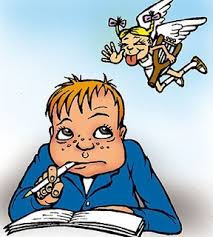
15 min 5 min | Class organisation Pre-learning (W) The lesson greeting. The teacher sets the lesson objectives, letting students know what to anticipate from the lesson. The teacher shows the picture and introduces the objectives of the lesson. Warm up. Free talk. Have you ever tried to write your own stories, poems? If you have your poem, can you read it to us? What should people know to write a story? Make a cluster of this topic. Pre-reading stage. Predicting and guessing. Students move their eyes over the words and pictures on the whiteboard and predict the title of the text. Then they read the text in pairs, find out the meaning of the underlined words. After that students call out words, phrases they remember from the text, note them. Students work in pairs (1 minute) discuss what the text is about or (create a text using some of the previous written words). Students express their ideas (1 minute). While-reading stage. The teacher informs the class that they will be participating in the contest about the words and the process of writing successfully. Ex.1 – 3 p.60. Write down key – words from the text: Draw on your dream- become a writer - have a passion for writing – to test……. Make a list of recommendations for a beginning writer: Ex.4.p. 60 (True – False sentences). If it’s false, prove the information. Answers: 1. False 2. True 3. False 4. False 5. True 6. True Who can be a writer or a journalist? What can you say about these professions? What would you like to be really good at? You are all in the ninth grade, some of you have already decided what he / she is going to be. Please in pairs speak about this problem. Assessment criteria: Read the given text of description and identify the general information. Demonstrate skills of organizing and expressing ideas accurately. Descriptor: A learner reads the text for global understanding; selects meaningful information, constructs the answer; evaluates the peers’ answers. Self-assessment. | Sts warm greet the teacher Sts answer around the class.
Students give their own examples using the correct forms of the verbs.
Ss and elicit their comments at the end
Ss to tell the class.
Ss complete the diagram
Students give their own examples using the correct forms of the verbs.
Ss and elicit their comments at the end
Ss to tell the class. | Emoticon
Formative assessment
Oral
8
10
Oral
Emoticon
Formative assessmen
Oral
Emoticon
Formative assessment
Oral
| Slide (useful phrases)
Pictures PPT
A cluster ” Writing a story”
CD2.15
Dictionaries
Student’s Book p.60
Whiteboard
Student Book p.60 Ex.5 CD2.15
Writing Worksheet Teacher’s Book p.82
| |||
| End 5 min.
| Home task. W.B. p.40 Ex.5.p.60 orally Students express their attitude to the lesson and give self-assessment using the method: “Six thinking hats”: Green: How can you use today's learning in different subjects? Red: How do you feel about your work today? White: What have you leant today? Black: What were the weaknesses of your work? Blue: How much progress have you made in this lesson? (Now I can, I still need to work on, I've improved in, Today I learnt... Yellow: What did you like about today's lesson? | Slide (Homework) Slide "Six thinking hats"
| |||||
Вебинар для учителей

🎓 Свидетельство об участии ✨БЕСПЛАТНО!✨



