


Росиия, Калининград


СДЕЛАЙТЕ СВОИ УРОКИ ЕЩЁ ЭФФЕКТИВНЕЕ, А ЖИЗНЬ СВОБОДНЕЕ
Благодаря готовым учебным материалам для работы в классе и дистанционно
Скидки до 50 % на комплекты
только до
Готовые ключевые этапы урока всегда будут у вас под рукой
Организационный момент
Проверка знаний
Объяснение материала
Закрепление изученного
Итоги урока

Была в сети 06.12.2024 10:46

Кулиева Елизавета Кирилловна
Репетитор английского языка
 89
 230 550

Местоположение
Whole language learning
Категория:
Всем учителям
28.11.2024 23:15

Просмотр содержимого документа
«Whole language learning»
Whole Language Learning
Integrating Language Skills for Holistic Education
Made by: Kulieva Elisaveta
Introduction to Whole Language Learning
Integrating Language Skills for Holistic Education
Definition: Focuses on learning as a whole experience rather than fragmented pieces.
Contrast: Whole Language Learning vs. Traditional Methods
• Traditional: Focus on grammar, vocabulary in isolation.
• Whole Language: Engages learners with complete texts and real-life tasks.
The Background
Célestin Freinet’s Influence :
• 1920s: Work-based pedagogy rejecting traditional academic routines.
• Innovation: Printing press in classrooms, real-life projects.
• Key Belief : Learning should be meaningful and linked to real-life activities.
Whole-to-Part Learning Philosophy
Two Teaching Approaches :
• Parts to Whole: Traditional, phonics-based.
• Whole to Parts: Freinet’s method, context-based learning.
Two Teaching Approaches :
• Example in Literacy: Debate between phonics and whole-language approaches.
• Phonics: Learning sound-letter relationships.
• Whole-Language: Understanding word meanings from context.
Core Principles of Whole Language Learning
• Whole to Part : Understanding language holistically.
• Integration :
Reading, writing, speaking, and listening develop together.
• Learner-Centered :
Knowledge construction is active.
• Social Learning :
Interaction plays a key role in development.
Implementation in Classrooms
• Characteristics :
• Focus on tasks or texts, not discrete grammar rules.
• Linguistic features addressed later, as needed.
Writing Workshops Example:
• No pre-teaching of grammar.
• Freewriting, collaboration, and multiple drafts.
• Instruction provided “at the point of need.”
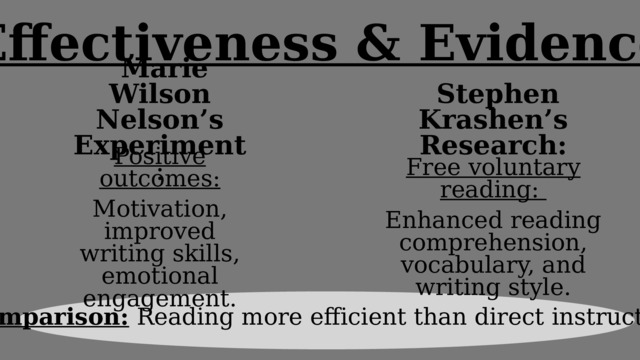
Effectiveness & Evidence
Marie Wilson Nelson’s Experiment :
Stephen Krashen’s Research:
Positive outcomes:
Motivation, improved writing skills, emotional engagement.
Free voluntary reading:
Enhanced reading comprehension, vocabulary, and writing style.
Comparison: Reading more efficient than direct instruction.
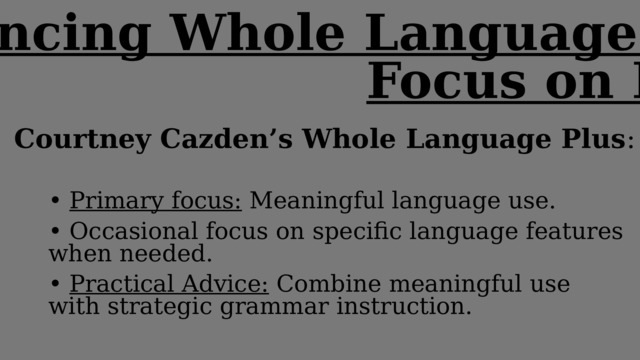
Balancing Whole Language with Focus on Form
Courtney Cazden’s Whole Language Plus :
• Primary focus: Meaningful language use.
• Occasional focus on specific language features when needed.
• Practical Advice: Combine meaningful use with strategic grammar instruction.
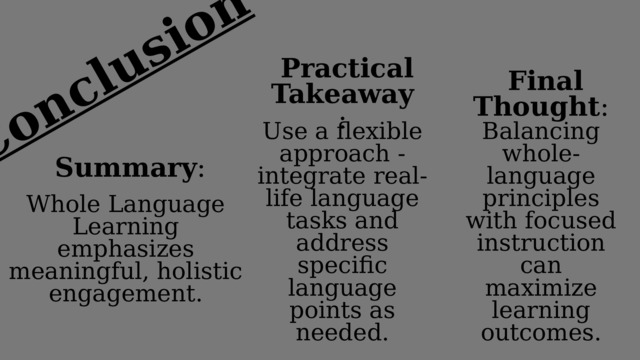
Conclusion
Practical Takeaway :
Final Thought :
Use a flexible approach - integrate real-life language tasks and address specific language points as needed.
Balancing whole-language principles with focused instruction can maximize learning outcomes.
Summary :
Whole Language Learning emphasizes meaningful, holistic engagement.

Thank you for your attention!








Вебинар для учителей

🎓 Свидетельство об участии ✨БЕСПЛАТНО!✨



