

Туркменистан, Дашогуз


СДЕЛАЙТЕ СВОИ УРОКИ ЕЩЁ ЭФФЕКТИВНЕЕ, А ЖИЗНЬ СВОБОДНЕЕ
Благодаря готовым учебным материалам для работы в классе и дистанционно
Скидки до 50 % на комплекты
только до
Готовые ключевые этапы урока всегда будут у вас под рукой
Организационный момент
Проверка знаний
Объяснение материала
Закрепление изученного
Итоги урока

Была в сети 21.06.2018 17:15

Матякубова Фазилат Базарбаевна
учительница английского языка
 472
 114 680

Местоположение
The presentation about Soltan Sanjar
Категория:
Английский язык
15.06.2018 11:42

Просмотр содержимого документа
«The presentation about Soltan Sanjar»
Mausoleum
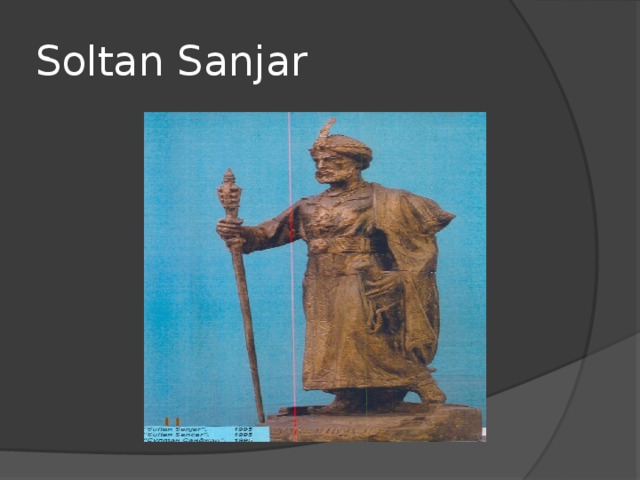
Soltan Sanjar
Soltan Sanjar
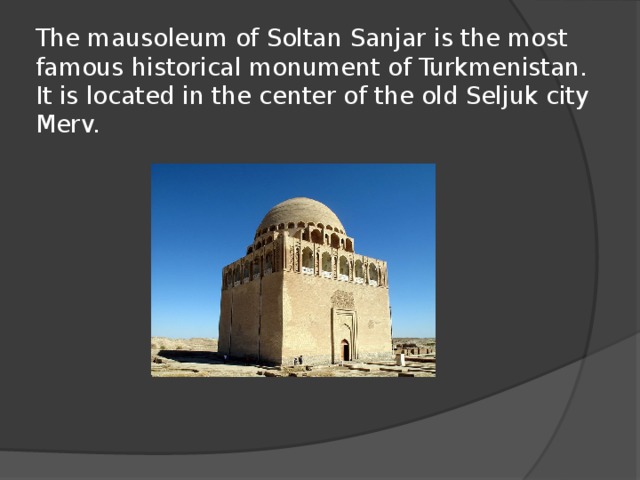
The mausoleum of Soltan Sanjar is the most famous historical monument of Turkmenistan. It is located in the center of the old Seljuk city Merv.
The second and greatest phase of development in Merv was from 1037 to 1157 under the Seljuks and the city became again a regional capital. For sixty years Merv was the capital of the eastern Seljuk Empire ruled by Soltan Sanjar. Soltan Sanjar was the king between 1118-1153 years.
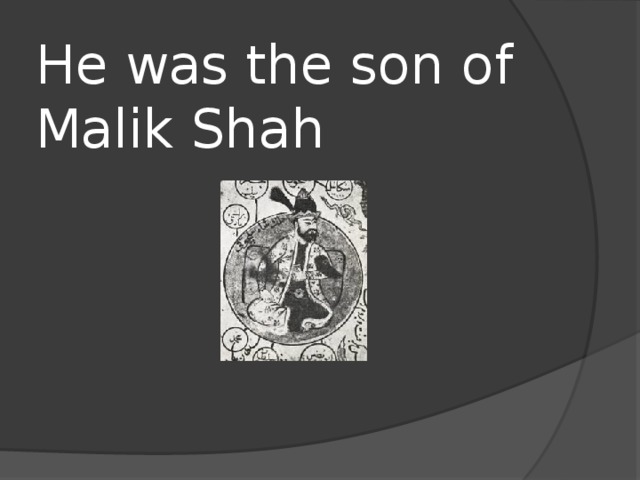
He was the son of Malik Shah
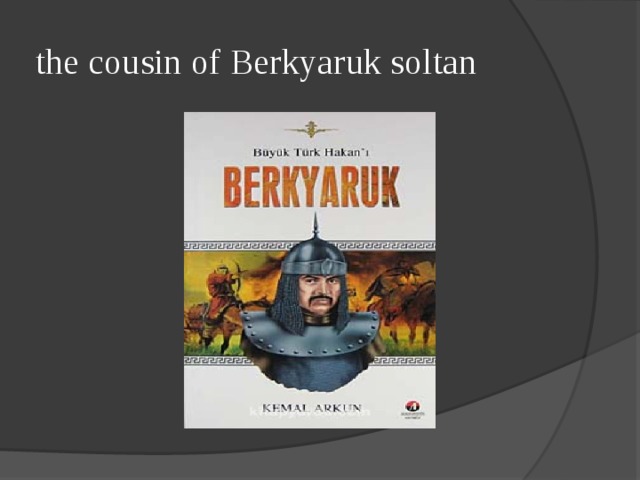
the cousin of Berkyaruk soltan
His mother was a hostage to Malik Shah. He became the ruler of Horasan when he was 11 years old. He got married to Tarkun-Hatun 1135. On September 9, in 1141 his wife had become a hostage of an enemy and Soltan Sanjar paid 500 thousand tuman to get her back. Merv was one of the greatest cities of its time, with many mosques, medresses and libraries.

Merv prospered in the basin of the Murgap river during the epoch of the Bronze age. There were more distinguished and educated people in Merv than in any other city of that time. First it was called in Margav but the ancient Greek and Roman geographers called it Margiana and the medieval Arab and Persian manuscripts described it as Maru or Merv. In the X century Merv began to develop intensively under the Seljuks and it was called “Shahjahan” which means “Soul of kings”.

In the period of Soltan Sanjar it was a capital of their great country, the largest town in Middle Asia and in the whole Muslim East. Its area together with suburbs was 1.800 hectares with a population of 150.000 people.
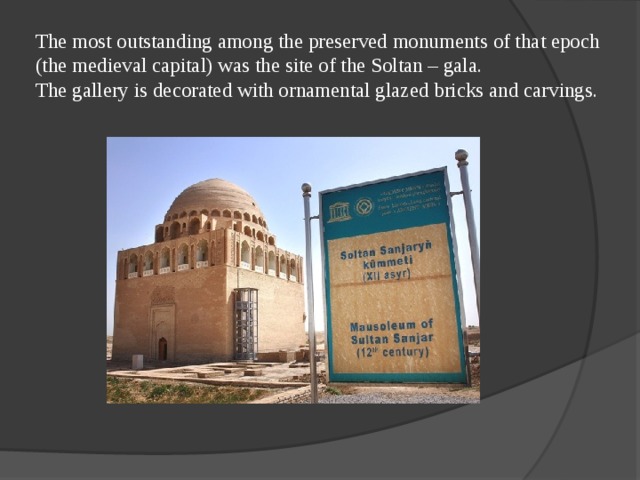
The most outstanding among the preserved monuments of that epoch (the medieval capital) was the site of the Soltan – gala. The gallery is decorated with ornamental glazed bricks and carvings.


The Soltan Sanjar’s tomb








Вебинар для учителей

🎓 Свидетельство об участии ✨БЕСПЛАТНО!✨



