

Россия, Москва


СДЕЛАЙТЕ СВОИ УРОКИ ЕЩЁ ЭФФЕКТИВНЕЕ, А ЖИЗНЬ СВОБОДНЕЕ
Благодаря готовым учебным материалам для работы в классе и дистанционно
Скидки до 50 % на комплекты
только до
Готовые ключевые этапы урока всегда будут у вас под рукой
Организационный момент
Проверка знаний
Объяснение материала
Закрепление изученного
Итоги урока

Была в сети 06.10.2026 21:27

Беликова Лариса Евгеньевна
учитель английского языка
 4 031
 17 021

Местоположение
Специализация
Природные катастрофы. Лавины
Категория:
Английский язык
12.10.2021 21:06

Просмотр содержимого документа
«Природные катастрофы. Лавины»
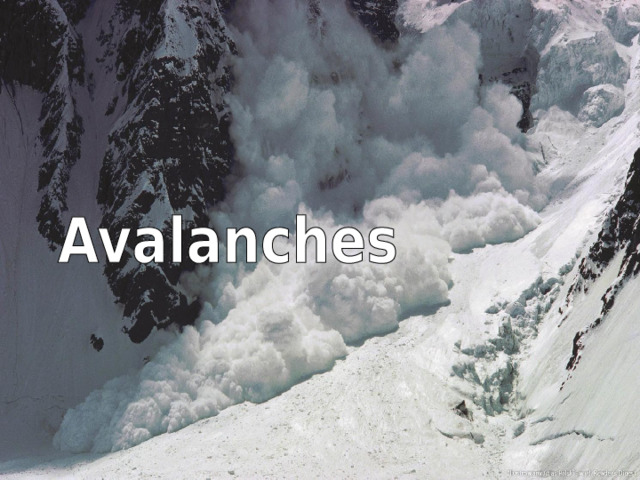
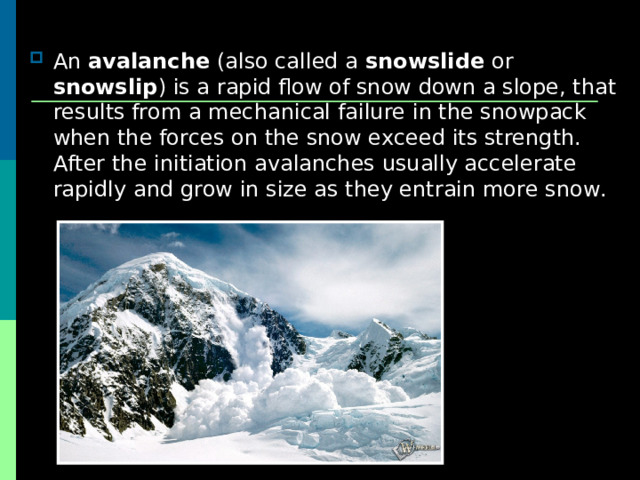
- An avalanche (also called a snowslide or snowslip ) is a rapid flow of snow down a slope, that results from a mechanical failure in the snowpack when the forces on the snow exceed its strength. After the initiation avalanches usually accelerate rapidly and grow in size as they entrain more snow.
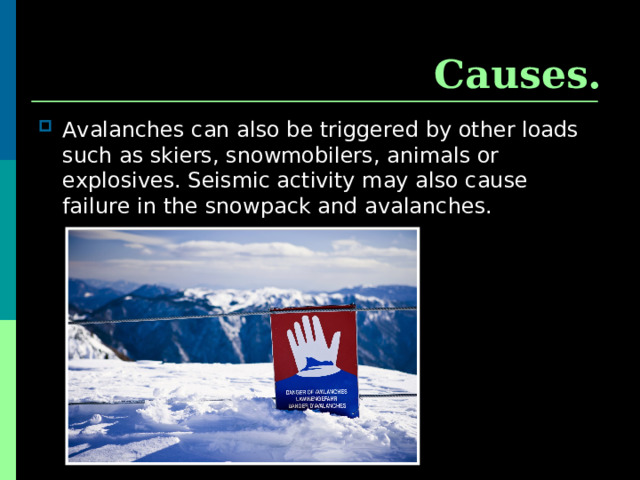
Causes.
- Avalanches can also be triggered by other loads such as skiers, snowmobilers, animals or explosives. Seismic activity may also cause failure in the snowpack and avalanches.
- Avalanches are not rare or random events and are endemic to any mountain range that accumulates a standing snowpack. Avalanches are most common during winter or spring but glacier movements may cause ice and snow avalanches at any time of year. Avalanches are among the most serious objective hazards to life and property, with their destructive capability resulting from their potential to carry enormous masses of snow at high speeds.
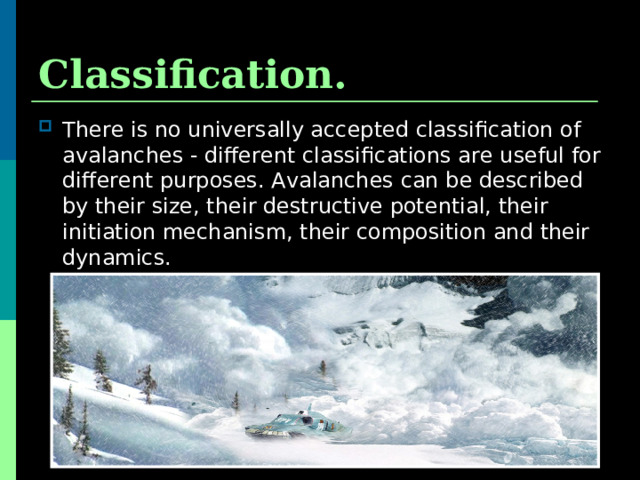
Classification.
- There is no universally accepted classification of avalanches - different classifications are useful for different purposes. Avalanches can be described by their size, their destructive potential, their initiation mechanism, their composition and their dynamics.
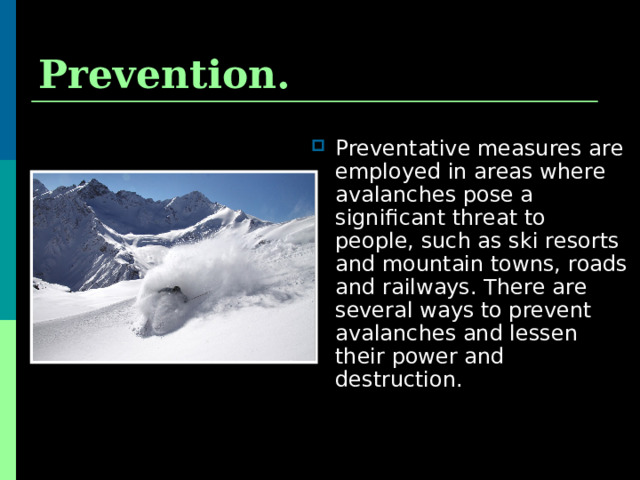
Prevention.
- Preventative measures are employed in areas where avalanches pose a significant threat to people, such as ski resorts and mountain towns, roads and railways. There are several ways to prevent avalanches and lessen their power and destruction.
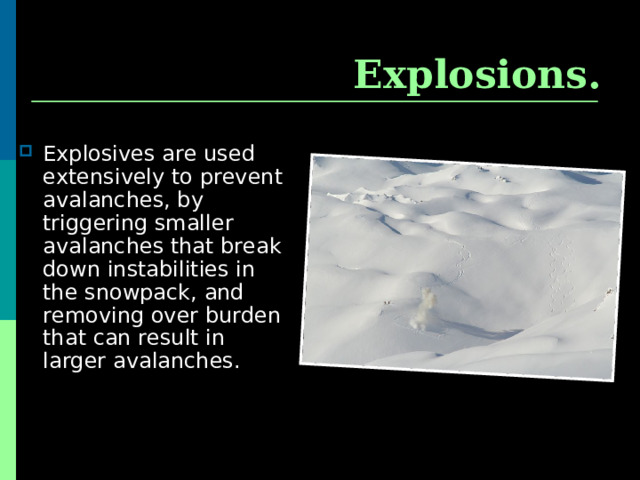
Explosions.
- Explosives are used extensively to prevent avalanches, by triggering smaller avalanches that break down instabilities in the snowpack, and removing over burden that can result in larger avalanches.
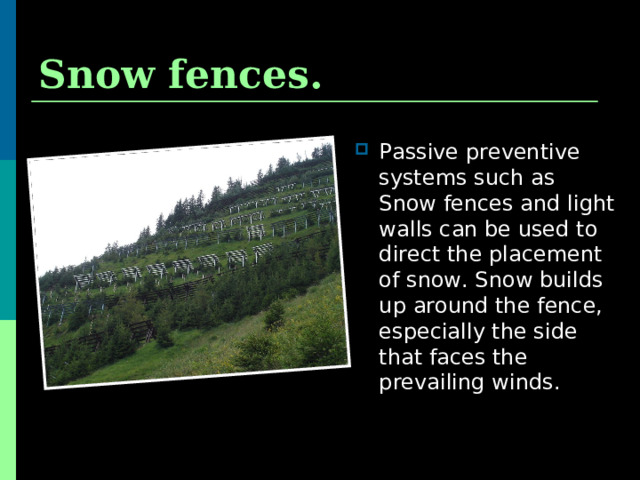
Snow fences.
- Passive preventive systems such as Snow fences and light walls can be used to direct the placement of snow. Snow builds up around the fence, especially the side that faces the prevailing winds.
- In many areas, regular avalanche tracks can be identified and precautions can be taken to minimise damage, such as the prevention of development in these areas, the construction of avalanche sheds over existing roads and railways and the use of tunnels for new road and rail links.
- Avalanches cause danger when their path cannot be predicted and are a major hazard for skiers and mountaineers.








Вебинар для учителей

🎓 Свидетельство об участии ✨БЕСПЛАТНО!✨



