

Россия, Московская обл. Ленин ский р-н, Р/П Лопатино


СДЕЛАЙТЕ СВОИ УРОКИ ЕЩЁ ЭФФЕКТИВНЕЕ, А ЖИЗНЬ СВОБОДНЕЕ
Благодаря готовым учебным материалам для работы в классе и дистанционно
Скидки до 50 % на комплекты
только до
Готовые ключевые этапы урока всегда будут у вас под рукой
Организационный момент
Проверка знаний
Объяснение материала
Закрепление изученного
Итоги урока

Была в сети 26.06.2026 22:12

Петросян Нарине Александровна
Учитель английского языка
 2 163
 33 930

Местоположение
Present perfect tense
Категория:
Английский язык
22.01.2020 20:33

Просмотр содержимого документа
«Present perfect tense»
PRESENT PERFECT TENSE
Настоящее совершённое время
Done : NARINE PETROSYAN

Past Simple употребляется
- когда мы говорим о действиях, которые произошли в прошлом и с настоящим моментом не связаны, мы обычно знаем когда , а часто и где эти события произошли.
e.g. Yesterday I visited my friend.
Last summer we went to London.
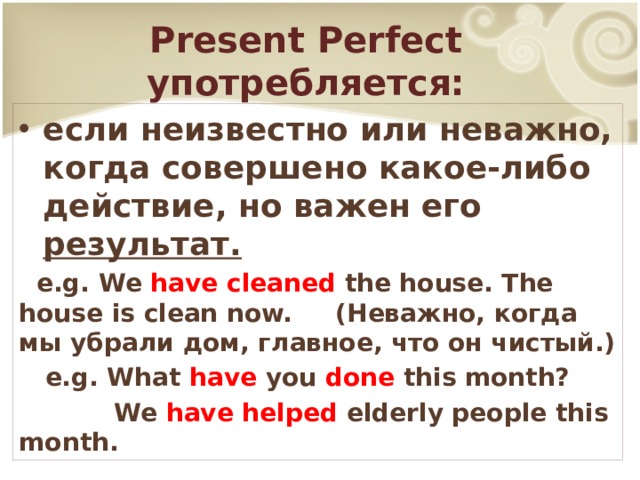
Present Perfect употребляется:
- если неизвестно или неважно, когда совершено какое-либо действие, но важен его результат.
e.g. We have cleaned the house. The house is clean now. (Неважно, когда мы убрали дом, главное, что он чистый.)
e.g. What have you done this month?
We have helped elderly people this month.
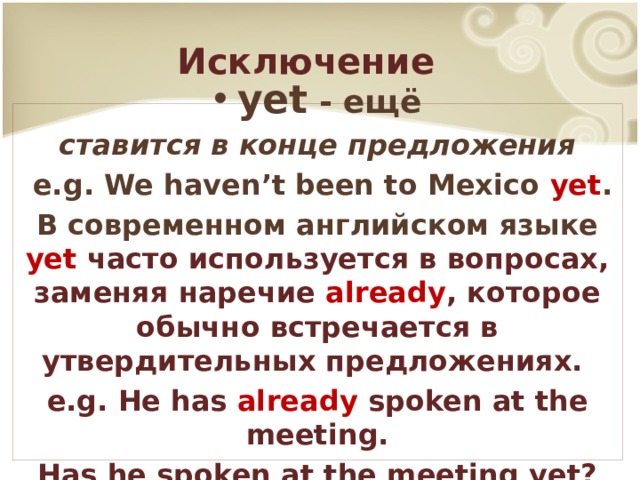
Исключение
- yet - ещё
ставится в конце предложения
e.g. We haven’t been to Mexico yet .
В современном английском языке yet часто используется в вопросах, заменяя наречие already , которое обычно встречается в утвердительных предложениях.
e.g. He has already spoken at the meeting.
Has he spoken at the meeting yet?
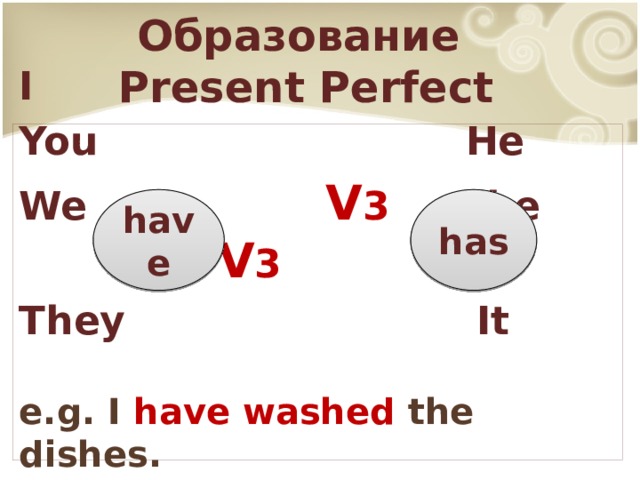
Образование Present Perfect
I
You He
We V 3 She V 3
They It
e.g. I have washed the dishes.
He has eaten fruit.
have
has
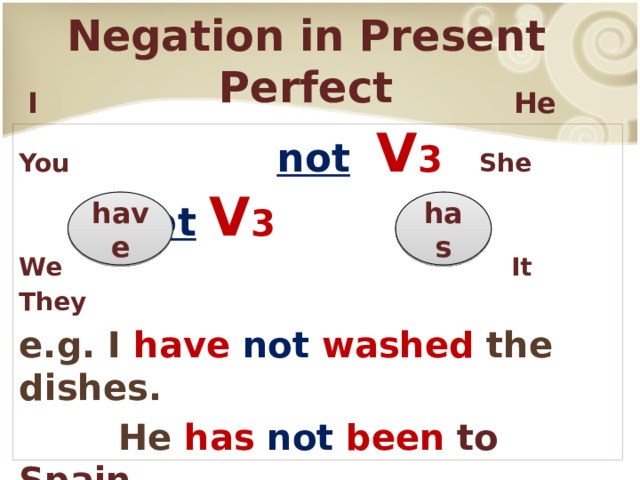
Negation in Present Perfect
I He
You not V 3 She not V 3
We It
They
e.g. I have not washed the dishes.
He has not been to Spain.
have
has
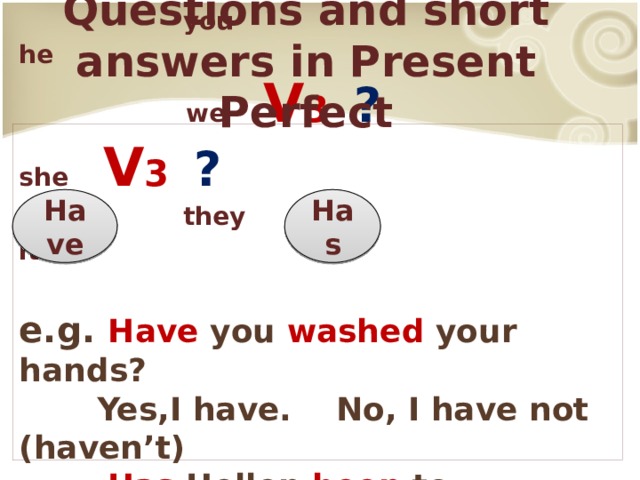
Questions and short answers in Present Perfect
I
you he
we V 3 ? she V 3 ?
they it
e.g. Have you washed your hands?
Yes,I have. No, I have not (haven’t)
Has Hellen been to Moscow?
Yes, she has. No, she has not (has’t)
Have
Has
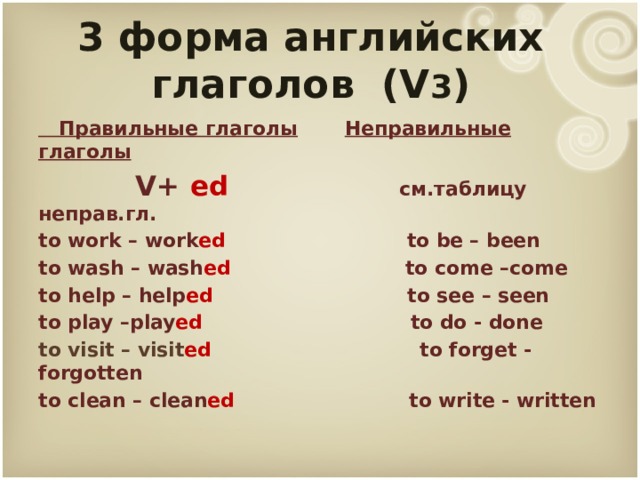
3 форма английских глаголов (V 3 )
Правильные глаголы Неправильные глаголы
V+ ed см.таблицу неправ.гл.
to work – work ed to be – been
to wash – wash ed to come –come
to help – help ed to see – seen
to play –play ed to do - done
to visit – visit ed to forget - forgotten
to clean – clean ed to write - written

Choose the correct form of the verb to have
- I ... fed my dog.
- She ... eaten the cake.
- Mike ... done his homework.
- The ... broken the window.
- The boy ... hurt his hand.
- My mother ... forgotten her key at home.
- Children ... drunk the lemonade.
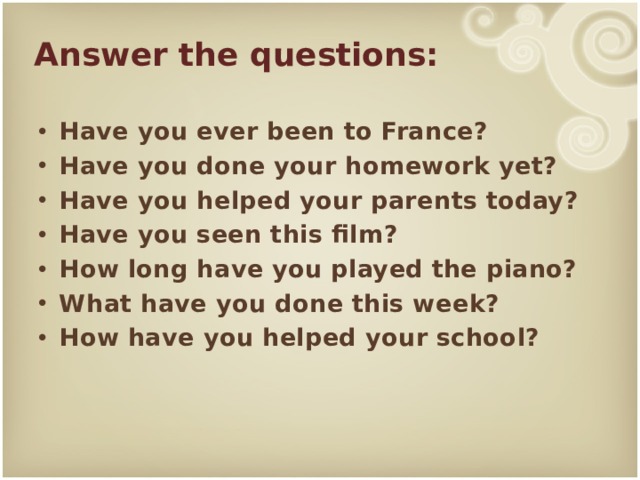
Answer the questions:
- Have you ever been to France?
- Have you done your homework yet?
- Have you helped your parents today?
- Have you seen this film?
- How long have you played the piano?
- What have you done this week?
- How have you helped your school?

Complete the sentences. Use the Present Perfect
- Susan (to make) a new dress for her bithday.
- She not (to speak) yet.
- We (to learn) already a lot of English words.
- I already (to do) my homework. Now I can go for a walk.
- He just (to come) home.
- I (not yet to eat) today.
- The rain (to stop) and the sun is shining in the sky again.

Вебинар для учителей

🎓 Свидетельство об участии ✨БЕСПЛАТНО!✨



