


Россия, р.п. Красные Баки


СДЕЛАЙТЕ СВОИ УРОКИ ЕЩЁ ЭФФЕКТИВНЕЕ, А ЖИЗНЬ СВОБОДНЕЕ
Благодаря готовым учебным материалам для работы в классе и дистанционно
Скидки до 50 % на комплекты
только до
Готовые ключевые этапы урока всегда будут у вас под рукой
Организационный момент
Проверка знаний
Объяснение материала
Закрепление изученного
Итоги урока

Была в сети 31.10.2026 19:58

Воронина Марина Владимировна
преподаватель английского и немецкого языка, преподаватель информатики
 91 619
 192

Местоположение
Специализация
Методические указания 3 курс 2 часть (ТОР) 2026
Категория:
Английский язык
16.10.2026 09:47

Просмотр содержимого документа
«Методические указания 3 курс 2 часть (ТОР) 2026»
МИНИСТЕРСТВО ЛЕСНОГО ХОЗЯЙСТВА
И ОХРАНЫ ОБЪЕКТОВ ЖИВОТНОГО МИРА НИЖЕГОРОДСКОЙ ОБЛАСТИ
Государственное бюджетное профессиональное
образовательное учреждение Нижегородской области
«КРАСНОБАКОВСКИЙ ЛЕСНОЙ КОЛЛЕДЖ»
(ГБПОУ НО «КБЛК»)
МЕТОДИЧЕСКИЕ УКАЗАНИЯ
по дисциплине «Иностранный язык
в профессиональной деятельности (Английский язык)»
для студентов III курса часть 2
тема 4.3 «Решение стандартных и нестандартных
профессиональных ситуаций»
для специальности 23.02.07 Техническое обслуживание
и ремонт автотранспортных средств 
Разработали:
преподаватели иностранных языков
Воронина М.В.,
Булкина Т.А.
Красные Баки
2026
Lesson 7
ROAD SAFETY
№1. Match the words from the box to the pictures “Vehicles: road transport”
ambulance fire engine motorbike scooter
bicycle hatchback pick-up-truck convertible
bus semi-trailer truck police car taxi
double-decker lorry saloon car van
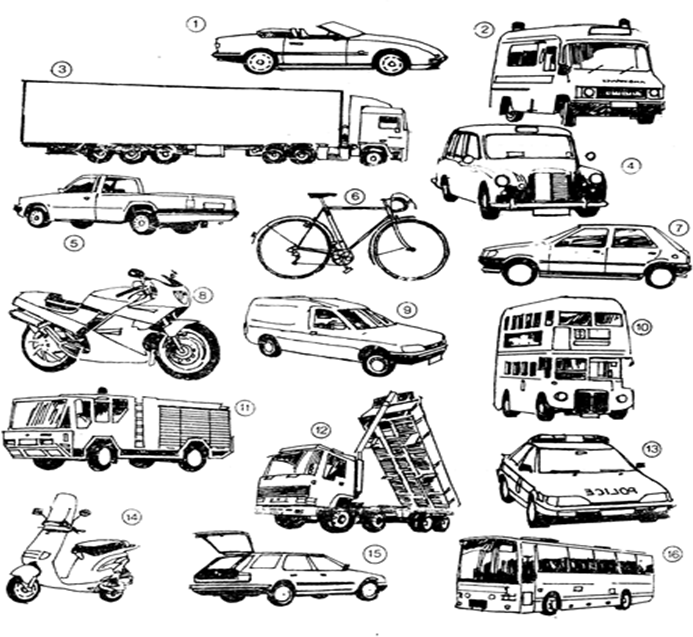
№2. Translate the antonyms, underlined negative suffixes where they are:
acceleration - deceleration; increased - decreased; forgiving - unforgiving; discouraged - encouraged; fatal - non-fatal; to reduce - to increase; certain - uncertain; modern - ancient; poor - rich; young - old; broad - narrow; increase - minimize; forgiving - unforgiving.
№3. Translate the words and write the part of speech:
safety, safe; crash, to crash, to crash through, to crash down; injury, to injure, injurious; to prevent, prevention, preventive; danger, dangerous, to be in danger; fatal, fatality, fatalist, fatalistic, fatalism; to increase, increase, to be on the increase; fail, failure, failing; pavement, to pave, paver; acceleration, to accelerate, accelerating, accelerator, accelerant; removal, move, movement, to remove, removed.
№4. Translate synonyms:
accident - crash, pedestrian – walker, to maintain – to service, dangerous – hazardous, motorway – freeway, footway – sidewalk, fatality – death, to prevent – to avoid, vehicle - car, safe – secure.
№5. Read the text and answer the questions:
Road safety is a vital concern for every community around the world. Every day, millions of people use roads as drivers, passengers, pedestrians, or cyclists. Ensuring their safety requires a combination of good infrastructure, strict rules, and responsible behavior. One of the most basic safety measures is obeying traffic signals and road signs. These signs provide crucial information about speed limits, turns, and potential hazards.
Drivers must stay focused and avoid any distractions while operating a vehicle. Using a mobile phone while driving significantly increases the risk of an accident. Even a few seconds of distraction can be enough to cause a serious collision. Wearing a seatbelt is mandatory in many countries for a very good reason. Seatbelts save lives by preventing passengers from being thrown during a crash. Children should always travel in properly fitted car seats appropriate for their age and weight. Installing child seats correctly is just as important as having them. Speed limits are set to match the conditions and risks of specific areas. Exceeding the speed limit reduces the time available to react to sudden changes. In residential zones and near schools, lower speeds are essential to protect vulnerable road users.
Pedestrians must be equally responsible when using the roads. They should always use designated crosswalks and follow pedestrian signals. Before crossing, it’s vital to look left and right and confirm that vehicles have stopped. Even on a green light, pedestrians should stay alert for turning cars or distracted drivers.
Cyclists play an important role in urban mobility, but they also face specific risks. Wearing a helmet can dramatically reduce the severity of head injuries in a fall or collision. Bright or reflective clothing helps cyclists be more visible, especially at dusk or dawn. Cyclists should follow the same traffic rules as motorists and signal their intentions clearly.
Motorcyclists need even more protection due to the exposed nature of their vehicles. Full protective gear, including helmets, jackets, gloves, and boots, is highly recommended. Alcohol and drugs severely impair judgment, coordination, and reaction times. Driving under the influence is not only illegal but also one of the leading causes of fatal crashes. Fatigue can be just as dangerous as intoxication behind the wheel. Tired drivers may experience slower reactions and even fall asleep while driving.
Regular vehicle maintenance is a key part of road safety. Checking brakes, tires, lights, and fluid levels helps prevent mechanical failures. Properly inflated tires with good tread improve traction and reduce stopping distances.
Road design and lighting also contribute significantly to overall safety. Well-lit streets, clear markings, and separated bike lanes make roads safer for everyone. Promoting road safety through education, enforcement, and engineering helps save countless lives every year.
Why is road safety considered a vital concern for communities worldwide?
What combination of factors is necessary to ensure the safety of road users?
What crucial information do road signs provide, according to the text?
How does using a mobile phone while driving increase the risk of an accident?
Why are seatbelts important, and what do they help prevent during a crash?
What are two key considerations regarding child car seats mentioned in the text?
Why are lower speed limits essential in residential zones and near schools?
№6. Read the statements and decide if they are true or false according to the text, correct the false ones:
Using a mobile phone while driving slightly increases the risk of an accident.
Seatbelts are optional in many countries.
Cyclists should follow the same traffic rules as motorists.
Fatigue is less dangerous than driving under the influence of alcohol.
Properly inflated tires with good tread can reduce stopping distances.
№7. Fill in the gaps with words: distraction, helmet, speed limit, crosswalks, maintenance, impaired, visible, collisions.
Even a few seconds of … can be enough to cause a serious … .
Wearing a … can dramatically reduce the severity of head injuries for cyclists.
Pedestrians should always use designated … and follow pedestrian signals.
Exceeding the … reduces the time available to react to sudden changes.
Bright or reflective clothing helps cyclists be more … , especially at dusk or dawn.
Alcohol and drugs severely … judgment, coordination, and reaction times.
Regular vehicle … is a key part of road safety.
№8. Write out regular and irregular verbs from the text, write 3 forms of every verbs: Example: translate – translated – translated (переводить)
read- read – read (читать)
№9. Write out from the text words with suffixes or prefixes and translate them:
Example: deformation (деформация) – deform (деформировать)
№10. Match the definitions to the terms:
| 1) Bypass | a road or path that goes under another road |
| 2) Flyover | a place where a railway crosses a road |
| 3) Slip road | the part of the road nearest the edge, used especially by slower vehicles |
| 4) Lay-by | a strong low fence or wall at the side of a road or between the two halves of a major road such as a motorway or interstate |
| 5) Roundabout | a place where two or more roads meet each other. |
| 6) Crossroads | a place where two or more roads meet, forming a circle that all traffic must go around in the same direction |
| 7) Crash barrier | an area at the side of a road where vehicles may stop for a short time |
| 8) Inside lane | a short road that is used to drive onto or off a motorway (= wide, fast road) |
| 9) Level crossing | a bridge that carries a road over another road |
| 10) Underpass | a road that goes around a town and not through it |
Lesson 8
Complex object
№1. Study the material:
Complex object — это сложное дополнение, которое состоит из существительного в общем падеже или местоимения в субъектном падеже и глагола в инфинитивной форме. А предшествуют ему подлежащее и сказуемое. В русском языке такой конструкции нет, поэтому сложное дополнение при переводе становится придаточным предложением.
Complex object + инфинитив с частицей to
Конструкция Complex object + инфинитив с частицей to употребляется после глаголов: advise, allow, believe, cause, consider, desire, expect, find, get, hate, help, invite, know, like, order, teach, want, warn, wish, would like.
Complex object + инфинитив без частицы to
Конструкция Complex object + инфинитив без частицы to употребляется после глаголов make – заставлять и let – позволять, разрешать, а также после глаголов восприятия: see — видеть, hear — слышать, feel — чувствовать, watch — смотреть, notice — замечать, observe — замечать.
После глаголов восприятия используется следующая формула — глагол + существительное или местоимение в объектном (винительном) падеже + инфинитив (неличная форма глагола) БЕЗ частицы to, либо герундий (Ving).
№2. Open the brackets using Complex Object, translate the sentences:
I want (she) to be my wife.
My brother taught ( I ) to swim and dive.
They would like (we) to read aloud.
Bob advised (she) to stay for another week.
We expect (he) to arrive at noon.
I heard (you) open the door.
Dad always makes ( I ) go fishing with him every weekend.
Our parents expect (we) to stop quarreling.
Sara never lets (he) drive her car.
I saw (you) cross the street.
№3. Insert «to» where necessary:
We heard the lorry … stop near the house.
I want my elder sister … take me to the zoo.
I believe the Internet … be the greatest invention ever.
The teacher doesn’t let us … use our mobile phones.
They didn’t expect her … be late.
The police officer made him … tell the truth.
I would like you … admit your fault.
Swan believes Vicky … be the best manager in our store.
Nick persuaded me … go in for sports.
We saw Jacob … break the window.
I consider this sculpture … be a masterpiece.
She noticed Mary suddenly … turn pale.
№4. Open the brackets using Complex Object, translate the sentences:
1. Не made me (do) it all over again,
2. Her father made her (learn) the lessons.
3. If you want us (make) the work quickly you should let start a once.
4. Would you like me (read) now?
5. They won't let us (leave) the classroom till our control work been checked.
6. He wouldn't let the children (play) in his study,
7. Please let me (know) the results of your exam as soon as possible.
8. He made us (wait) for two hours.
9. I let him (go) early as he had done his task.
10. I'd like him (enter) the university but I can't make him(do) it.
11. I want her (learn) English.
12. I heard the door (open) and saw my friend (come) into the room.
13. I heard her (play) the piano.
14. I saw him (go out) of the house.
15. The teacher advised us (use) dictionaries.
16. Her father doesn't allow her (go) to the cinema
17. We expect our basketball team (win) next game.
18. We don't want you (tell) anything.
19. I saw them (open) the window.
20. That is too difficult for you to do, let me (help) you
№5. Make up the sentences:
her/ to/ the text/ the teacher/ wanted/ translate/ pupils.
recommend/ for my holidays/ you/ me/ where/ to go/ would?
her pupils/ the lessons/ doesn’t/ the teacher/ miss/ want/ to.
always/ me/ my parents/ study/ encourage/ hard/ to/ at school.
invited/ for a few days/ Jane’s/ to/ with them/ her/ stay/ friends.
№6. Rewrite sentences using Complex Object:
Example: He must wash the car. I want him to wash the car.
You mustn’t be late for work. I don’t want __________________________.
Clair must tidy her bedroom. I want ________________________________.
She mustn’t go to the disco. I don’t want ____________________________.
They must go to the school tomorrow. I want _________________________.
Gary mustn’t make so much noise. I don’t want _______________________.
You mustn’t make a mess. I don’t want ______________________________.
He must mend his bike. I want _____________________________________.
№7. Translate into Russian.
They are likely to win the match.
She is unlikely to be a good actress.
We are sure to meet you at the station.
My parents are certain to believe me.
Los Angeles is sure to be the capital of the world movie production.
Celebrities are certain to need peace and quiet.
They are thought to have gone away some days ago.
The patient is unlikely to follow the doctor’s recommendations.
This picture is sure to be the best at the exhibition.
The delegation is reported to be leaving Russia tonight at 11 a.m.
№8. Translate into English.
1. Вероятно, он станет популярным певцом.
2. Маловероятно, что мы забудем этот вечер.
3. Маловероятно, что они примут решение сразу.
4. Несомненно, вы победите.
5. Родителям, конечно, понравится наше представление.
6. Учителя, конечно, помогут ученикам подготовиться к экзаменам.
7. Сообщают, что гуманитарный груз был доставлен вовремя.
8. Он, похоже, не слышал эту новость.
№9. Choose the correct sentences, write and translate the sentences:
1.
I expect him understand me.
I expect him to understand me.
I expect he to understand me.
2.
Julia noticed Jim to walk along the street.
Julia noticed Jim to walking along the street.
Julia noticed Jim walking along the street.
3.
Our manager saw me to walk into the office.
Our manager saw me walk into the office.
Our manager saw me walking into the office.
4.
The teacher didn't want the student to arrive so late.
The teacher didn't want the student arrive so late.
The teacher didn't want the student arriving so late.
5.
The trainer will make the athletes to do it.
The trainer will make the athletes doing it.
The trainer will make the athletes do it.
Lesson 9
Safety at Service Stations
№1. Read the text and answer the questions:
Service stations (also called petrol stations or servos) are busy places, and following safety rules helps prevent accidents. This guide outlines the main precautions to keep in mind.
1. Refueling Safety
Turn off the engine. It’s not just a suggestion — it’s the law in many places. A running engine poses a fire risk, especially with fuel vapors present.
Never smoke, use lighters, or matches. This is extremely dangerous. In many jurisdictions, smoking inside a service station is prohibited, including in a parked car with windows up. You must extinguish cigarettes before entering the premises.
Avoid using mobile phones. While the risk of a spark from a phone causing a fire is low, the distraction can lead to mistakes, like overfilling the tank.
Discharge static electricity. Friction (e.g., between synthetic clothing and seats in dry air) can build up a charge. Before touching the nozzle, touch a metal part of the vehicle to discharge it.
If you spill fuel: Inform the operator immediately. Do not restart your engine until the spill has been cleaned up and the operator gives the all-clear.
2. General Precautions
Watch for children. Always supervise young children when crossing the forecourt. It’s illegal for children under a certain age (e.g., 15 or 16) to operate petrol pumps, even under adult supervision.
Secure your vehicle. Lock your car doors while refueling or when entering the station store to prevent theft of items left in plain sight.
Drive carefully. Move slowly and cautiously within the service station area to avoid accidents.
Never leave children unattended. Keep fuel and other hazardous substances out of their sight and reach.
3. For Vehicles with Awnings or Trailers. If you have a boat or caravan with a gas-powered fridge, turn off the pilot light before arriving at the service station whenever possible.
Why these rules matter. Statistics show that fires and explosions at service stations, often caused by mechanical failures, cigarettes, or static discharge, can have serious consequences. Adhering to these safety measures protects you, other customers, and the staff.
Why is it necessary to turn off the engine while refueling?
What are the main fire risks mentioned in the refueling safety section?
Why is smoking strictly prohibited at service stations, even in a parked car?
What steps must be taken if fuel is spilled during refueling?
What precautions should be taken regarding children at a service station?
Why should you lock your car doors while refueling or visiting the station store?
What are some common causes of fires and explosions at service stations?
How can using a mobile phone be dangerous at a petrol station, according to the text?
№2. Read the statements and decide if they are true (T) or false (F) according to the text:
It’s only a recommendation to turn off the engine while refueling, not a legal requirement.
Smoking is allowed in a parked car with windows up at a service station.
Using a mobile phone at a petrol station is dangerous mainly because it can easily cause a spark and start a fire.
Friction between synthetic clothing and seats can build up static electricity.
If you spill fuel, you should clean it up yourself and then restart the engine.
Children under a certain age are not allowed to operate petrol pumps, even with an adult present.
Locking your car doors at a service station helps prevent theft.
You should drive quickly through a service station to get out of the way of other vehicles.
For vehicles with caravans or trailers, it’s recommended to turn off the pilot light of a gas‑powered fridge before arriving at the station.
Mechanical failures, cigarettes, and static discharge are listed as common causes of fires at service stations.
№3. Complete the sentences with words or phrases from the text:
A running engine poses a fire risk, especially with … present.
Before touching the nozzle, you should touch a … to discharge static electricity.
If you spill fuel, you must … immediately and wait for the operator’s all‑clear before restarting the engine.
It’s important to … when crossing the forecourt to avoid accidents.
You should … while refueling or when entering the station store to prevent theft.
For vehicles with awnings or trailers, turn off the … before arriving at the service station whenever possible.
The distraction from using a mobile phone can lead to mistakes, such as … .
Children must be kept away from fuel and other … .
In many jurisdictions, smoking inside a service station is … .
Adhering to safety measures protects you, other customers, and … .
№4. Match the word combination with its translations:
| a) power screwdriver b) hydraulic lift c) tyre pressure gauge d) tools e) body hammer f) engine lifting hook g) car wash hose h) repair shop i) oil can | 1) гидравлический подъемник 2) инструменты 3) рихтовочный молоток 4) электроотвертка 5) крюк для подъема двигателя 6) шланг для мойки автомобилей 7) ремонтный бокс 8) измеритель давления в шинах 9) масленка |
№5. Read the text. Write out and translate sentences with modal verbs, underlined them in the sentences:
Customer Safety
Both self-service car washes and traditional shops can pose risks to customers. Whether they stay in their car or wait inside while your crew washes and details, the below tips will help keep them safe:
Use visible signage: Post speed limit signs clearly throughout areas in which customers will be driving. Tell customers where to park to drop off cars or if they’ll be vacuuming after a self-service wash. If a conveyor belt is involved, make it clear where to stop and how slowly to approach it. Additionally, make customers aware of any ways their vehicles may be damaged, such as maximum clearance levels.
Keep all entrances and exits clear: Easy access is both convenient and improves customer safety. Design waiting lanes to be clear of all entryways and exits. You may even designate employees to guide customers if they block any essential areas.
Create safe waiting areas: Customers should be protected safely from water, chemicals, and machinery. An enclosed and indoor area for customers to wait while their vehicle is being serviced also prevents them from interfering with employees, which can also cause safety issues.
Employee Safety
Providing a safe working environment is essential for any workplace, and car washes create several hazards to your workers. You can help protect employees by following vital safety practices, such as:
Provide initial and ongoing training: Your workers will be around wet surfaces, machinery, electrical components, and chemicals throughout their workday. They must understand how to avoid injuries during their workday, and training is their best line of defense against injuries. Onboarding should involve in-depth safety training, while all employees should receive ongoing safety training.
Emphasize avoiding slips, trips, and falls: Car washes are prone to slips, trips, and falls more than most businesses due to frequent wet surfaces, cords, and hoses running throughout the facility. Proper signage in problem areas will provide quick reminders for employees as they work. It’s also worth creating guidelines for shoes, as traction is crucial to walking on wet surfaces.
Enforce OSHA guidelines and general safety procedures: OSHA has regulations that apply to all workplaces and are crucial for keeping your car wash safe. Additionally, several general safety procedures will benefit your workers, such as understanding chemical storage practices, frequent safety inspections, and maintaining clear walkways.
№6. Answer the questions:
What kinds of car wash facilities are mentioned as potentially risky for customers?
What is the main purpose of creating safe waiting areas for customers?
What potential vehicle damage should customers be made aware of?
What are the main hazards employees face during their workday, as listed in the text?
Why is footwear choice important for workers in a car wash?
№7. Read and act the dialogues. Answer the questions:
1) Customer: Hello, can I get a car wash?
Attendant: Of course, what type of wash would you like?
Customer: Just a basic wash with underbody cleaning.
Attendant: Sure thing. Would you like any extras, like tire shine or interior cleaning?
Customer: No, just the basic wash is fine.
Attendant: Alright, that will be 460 rubles. Please pull into bay 2 and turn off your engine.
Customer: Sounds good, thank you.
Attendant: No problem, we'll have your car looking sparkling clean in no time.
What service does the customer ask for at the beginning of the conversation?
Which type of car wash does the customer choose?
What extra services does the attendant offer?
Does the customer accept any extras? What does he say?
How much does the basic wash with underbody cleaning cost?
2) Customer: Good morning! How much for a car wash?
Attendant: Good morning! Our basic wash starts at 470 rubles. Would you like to add any extras like wax or interior cleaning?
Customer: Yes, I'd like the full package with wax and interior cleaning.
Attendant: Great! That will be 865 rubles. We also offer a loyalty card program where every 5th wash is free. Would you like to sign up for that?
Customer: Sure, that sounds like a good deal. How long will it take?
Attendant: About 45 minutes. Please wait in our waiting area and we'll come get you when your car is ready.
Customer: Okay, thanks.
How much does the basic wash cost?
What is included in the full package?
Which package does the customer choose?
How long will the car wash take?
Where does the attendant ask the customer to wait?
№8. Make up your own dialogue using the information from the carwash. Translate the word combinations:
Basic Services
Basic exterior wash — 470 ₽
Exterior wash + underbody cleaning — 620 ₽
Full package (exterior wash, underbody cleaning, wax, interior cleaning) — 865 ₽
Add‑ons (Extras)
Tire shine — 150 ₽
Wheel cleaning — 220 ₽
Vacuum cleaning (interior) — 180 ₽
Interior wipe‑down (dashboard, doors, seats) — 300 ₽
Glass treatment (rain repellent coating) — 250 ₽
Special Services
Engine bay cleaning — 550 ₽
Detailing (deep cleaning, polish, protection) — from 1 500 ₽
Stain removal (fabric/leather) — from 400 ₽ per seat
Loyalty Program
Loyalty card: every 5th car wash is free
№9. Make the following sentences negative and interrogative:
1. He wants to change a tire.
2. I am going to block the wheels.
3. He suggested that I should buy a new cellphone.
4. They were asked to help with his car.
5. We can park close to the club.
№10. Match the following words and word combinations. Make up your own sentences using them:
to jack up tools
to change a jack
to inspect a rear wheel
to require between the pavement and underside of the car
to get under repairs
to squeeze oneself brakes
to manipulate a tire
to observe a vehicle
to use the car
to block safety precautions
to rotate a jack
№11. Translate the following sentences into English:
1. Для того чтобы поменять шину нужно поднять машину на домкрат.
2. Чтобы осмотреть тормоза нужно забраться под машину.
3. Домкраты используются только для поднятия машины.
4. Заблокируйте колеса, чтоб машина не двигалась.
5. Никогда не меняйте шину на шоссе.
6. Если у вас спустила шина на склоне, припаркуйтесь возле бордюра.
Lesson 10
Lexical-grammatical exercises: verb forms
№1. Open the brackets, using the verb in Present Simple:
At our car wash, every employee … (wear) non‑slip shoes.
The safety rule … (state) that the engine must be off before washing.
We … (check) the pressure hoses every morning before opening.
If a customer … (drive) too fast into the bay, the attendant … (stop) them immediately.
The chemical storage area … (require) a lock and a ventilation system.
Each shift, the team … (perform) a quick safety walk‑through.
№2. Open the brackets, using the verb in Past Simple:
Yesterday, a new attendant … (make) a mistake. He … (forget) to put a “Wet Floor” sign after cleaning the waiting area. A customer … (walk) through and … (slip) on the wet tiles. The attendant … (run) over and … (ask) if the customer was okay. The supervisor … (arrive) soon after and … (write) an incident report.
| Will + infinitive | Be going to + infinitive |
| A decision at the moment of speaking: | A decision before the moment of speaking: |
| A prediction based on opinion: | A prediction based on something we can see (or hear) now: |
| A future fact: |
|
| For promises / requests / refusals / offers: |
|
№3. Open the brackets, using the verb in Future Simple - will or be going to
We … (install) new non‑slip flooring in the workshop next month. (запланировано)
If we see more misses, we … (review) the training program. (условие/решение в момент речи)
The manager says we … (get) new safety helmets for the team. (уже решено)
When the inspection comes, we … (show) all our safety logs. (обещание/реакция на событие)
I think the oil leak … (cause) bigger problems if we don’t fix it today. (прогноз)
№4. Open the brackets, using the verb in Present Simple or Present Continuous:
At this car wash, safety rules … (apply) to every employee.
Right now, the supervisor … (check) the emergency exits.
Employees … (wear) protective gloves whenever they handle chemicals.
Today, the team … (follow) a new cleaning protocol.
The sign … (warn) about wet floors in this area.
Look: the technician … (inspect) the electrical panel.
We … (conduct) safety briefings every Monday morning.
Currently, the manager … (review) the accident report from last week.
№5. Open the brackets, using the verb in Past Simple or Past Perfect:
Yesterday, a minor incident … (happen) at the car wash. The supervisor … (notice) that the floor … (be) slippery. He … (realize) that someone … (spill) some cleaning solution earlier. Before the supervisor … (arrive), the worker … (forget) to put up a warning sign. The worker … (already/finish) his shift when the supervisor spoke to him. The supervisor … (record) the incident and … (ask) for a full review of the cleaning procedure.
Модальные глаголы must, have to, should и need to могут выражать необходимость, обязанность, совет — но с разной степенью строгости:
| Глагол | Значение | Контекст / Пример | Степень обязательности |
| must | обязан, необходимо | You must wear a seatbelt. — Ты обязан пристегнуться. | Очень высокая |
| have to | нужно, должен | I have to go to work at 8. — Мне нужно идти на работу в 8. | Высокая |
| need to | нужно (необходимость) | We need to talk. — Нам нужно поговорить. | Средняя |
| should | следует, стоит | You should eat more vegetables. — Тебе стоит есть больше овощей. | Низкая (совет) |
№6. Insert must, have to or should, choose the one that fits the meaning better:
All workers … wear high‑visibility vests on the site. (это строгое требование)
You … report any safety hazard immediately. (это правило компании)
If you see a leaking pipe, you … inform the supervisor right away. (это критически важно)
It’s a good idea to double‑check the lockout/tagout procedure—you … do it before starting maintenance.
Employees …. complete the online safety course by Friday. (это обязательное условие)
In case of fire, you … use the stairs, not the elevator. (это требование безопасности)
It’s recommended to keep walkways clear—you … avoid storing boxes there.
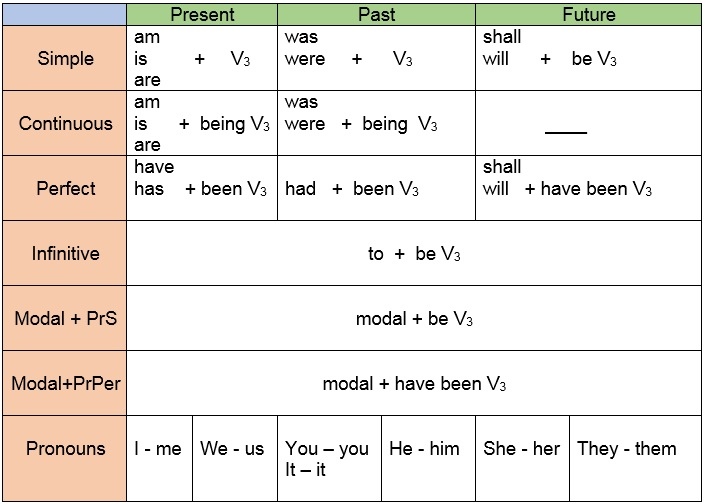
№7. Rewrite the sentences in the passive voice:
The company checks all equipment weekly. →
They must fix the broken guard immediately. →
The safety officer inspected the workshop yesterday. →
They will install new warning signs next week. →
Someone should report any near‑miss incident. →
The team has already completed the risk assessment. →
The mechanic checks the brake pads on every car. →
They test the suspension system after every major repair. →
The insurance company requires a full diagnostic report. →
Someone must replace the worn‑out filter before the next service. →
The workshop manager approves all safety modifications. →
| Type |
| If -clause | Main clause |
| 0th | описывают законы природы, общие истины, общеизвестные факты | If + S + V/Vs | S + V/Vs |
| 1st | описывают реальную или очень вероятную ситуацию в настоящем или будущем | If + S + V/Vs | S + will + V1 |
№8. Open the brackets using the 0th or 1st type of conditional sentences.
If the floor … (be) wet, we … (put) up a warning sign.
If a worker … (not wear) protective goggles, he … (risk) eye injury.
If you … (see) a damaged cable, you … (must/report) it to the supervisor.
If the fire alarm … (sound), everyone … (evacuate) immediately.
If the safety inspection … (find) a hazard, the team … (take) corrective action.
If the water pressure … (be) too high, it … (damage) the paint finish. (общий факт)
If a worker … (not use) gloves when handling chemicals, he … (risk) skin irritation. (правило/риск)
If you … (see) a frayed power cable in the bay, you … (must/report) it right away. (инструкция)
If the lift … (fail), the car … (fall) unless the safety lock engages. (закономерность)
If the supervisor … (notice) unsafe behavior, he … (give) a warning and retraining. (типичная реакция)
№9. Translate the phrasal verbs and insert them in the sentences:
carry out, put out, watch out for, clear up, set up, look into, top up, look over, pull over, wipe down, run through, sort out
Please … the spilled liquid before someone slips.
We need to … a new safety training session for new hires.
When working near heavy machinery, … moving parts.
The fire brigade managed to … the fire quickly.
The manager will … the cause of the accident.
Safety audits are … every quarter.
Before the customer leaves, the attendant … the dashboard and door panels to remove water spots.
The mechanic will … the car quickly to check for any obvious issues.
If the oil level is low, you need to … it before driving further.
The supervisor asks the team to … the safety checklist before starting the shift.
If a tire looks suspicious, ask the driver to … to the side for inspection.
The team needs to … the issue with the broken conveyor belt by the end of the day.
Lesson 11
Preventive maintenance
№1. Study the key terms and translate the sentences:
Preventive maintenance - planned, scheduled work to keep equipment/vehicles in good condition and avoid breakdowns.
Routine inspection - regular check of a vehicle or component to spot early signs of wear or damage.
Oil change - replacing old engine oil with fresh oil to reduce friction and protect the engine.
Filter replacement - changing air, oil, fuel, or cabin filters to keep the engine and interior clean.
Balance - ensuring the weight is evenly distributed around the wheel to prevent vibration and uneven wear.
Wear and tear - gradual damage and deterioration of parts due to normal use over time.
Play (in suspension/steering) - unwanted looseness or movement in a joint or component; indicates wear or damage.
Downtime - time when a vehicle or equipment is not operational due to repair or maintenance.
Brake pad wear - the degree to which brake pads have worn down; measured to ensure safe stopping performance.
Tire tread depth - the depth of the grooves on the tire surface; critical for grip and safety, especially in wet conditions.
Fluid levels - checking amounts of engine oil, brake fluid, transmission fluid, coolant, and power steering fluid.
Alignment - adjusting the angles of wheels so they are parallel and perpendicular to the car and road as specified by the manufacturer.
Corrosion - damage caused by oxidation (rust) on metal parts, often from moisture and road salt.
Tension - the tightness of a belt or cable; must be within manufacturer specs to work properly and avoid failure.
Overheating - when an engine or component reaches an unsafe high temperature, often due to cooling system issues.
Leak - an unintended escape of fluid (oil, coolant, brake fluid) from a hose, seal, or gasket.
№2. Fill in the gaps with the correct term:
During the … , the mechanic noticed a small crack on the hose.
The car needs an … because the current oil is too dirty and thick.
… is important to keep the cabin air clean and the engine running smoothly.
The vibration at high speed was fixed after the technician performed a … .
A broken compressor caused 3 days of … while the repair was done.
The … was measured at 2 mm below the safe limit for wet roads.
The … showed that the brake pads were down to 3 mm, so they needed replacement.
The … was off, causing uneven tire wear and poor handling.
The engine was … ; the radiator was clogged and couldn’t cool it down.
There was a … from the oil pan gasket, so the oil level kept dropping.
№3. Choose the correct term to complete the sentence
1. To reduce costly repairs, the garage follows a strict … program.
a) wear and tear b) preventive maintenance c) downtime
2. The technician measured … to decide if new tires were needed.
a) tire tread depth b) tension c) play
3. After the accident, the car was in … for two weeks while parts were ordered.
a) corrosion b) overheating c) downtime
4. A small … from the radiator could lead to overheating if not fixed.
a) alignment b) leak c) balance
5. … can be prevented by keeping metal parts clean and dry, especially in winter.
a) Corrosion b) Tension c) Fluid levels
6. The … of the drive belt must be just right: too loose and it slips, too tight and it wears out fast.
a) play b) wear and tear c) tension
7. During a … , mechanics look for early signs of damage before they become serious problems.
a) oil change b) routine inspection c) filter replacement
8. If the … is off, the car pulls to one side and tires wear unevenly.
a) alignment b) balance c) brake pad wear
9. … is a normal process; even the best parts get worn out after many miles.
a) Preventive maintenance b) Wear and tear c) Downtime
10. An … keeps the engine lubricated and reduces friction between moving parts.
a) oil change b) filter replacement c) alignment
№4. Divide the words into two groups and translate them: with the stress on the first and on the second syllable:
dictionary, preventive, maintenance, pollution, engine, corrosion, repair, produce, pressure, coolant.
№5. Read, translate the text “Few basic car maintenance tips” and answer the questions:
Preventive maintenance is important to keep your car safe. With proper care your car will last longer and some of the possible problems can be avoided. Well-maintained car is not only safer, it’s also more economical and produces less pollutions. If the car is well-maintained, you can expect higher price when you decide to sell it.
Regular oil changes are very important to keep your engine in a good shape. Wash your car regularly, wax it once in a while to keep the car body shiny and free from corrosion. Take care of any minor concerns as soon as you can, so it won’t cause serious problems and an expensive repair later. Avoid overheating the engine. Changing spark plugs, air filter, timing belt and other items according to maintenance schedule may save you from costly repairs. Use only original parts.
Why are regular oil changes important, according to the text?
What two things should you do to protect the car body from corrosion?
What risk does the text warn you to avoid regarding the engine?
What kind of parts does the text advise using?
How does regular washing and waxing connect to long‑term car maintenance, according to the passage?
№6. Say what the preventive maintenance includes. Make the list of tips how to help the car to last longer.
№7. Give the English equivalents to the word combinations and phrases:
Профилактическое обслуживание, время от времени, уберечь кузов от коррозии, вызывать серьёзные проблемы, содержать двигатель в хорошем состоянии, машина прослужит дольше, можно избежать проблем.
№8. Read the text and fill in the gaps with the words and word combinations:
pressure, plugs, filter, injectors, tune-up, oil, gas, warmed up.
Few tips how to improve emission test results
– Change the engine … before testing. For old or high mileage car using thicker oil may help.
– Change the spark … and the air … if you changed them a long time ago.
– Complete … may be an option for older cars.
– Flushing the fuel … usually helps.
Before the test:
– Check and adjust a tyre … .
– Fill the car with premium … .
– Make sure, the engine is fully … before test.
№9. Put the verbs in the correct tense: Present Simple / Present Continuous / Present Perfect
The service team … (follow) the manufacturer’s schedule strictly.
Right now, the mechanic … (check) the fluid levels and … (inspect) the brake lines.
We … (already / record) all findings in the vehicle’s service history.
This type of … (occur) gradually over time; it’s called wear and tear.
So far, the workshop … (reduce) downtime by 15 % thanks to preventive checks.
Technicians … (wear) PPE whenever they work under the car.
They … (just / discover) a small leak in the fuel line.
The workshop … (keep) a spare parts inventory to respond quickly.
Today, the team … (perform) a routine inspection on three vehicles.
Preventive maintenance … (help) avoid unexpected breakdowns.
Lesson 12
Lexical-grammatical exercises: verb forms
№1. Make the sentences negative and interrogative in Present Simple:
Employees wear protective helmets on the construction site.
We follow the safety guidelines strictly.
Machines turn off automatically during maintenance.
Workers report any hazards immediately.
The emergency exit stays clear at all times.
Safety training takes place once a year.
The company provides safety goggles for all staff.
№2. Make the sentences negative and interrogative in Past Simple:
They installed new warning signs two months ago.
The supervisor noticed a faulty cable during the inspection.
We attended the emergency drill last Friday.
The machine broke down because the guard was missing.
He forgot to wear his safety harness during the shift.
The company issued new safety protocols in 2023.
The accident happened due to a lack of training.
№3. Make 2 general, 2 special, 2 alternative, and 2 tag-questions:
We will conduct a safety workshop next month.
They will install additional lighting in the warehouse soon.
She will attend the occupational health course next year.
The team will test the emergency alarm system on Friday.
The company will introduce new safety standards soon.
He will check the expiration date of the fire extinguishers.
They will update the first aid kits next week.
The safety committee will propose new measures at the meeting.
№4. Read each situation and write: a) what the likely problem is, and
b) one preventive action that could have avoided or reduced it.
A car vibrates at 80 km/h; the driver ignored a small shake for months.
Problem: __________ Preventive action: __________
The engine overheated and the radiator was found to be clogged.
Problem: __________ Preventive action: __________
The brake pedal feels soft and the car takes longer to stop.
Problem: __________ Preventive action: __________
The underbody shows rust and flaking paint after two winters in a city with heavy salt.
Problem: __________ Preventive action: __________
A belt snapped and the alternator stopped working; the car died on the highway.
Problem: __________ Preventive action: __________
№5. Complete the sentences with the correct modal verb:
A mechanic … wear PPE when working under a car-safety rules require it.
You … ignore a warning light on the dashboard; it … indicate a serious problem.
If the tire tread depth is below 3 mm, you … replace the tires - it’s unsafe to drive with them.
The workshop … close for two days next week because they … repair the lift.
Drivers … check fluid levels regularly; it helps avoid many problems.
This noise … be caused by worn brake pads, but we need to inspect the car to be sure.
You … try to fix the cooling system yourself if you’re not trained—it’s risky.
Technicians … perform a routine inspection every 10 000 km according to the manufacturer’s schedule.
If the belt tension is too low, the engine … overheat because the water pump won’t work properly.
A customer … ask the mechanic to explain what preventive work is recommended for their car.
№6. Rewrite the sentences using a modal verb:
Example: It is necessary to check the brake pads regularly. → You must/should check the brake pads regularly.
It’s a good idea to follow the manufacturer’s maintenance schedule.
→ __________________________________________________________
It’s forbidden to work on a car without locking the wheels first.
→ __________________________________________________________
There’s a possibility that the vibration comes from unbalanced wheels.
→ __________________________________________________________
It isn’t necessary to change the cabin filter at every oil change.
→ __________________________________________________________
It’s possible to detect early signs of corrosion during a routine inspection.
→ __________________________________________________________
№7. Read the situation and write 3–4 sentences: 2 with should/shouldn’t (advice) and 2 with must/have to (obligations/requirements). Use at least 3 terms from the list: preventive maintenance, routine inspection, brake pad wear, tire tread depth, fluid levels, corrosion.
Situation 1: A driver has a 5‑year‑old car used daily in a city with heavy salt in winter. They’ve noticed a slight squeak when braking and a small vibration at high speed.
Situation 2: A delivery van is used heavily for long daily routes. The driver mentions that the engine sometimes runs hotter than usual, and the oil pressure light flickered briefly last week. The van is due for its 15 000 km service.
Situation 3: An older car (8 years) is mainly used for short city trips. The owner hasn’t done any major preventive work for over a year. Recently, they noticed a musty smell in the cabin and a slight rattle from under the car. The weather has been very wet lately.
№8. Scan the text to complete the following sentences. Use the terms: antifreeze / bottom / cooling system / fan / radiator
1. The primary job of the … is to cool the engine and to keep it from overheating.
2. is a mixture of water and ethylene glycol.
3. The coolant flows around the engine and then passes through the …
4. The cooled liquid leaves the radiator through the … hose.
5. The air is pulled by a …
Burning in the engine the fuel-air mixture produces energy. Most of this energy turns into heat. The primary job of the cooling system is to cool the engine and to keep it from overheating. The coolant used in most cars is a mixture of water and ethylene glycol called antifreeze. The coolant flows around the engine and then passes through the radiator. Then it passes through the water pump and flows around the engine again. There are some stages of the cooling process. First, the liquid flows around the engine. The engine is cooled and the liquid is heated. The hot water enters the radiator through the top hose. Then it flows down through the radiator and here it is cooled by air. The air is pulled by a fan. This fan is turned by a belt which is driven by the engine. The cooled liquid leaves the radiator through the bottom hose. The coolant is pumped around the engine again. Another important job of the cooling system is to allow the engine to heat up very quickly and then to keep the engine at a constant temperature.
№9. Read the dialogue and say if the statements are true (T) or false (F):
Mr. Davis: Hi, I’m here for the scheduled preventive maintenance check on my sedan.
Linda: Hello, Mr. Davis! We’ve got your car in the bay. Our mechanic is doing the routine inspection right now.
Mr. Davis: Great. I just want everything by the book—no surprises.
Linda: Absolutely. Preventive maintenance is all about avoiding surprises later. The mechanic must check fluid levels, tire tread depth, and brake pad wear today.
Mr. Davis: Should I be worried about anything specific? The car’s been making a faint rattle lately.
Linda: The technician should identify the source of the noise during the inspection. It might be something simple, like a loose bracket, but we mustn’t ignore it.
Mr. Davis: Fair enough. While they’re at it, they should also replace the cabin filter—I forgot to mention that earlier.
Linda: I’ll note that down. Filter replacement is a quick job and really improves cabin air quality.
Mr. Davis: Perfect. And please have them check for corrosion—I drive through salted roads every winter.
Linda: Definitely. We have to inspect the underbody in these conditions; catching corrosion early saves a lot of trouble later. I’ll tell the team to add that to the checklist.
Mr. Davis came to the service station to repair a broken engine.
Linda confirmed that the mechanic is currently doing a routine inspection.
Linda said the mechanic must check the car’s paint job and trim.
Mr. Davis mentioned that the car has been making a faint rattle lately.
Linda thinks the rattle is definitely caused by a serious engine problem.
Lesson 13
Preventive Car Maintenance: Instructions and Guide
№1. Read, translate the text and answer the questions:
Key Principles of Preventive Maintenance
Preventive maintenance (PM) is planned, scheduled work to keep vehicles in good condition and avoid unexpected breakdowns. Its main goals are:
to detect early signs of wear and damage;
to extend the life of components and the car overall;
to improve safety and reduce long-term repair costs.
Always follow the manufacturer’s schedule in the owner’s manual or service booklet. Intervals are usually based on mileage (e.g., every 7,500–15,000 km) or time (e.g., every 6–12 months), whichever comes first. For severe use (city traffic, towing, dusty roads), intervals should be shorter.
Basic Preventive Maintenance Guide (by Frequency)
Daily / Every Trip Checks
These take 2–3 minutes and can catch serious issues early:
Tire condition and pressure. Check for obvious damage (cuts, bulges) and measure pressure with a gauge. Low or uneven pressure increases wear and affects handling.
Lights. Test headlights, brake lights, turn signals, and hazard lights.
Fluids under the car. Look for puddles or stains that could indicate leaks (oil, coolant, brake fluid).
Windshield and wipers. Check for cracks and ensure wipers clear water without streaking.
Exterior and mirrors. Quick visual check for damage, missing trim, or blocked sensors/cameras.
Every 1–2 Weeks or ~500–1,000 km
Engine oil level. Use the dipstick when the engine is cold and the car is on level ground. Top up only if needed and use the grade specified by the manufacturer.
Coolant level. Check in the expansion tank (never open a hot radiator cap). The level should be between the “min” and “max” marks.
Brake fluid level. Low level can indicate worn pads or a leak; consult a mechanic if it’s consistently low.
Washer fluid. Keep it topped up, especially in colder weather (use winter fluid with antifreeze).
Every 5,000–7,500 km or 3–6 Months
Typical tasks at this interval:
Oil change and oil filter replacement. Fresh oil reduces friction and protects the engine; a new filter traps contaminants.
Air filter check/replacement. A dirty air filter reduces performance and fuel economy. Replace if visibly soiled or per schedule.
Cabin air filter check/replacement. Improves air quality inside the car and helps the HVAC system work efficiently.
Tire rotation. Rotating tires evens out wear and extends tire life. Follow the manufacturer’s rotation pattern.
Wheel balance check. If you feel vibrations at certain speeds, balancing may be needed.
Every 15,000–30,000 km or 12 Months
More comprehensive checks:
Brake inspection. Check pad thickness, rotor condition, and brake lines for leaks or corrosion.
Battery check. Inspect terminals for corrosion and test capacity; replace if weak or nearing its expected lifespan.
Suspension and steering components. Look for worn bushings, leaking shocks, or play in joints.
Belts and hoses. Inspect for cracks, fraying, or leaks; replace as recommended.
Fuel filter replacement. Ensures clean fuel reaches the engine and protects fuel injectors.
Every 40,000–60,000 km or 2 Years
Major fluid and system services:
Transmission fluid change or flush. Keeps gears shifting smoothly and prevents overheating.
Coolant flush and refill. Old coolant loses corrosion inhibitors; flushing removes debris and restores protection.
Differential fluid change. Protects gears and bearings in the drivetrain.
Power steering fluid check/change. Ensures smooth steering and protects seals.
Seasonal Checks (Twice a Year)
Adjust maintenance to the season:
Winter prep: Check battery, antifreeze concentration, wiper blades, and tire tread depth; consider winter tires if temperatures drop below 7°C.
Summer prep: Inspect AC performance, cabin filter, and cooling system; ensure the radiator and condenser are free of debris.
What are the main goals of preventive maintenance (PM) according to the text?
Why should drivers follow the manufacturer’s maintenance schedule, and what two factors are usually used to determine service intervals?
What should be checked when looking at fluids under the car, and what might puddles or stains indicate?
What components are inspected during a brake inspection at the 15,000–30,000 km interval, and what issue might a low brake fluid level point to?
What major fluid services are recommended every 40,000–60,000 km or every 2 years, and why is flushing the coolant important?
№2. True/False – decide if the statements are true or false according to the text:
Preventive maintenance is done only when a car shows clear signs of a problem.
Service intervals are based only on time (e.g., every 6–12 months), not on mileage.
For severe use (city traffic, towing, dusty roads), maintenance intervals should be shorter.
You should open the radiator cap while the engine is hot to check the coolant level.
A low brake fluid level can indicate either worn brake pads or a leak.
Tire rotation should follow the manufacturer’s pattern.
The coolant flush is recommended every 5,000–7,500 km.
№3. Match each task (1–8) with the correct purpose (a–h). One purpose is extra:
| Change engine oil and oil filter Rotate tires Flush and refill coolant Check brake fluid level Replace cabin air filter Inspect belts and hoses Check tire pressure daily Change transmission fluid | a) Prevents overheating and removes debris; restores corrosion protection. b) Ensures smooth gear shifts and prevents transmission overheating. c) Reduces friction, protects the engine, and traps contaminants. d) Improves interior air quality and HVAC efficiency. e) Evens out wear and extends tire life. f) Helps detect leaks or worn brake pads early. g) Prevents uneven wear and improves handling. h) Avoids severe engine damage from a broken belt. i) Prevents fuel injector damage. |
№4. Fill in the gaps with words from the text. Use these words: intervals, wear, leaks, rotation, flush, capacity, vibration, debris.
Low or uneven tire pressure increases ______ and affects handling.
Maintenance ______ are usually based on mileage or time.
Puddles or stains under the car could indicate ______.
Tire ______ evens out wear and extends tire life.
Old coolant loses corrosion inhibitors; flushing removes ______ and restores protection.
You should test the battery’s ______ and inspect terminals for corrosion.
If you feel ______ at certain speeds, wheel balancing may be needed.
A coolant ______ and refill is recommended every 40,000–60,000 km or 2 years.
№5. Match English sentences with Russian ones:
| a) The fuel tank leaks. b) The engine gets overheated from time to time. c) Abnormal oil consumption. d) Intake manifold has a hole in it. e) Jacket water has frozen. f) Flush the radiator. g) The carburettor has to be dismantled and cleaned. h) Blow through the fuel piping. i) The brake pedal has fallen through. j) Bleed the braking system. k) Adjust the hand brake. l) It doesn’t ignite. | 1) Повышенный расход масла. 2) В приёмной трубе (приемном коллекторе) дыра. 3) Промойте радиатор струёй воды. 4) Протекает бензобак. 5) Карбюратор нужно разобрать и почистить. 6) Время от времени двигатель перегревается. 7) Вода в охлаждающей рубашке замёрзла. 8) Тормозная педаль запала. 9) Продуйте топливную магистраль. 10) Отрегулируйте ручной тормоз. 11) Нет зажигания. 12) Прокачайте тормозную систему. |
№6. Give the English equivalents to the following words and word combinations.
Бак протекает, двигатель перегревается, расход масла, приемная труба (приемный коллектор), вода в охлаждающей рубашке, продуть, педаль западает, отрегулировать.
№7. Read the following text and fill in the gaps with the words: level, replace, plugs, adjust, forwards, faults, start, fill, clean, recharge, broken, repaired, replaced
Finding a fault in a car
If your car doesn’t … in the morning, you should check three things first: the battery, the fuel … and the spark … . It is easy to repair these … . If the battery is flat, you should … it. If this doesn’t work, you should … it. If the petrol tank is empty, … it up. If the spark plugs are dirty, … them, and if the gap in a spark plug is too narrow or too wide, … it to the correct width.
If your car doesn’t start, the petrol pump may be …, or the fuel pipe may be blocked. If the pump is broken, it must be … or replaced. If the fuel pipe is blocked, take it off and unblock it.
If there is a loud CLICK! When you turn the key, the starter motor may be jammed. If it is, you can try to release it by pushing the car … and backwards (in 2nd gear). If the car still doesn’t start, the starter motor should be repaired or … .
№8. Answer these questions:
1. You check the battery. It’s flat. You try to recharge it. It's still flat. What do you do next?
2. If the gap in a spark plug is too narrow, how do you adjust it? Do you widen it or make it narrower?
3. How do you know that the starter motor might be jammed? What do you hear?
4. You push the car forwards and backwards, but the starter still doesn’t work. What do you do now?
№9. Form the comparatives and superlatives of the following adjectives:
Example: easy – easier – the easiest
large, quick, useful, good, hot, tidy, far, serious, big, new
№10. Translate into English:
Виды профилактического обслуживания
Подходы к планированию работ могут различаться:
По календарному времени. Обслуживание проводится через фиксированные интервалы (например, ежемесячные проверки).
По наработке. Работы выполняются на основе фактического использования: количества отработанных часов, производственных циклов, пройденных километров.
По текущему состоянию. Основано на мониторинге состояния оборудования в реальном времени с помощью датчиков и диагностических инструментов. Обслуживание проводится только при выявлении признаков износа или риска отказа.
1







Вебинар для учителей

🎓 Свидетельство об участии ✨БЕСПЛАТНО!✨



