


Россия, р.п. Красные Баки


СДЕЛАЙТЕ СВОИ УРОКИ ЕЩЁ ЭФФЕКТИВНЕЕ, А ЖИЗНЬ СВОБОДНЕЕ
Благодаря готовым учебным материалам для работы в классе и дистанционно
Скидки до 50 % на комплекты
только до
Готовые ключевые этапы урока всегда будут у вас под рукой
Организационный момент
Проверка знаний
Объяснение материала
Закрепление изученного
Итоги урока

Была в сети 31.10.2026 19:58
Воронина Марина Владимировна
преподаватель английского и немецкого языка, преподаватель информатики
 91 619
 192

Местоположение
Специализация
Методические указания 2 курс 6 часть (ТОР) 2026
Категория:
Английский язык
07.05.2026 08:37

Просмотр содержимого документа
«Методические указания 2 курс 6 часть (ТОР) 2026»
МИНИСТЕРСТВО ЛЕСНОГО ХОЗЯЙСТВА
И ОХРАНЫ ОБЪЕКТОВ ЖИВОТНОГО МИРА НИЖЕГОРОДСКОЙ ОБЛАСТИ
Государственное бюджетное профессиональное
образовательное учреждение Нижегородской области
«КРАСНОБАКОВСКИЙ ЛЕСНОЙ КОЛЛЕДЖ»
(ГБПОУ НО «КБЛК»)
МЕТОДИЧЕСКИЕ УКАЗАНИЯ
по дисциплине «Иностранный язык
в профессиональной деятельности (Английский язык)»
для студентов II курса 6 часть
Тема 3.1. Чемпионаты. России по профессиональному мастерству. Демонстрационный экзамен
Тема 4.1. Чертежи и техническая документация
для специальности 23.02.07 Техническое обслуживание
и ремонт автотранспортных средств 
Разработали:
преподаватели иностранных языков
Воронина М.В.,
Булкина Т.А.
Красные Баки
2026
Lesson 1
WorldSkills Competition
№1. Read and translate the word family. Make up your own sentences with them:
| Compete | |||
| Competing | Competition | Competitor | Competitive |
№2. Answer the questions:
1) Do you take part in competitions?
2) Do you like to compete?
3) Are you competitive?
4) Have you ever taken part in professional competitions?
5) Can you translate the name of the competition?
6) Do you know anything about the WorldSkills contest?
№3. Guess and write what these words and phrases mean:
Competition results, global industry, information, initiator, motivate, socioeconomic transformation, competing spirit, convince, due to similarities, exchange, far-reaching goals, great, inspire, prospective employer, provide the opportunity, reflect, need, skills, succeed, suitable solution, technological, career, trade, vocational training
№4. Read the text and match its paragraphs to the titles. There is one extra title:
A. General Information
B. The History of the Worldskills Competition
C. The Idea Proves to Be Successful
D. Europe Gets in
E. The Aims of the Competition
1. The WorldSkills Competition is the biggest vocational education and skills excellence event in the world that truly reflects global industry. It is held every two years. The competitors demonstrate technical abilities and skills in 45 trades. They do specific tasks for which they study and / or perform in their workplace. They do it both individually and collectively.
2. One of the main goals of the WorldSkills Competition is to give importance to professional education, as one of the true tools of socioeconomic transformation. The Competition also provides leaders in the industry, government and educa tion with the opportunity to exchange information and best practices in different industries and professional education. New ideas and processes inspire school aged youth to technical and technological careers and towards a better future.
3. It was 1946, and there was a great need for skilled workers in Spain. Mr Jose Antonio Elola Olaso, who was General Director of OJE (Spanish Youth Organization), had an insight: it was necessary to convince youth, as well as their parents, teachers and prospective employers, that their future depended on an effective vocational training system. For this challenge, the most suitable solution was to organize a competition. So, young people's competing spiril would be aroused, adults would discuss the competition results and visitors would be able to see a great variety of trades being demonstrated.
4. But the initiators wanted much more than that. As a matter of fact, they had far-reaching goals: to motivate youth to compete, to make them enthusiastic about vocational training and to compare skills and abilities of people from different countries. Due to similarities in language, history and culture, contacts were made with Latin American countries to set up a joint International Competition. At first, these contacts did not succeed, but Portugal showed interest in the project. As a result, in 1953, at Spain's invitation, youth from Germany, Great Britain, France, Morocco and Switzerland took part in it for the first time.
№5. Answer the questions
1. Have you ever taken part in the WorldSkills Competition?
2. Would you like to take part in the Competition?
3. Is it exciting? Is it honourable?
4. What do you have to know to take part in the Competition?
5. What do you have to do in the Competition?
№6. Read the dialogue and say who is taking part in the conversation and where it is taking place:
— Hello.
— Hi.
— l am Benjamin from Canada. What country are you from?
— I am Alexander from Russia.
— Great. Are you taking part in an international competition for the first time?
— Yes, I am. And you?
— Me too. Exciting, isn’t it?
— It is. Have a good luck.
— Same to you. See you later.
№7. Complete the sentences using the given words: careers, competing spirit, competition, competitors, exchange, inspire, need, professional, provides, results, suitable, variety of trades, vocational
1. The WorldSkills Competition is the biggest ... education and skills competition for young people.
2. The ... demonstrate technical abilities and skills to do specific tasks.
3. The ... reflects global industry.
4. The Competition also ... the opportunity to ... information and best practices in different industries and ... education.
5. New ideas and processes ... school-aged youth to technical and technological ... and towards a better future.
6. After World War II, there was a great ... for skilled workers.
7. For this challenge, the most ... solution was to organize a competition.
8. Young people’s ... is aroused.
9. Adults discuss the Competition ...
10. Visitors can see a great ... being demonstrated.
№8. Match synonyms and translate them:
1) require a) take part in
2) select b) different
3) qualified c) choose
4) various d) support
5) participate e) need
6) help f) connect
7) join g) professional
8) complex h) hard
№9. Write out from ex.4 seven sentences with “to be”, define the tense and translate the sentences.
№10. Insert to be in Present, Past or Future Simple:
Ronald Wood … a director of the BB bank in Moscow. He … always on business trip. Yesterday he … in Paris. Tomorrow he … in London. Last week he … in Ottawa. Next week he … in Amsterdam. At the moment he … Moscow. He … with his family now. At the end of each trip he … always tired but pleased. He … glad to see his family. His children … excited and his wife … happy to see him at home again.
But in two days he … in Prague. How busy his life…!
№11. Write negative and interrogative sentences:
1) There is something important to deal with.
2) There are a few ways of solving this task.
3) There were some mistakes in his work.
4) There was some gasoline in the car.
5) There will be a lot of people at the conference.
№12. Write sentences in Past and Future Simple:
1) There are many advantages to being able to speak a foreign language
2) There is a meeting tonight.
3) There are several visitors in the gallery right now
4) There is 24 hour security service.
5) There is a map on the wall.
№13. Make negative sentences. Correct sentences:
Example: Milan is in Australia (Europe). Milan isn’t in Australia. It’s in Europe.
1) Vladimir Putin is a teacher (president). 2) The sun is cold (hot). 3) Milk is green (white). 4) A cow is a wild animal (domestic animal). 5) Oxford is in Russia (England).
Lesson 2
Reported Speech
№1. Study the material:
В английском языке употребление времени глагола-сказуемого в придаточном предложении зависит от времени глагола-сказуемого в главном предложении. Это называется правилом согласования времен.
Правило согласования времен заключается в следующем:
1) если в главном предложении глагол-сказуемое стоит в одной из форм настоящего или будущего времени, то глагол-сказуемое в придаточном предложении может стоять в любой временной форме, которая требуется по смыслу. Mum says, ‘Dinner is ready’. - Mum says that dinner is ready.
2) если в главном предложении глагол-сказуемое стоит в одной из форм прошедшего времени, то в придаточном предложении глагол-сказуемое нужно употреблять также в одной из форм прошедшего. He said, ‘I’m cold’. - He said that he was cold.
Переход от прямой речи к косвенной происходит так:
Сообщение
Прямая речь: Не said, “I go there.”
Косвенная речь: Не said (that) he went there.
Как видно из примера, знаки прямой речи (запятая и кавычки) отсутствуют и действует закон согласования времен.
Вопрос
Вопрос без вопросительного слова. Здесь используется союз if или whether, примерно соответствующие в русском языке частицы ли:
Прямая речь: Не asked, “Do you go there?”
Косвенная речь: He asked if they went there.
Здесь соблюдается прямой порядок слов (подлежащее стоит перед сказуемым), а также закон согласования времен.
Вопрос с вопросительным словом. В этом случае роль соединительного элемента играет само вопросительное слово. Здесь тоже соблюдаются прямой порядок слов и закон согласования времен:
Прямая речь: Не asked, “When do you go there?”
Косвенная речь: He asked when they went there.
Просьба или приказ
Поскольку в повелительном наклонении употребляется инфинитив (неопределенная форма глагола), то никакого согласования времен здесь нет:
| Прямая речь: | Не said to them, “Go there.” |
| Косвенная речь: | He told them to go there. |
| В отрицательной форме: |
|
| Прямая речь: | Не said to them, “Don’t go there.” |
| Косвенная речь: | He told them not to go there. |
Если время и место действия, указываемые в прямой речи, при обращении в косвенную речь изменились, то происходит замена наречий места и времени, а также указательных местоимений:
| Прямая речь | Косвенная речь |
| now | then |
| today | that day, at the time |
| tomorrow | the next day |
| the day after tomorrow | two days later, in two days’ time |
| yesterday | the day before, on the previous day |
| the day before yesterday | two days before |
| last night | (on) the previous night |
| ago | before |
| next year | the next year, the following year |
| last year | the previous year |
| here | there |
| this | that |
| these | those |
Если для косвенной речи время и место действия имеют то же значение, что и для прямой, то никакой замены делать не нужно. Например, если кто-либо сказал: “I’ll be here tomorrow” и для участников разговора слова здесь и завтра имеют тот же смысл, то не нужно менять их на там и на следующий день: Не said he would be here tomorrow.
Замену нужно делать лишь в том случае, если понятия завтра и здесь относятся уже к другому дню и месту: Не said he would be there the next day.
№2. Change the imperative sentences in reported speech using verbs ask, order, advise, remind, recommend, warn, implore.
Model: He said, “Open the door!” — He asked me to open the door.
He said, “Don’t go there!” — He ordered us not to go there.
1. He asked, “Close the door!”
2. The children ordered, “Read to us!”
3. She said, “Don’t laugh at him!”
4. The teacher asked, “Please give me a pen.”
5. Mother reminded, “Don’t be late for college.”
6. He advised, “Take the umbrella.”
7. She said, “Please help yourself.”
8. He said, “Don’t ask me this silly question again!”
9. She reminded, “Call me as soon as you can!”
10. Jane begged, “Help me, please”
№3. Change the positive sentences in reported speech using ask, order, advise, remind, recommend, warn, implore.
Model: She said, “He is my friend.” — She said that he was her friend.
1. Tom remarked, “I didn’t expect him to be so young.”
2. Jane muttered, “I am sorry I am late”.
3. Jean said, “My Dad will be fifty years old next year.”
4. Mother answered, “The children are playing in the garden.”
5. Sam told Boris, “It is raining outside. Take an umbrella.”
6. The teacher said in surprise, “Sorry to say, but you have got a bad mark for your test.”
7. Mike noted, “I called him a few days ago.”
8. Vlad explained, “I have had a flu, but now I am feeling much better.”
9. Lena told her friend, “I am going to the seaside for a holiday.”
10. His friend shouted, “It’s a lie!”
№4. Change the interrogative sentences in reported speech using ask, order, advise, remind, recommend, warn, implore.
Model: He asked, “When do you finish your work?” - He asked me when I finished my work. She asked, “Is everything ready?” - She asked if everything was ready.
1. He inquired, “Do you want to speak to me?”
2. She wondered, “When will they arrive?”
3. Mother asked in surprise, “Have you already done your homework?”
4. George inquired, “Are you sure that you are doing the right thing?”
5. The man asked, “When were you last in the Crimea?”
6. He wondered, “What are you laughing at?”
7. The boy asked, “Why were you so surprised?”
8. He asked, “Are you playing football with us today?”
9. She inquired, “Who will help me to do the washing up?”
10. Fred asked, “Did you write the answer to his previous letter?”
№5. Translate the sentences using the rules of reported speech:
Дэвид сказал, что его мама учитель.
Мы увидели, что дети играли в настольный теннис.
Она надеется, что я не буду работать по воскресеньям в следующем году.
Я не знала, что они сегодня заняты и не смогут мне помочь.
Я думал, что он болеет.
Мы надеялись, что они придут вовремя.
Я не знал, что его сестра учит немецкий язык.
Я была уверена, что они учили французский в школе.
Он уверен, что закончит работу до вечера.
Мой друг говорит, что уже перевел эту статью.
№6. Write these sentences in indirect speech, changing words where necessary:
1) “My parents are arriving tomorrow”, she said.
2) “I’ll see you tomorrow”, she said.
3) “We visited her this morning” they said.
4) “Do you like Marlon Brandon?”, she asked.
5) “Why did you take my wallet?”, he asked.
7) “Keep all the windows closed, Bill” they said.
8) “Make some coffee, Bob”, Carol said.
9) “Don’t take your coat off.”
10) “I don’t like this film”, she said.
№7. Read and translate the text. Write 4 forms for 5 irregular and 5 regular verbs:
The future exists for those who know how to do, who have the theoretical and practical knowledge of procedures. Millions of young people across the world have chosen the vocational training and qualifications path to get there. WorldSkills International believes above all in vocational education as a tool for development and social change. Through several initiatives it seeks to motivate young people, parents, teachers, employers and Experts to consider trends and create strategies for vocational education.
Every two years WorldSkills International promotes the biggest skills competition in the world. The WorldSkills Competition brings together young professionals and Experts from more than 60 countries/regions with a view to encourage the exchange of experiences and consequently the vocational education evolution. WorldSkills Competition is a competition based on motivation and recognition of young people's talent, an unparalleled opportunity of exchange for thousands of young people and Experts, a powerful tool of technical development for young people and the education systems of all countries/regions.
In 1950 the first International Competition was held with the participation of 12 young professionals from Spain and 12 from Portugal. In subsequent years the number of participating countries/regions has continuously increased. Today, WorldSkills International involves 67 Member countries/regions. WorldSkills Competition is:
the largest hands-on vocational education encounter with the highest standards of performance are presented to the world;
an activity that promotes the strengthening of the industry, trade and services of participating countries/regions;
an initiative held in cooperation and partnership among institutions, governments, and private initiative.
In 4 days of competition more than 1,000 young competitors plan and perform the tasks proposed in their trades for evaluation by Experts from all over the world.
Educators, students, and representatives from governments industry, trade and services sectors visit the workstations observing new talents and technologies.
Recognition is given to Competitors who always seek the greatest degree of perfection in the entire process at institutions and countries/regions that invest in vocational education. It is fundamental to make the world aware that vocational education is the most effective way to promote success for young people and their nations.
№8. Form new words using suffixes and write your own sentences with them:
practice, qualify, theory, compete, govern, profession, educate, develop, act, perform
Lesson 3
Types of cars. Parts of a car
№1. Match the words on the left with their transcriptions:
| saloon hatchback estate convertible van limousine | [kənˈvɜːtəbl] [ˈlɪməziːn] [səˈluːn] [væn] [ˈhæʧbæk] [ɪsˈteɪt] |
№2. Read the descriptions of different types of cars. Are they True or False?
Correct the false ones:
Mind: (BrE) estate car – (AmE) station wagon (автомобиль с грузопассажирским кузовом)
(BrE) saloon – (AmE) sedan
Off-road cars are also called four-by-fours.
The saloon car is a car that has a separate enclosed space for bags, cases.
The van car is a car with a roof which you can fold back or remove.
The hatchback car is a car with a door at the back that opens upwards.
The limousine car is a vehicle made for travelling over rough ground.
The estate car is a car with a lot of space for boxes.
The off-road car is a big expensive car, usually driven by a chauffeur.
The convertible car is a vehicle used for carrying goods which is covered and has metal sides, and is smaller than a truck.
№3. Write the type of the car which fit the descriptions:
Which car (s) …………
1. Is (are) best for families?
2. Is (are) best for single people in cities?
3. Is (are) best for going to the countryside?
4. Is (are) good for driving on bad roads?
5. Is (are) not suitable for large families?
6. Is (are) best for sunny and hot weather?
7. Is (are) ideal for small parking?
8. Is (are) good for transporting things?
9. Is (are) popular in Russia?
№4. Put in prepositions where necessary:
Vans have enough room … bags.
Off-road cars are especially good … rough roads.
Sports cars are very popular … young people.
In the limousine you have a lot … space.
Expensive cars are usually driven … chauffeurs.
Convertible cars are good … travelling in warm weather.
№5. Match the words on the left with their translation:
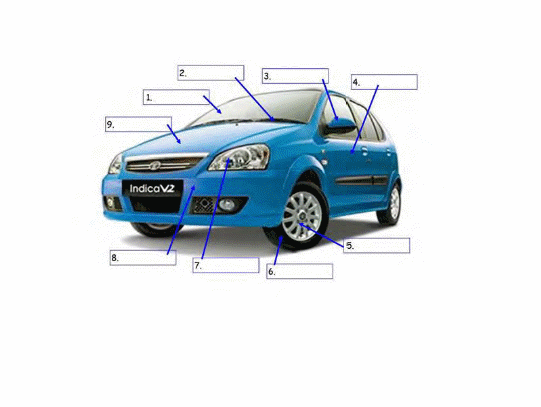
| a) windscreen wipers | 1) зеркало заднего вида |
| b) steering wheel | 2) багажник |
| c) speedometer | 3) бампер |
| d) turn signal | 4) рулевое колесо |
| e) windscreen | 5) указатель поворота |
| f) wing mirror | 6) кузов |
| g) number plate | 7) капот |
| h) tyre | 8) спидометр |
| i) bonnet | 9) номерной знак |
| j) bumper | 10) шина |
| k) boot | 11) ветровое стекло |
| l) body | 12) стеклоочиститель |
№6. Name the parts of the car
№7. Complete the sentences with the appropriate expressions, choose between: bumpers, boot, bonnet, seat belt, indicator, aerial, logo, sunroof, windscreen wipers, tires, badge
1. You open the bonnet to look at the engine.
2. The ____________ absorb small impacts in an accident.
3. Don’t forget to retract the ____________ before using the car wash.
4. Can you put my suitcase in the ____________, please?
5. When it starts raining, you need to switch on the ____________.
6. “What model is that?” “I don’t know I can’t see the ____________ from here.”
7. It is important to inflate the ____________ to correct the pressure for better fuel consumption.
8. The Mercedes star is a well-known ____________.
9. Open the ____________ and let some sun and fresh air into the car.
10. I wish all drivers would use their ____________ when they want to turn right or left!
11. Do not forget to fasten your ____________, it can save your life in case of an accident.
№8. Put these steps for changing a tyre in the correct order:
a) Remove the old tyre from under the vehicle and lower the vehicle.
b) Take the spare tyre out of the boot and make sure it is in good condition.
c) Check again to make sure the wheel nuts are tight.
d) Remove the tyre and put it under the vehicle, next to the jack.
e) Put the vehicle into gear (manual transmission) or park (automatic).
f) Use a jack to raise the vehicle.
g) Fit the spare tyre and tighten the wheel nuts.
h) Secure the opposite wheel to stop it moving.
i) Loosen the wheel nuts slightly.
j) Loosen the wheel nuts more and remove them.
№9. Answer the questions:
a) What is your favorite logo of the car?
b) What is your favorite color of cars?
c) Is it important to have car with GPS navigation system?
d) Do you like to have a lot of switches and gadgets in the car?
e) Would you want to have a car with air conditioning?
f) Will you have soft toys and cushions in the car?
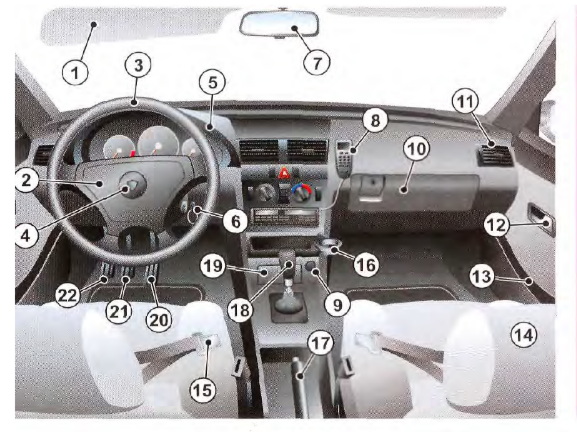
№10. Label the parts of car interior:
Accelerator, air vent, airbag, ashtray, brake pedal, handbrake, car seat (headrest), cigarette-lighter, clutch pedal, cup holder, dashboard, door handle, door tray, gearstick, glove-compartment, hands-free telephone, ignition, seat belt, rear-view mirror, steering wheel, sun visor
№11. Read and translate the text:
Here is our quick checklist for what to look for before you head off on your road trip:
1. Check The Fluids. Some of the fluids need to be changed depending on the mileage, so think about how many miles you have done since the last time. Then you can decide which might need replacing before you head off. The oil should be changed around every 3 – 5,000 miles so if you’ve had it changed already within that range your car should be fine. If not, then you should book it in for an oil change before you head off on your travels. Radiator fluid is essential as cars produce heat and if your fluid levels are too low you could face an overheating car while on your travels. Make sure it’s topped up before you hit the road. If your brakes feel spongy you might need a top up of your brake fluid. Be sure to book your car in to have this checked out before your road trip begins. The last thing you want is a brake failure.
Modern cars use power steering so it’s also worth making sure this is clean and not contaminated before you head off, as well as your gear transmission fluid. Both of these would need to be checked by a mechanic before you go. There is nothing worse than not being able to see clearly so make sure your windscreen cleaning fluid is topped up. If you are going on a long journey, take some with you in the boot. That way you can keep it topped up on the way.
2. Check the Tyres. Make sure your tyres are in top condition before you leave. It’s important they have adequate tread for the whole journey and make sure they are all inflated correctly. Tyres which are too low pressure or too high pressure can be dangerous and make it harder to control the car. Low pressure will result in your car using up more fuel, while high pressure could cause blowouts. If you are driving really long distance you might need to replace the tyres before you go, particularly if they are nearing the tread limit.
3. Check the Timing Belt. Check your timing belt to make sure it’s not aged and about to snap. If it needs replacing be sure to get this done before you head off. If your timing belt were to break you need to stop the car safely as quickly as possible to avoid damaging the engine.
4. Make Sure the Brakes Work. It goes without saying but you need your brakes to be in good working order before going anywhere, so make sure your brake pads are in good condition first. These pads wear away over time so make sure they are not worn low before you go.
5. Replace the Air Filters. Air filters can become clogged with dust and dirt and eventually stop working effectively which can have an effect on the way the engine works and how much fuel is used up. So it’s worth getting these changed before a long trip.
6. Check the Lights Work. Make sure all the lights are working properly. Take some spare bulbs in the car with you too, just in case you have any light bulb problems while on route. Don’t forget to check the headlights, indicators and brake lights.
7. Check the Belts and Hoses. Make sure all the belts are fitted tight and look for any cracks or missing teeth before you go. Also check the hoses to make sure there are no leaks. The last thing you want is for a hose to fail halfway to your holiday destination.
Heading off on a road trip should be a fabulous and exciting adventure so make sure your chosen car doesn’t let you down and turn your trip of a lifetime into a breakdown nightmare. By carrying out simple and routine checks to ensure every element of your car is in great working order before you go, you could save yourself expensive repairs and holiday heartache further down the road. Follow our checklist to make sure your car is in great condition before heading off on the trip of a lifetime this holiday season.
Lesson 4
Technical drawing
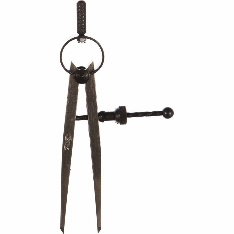
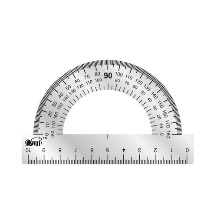
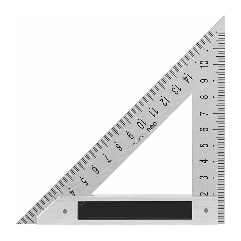
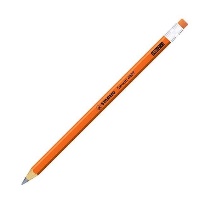
№1. Read the text about technical drawing and label the pictures:
Technical drawing, also known as drafting, is the act and discipline of composing plans. The main purpose of technical drawing is to describe or explain all the characteristics of a product, giving all the necessary information that will help a manufacturer to produce that component. The visual image should be accurate in terms of dimensions and proportions, and should provide an overall impression of what an object is or does. It is a precise task requiring a high level of skill and suitable engineering tools. A drafter is the person who makes a drawing and who requires a wide knowledge of geometry, trigonometry and spatial comprehension, and in all cases must be precise and accurate and give great attention to detail.
People who communicate with technical drawings use a visual language and technical standards that define practical symbols, perspectives and units of measurement. What are the tools and instruments used by a drafter in manual drafting? A T-square, a protractor, a compass, rulers, and triangles. Paper is also important and can be divided into layout paper, which is thin and fragile, and cartridge paper, which is heavier and more suitable for final drawings. Pencils used in drawing are graded from H to F depending on the hardness. The final drawing is made using a technical pen, graded according to the point, which must maintain the same line width. They are used with a range of stencils to add symbols, letters and patterns to the drawing. Rubbers remove pencils or pen writing when mistakes are found. Correction fluid is used to mask text errors.
|
|
|
|
|
|
|
| 1 | 2 | 3 | 4 | 5 | 6 |

№2. Read the text again and choose the correct answer:
1. Technical drawing is needed to ...
a) make a scale of the product.
b) practise pens, rulers and stencils.
c) let the manufacturer understand the requirements.
2. The drafter needs .. .
a) some paper and a pencil.
b) a wide range of technical instruments.
c) the final product.
3. Paper is chosen considering .. .
a) what sort of drawing the drafter is going to make.
b) the pencils he/she is going to use.
c) the drafter's preference.
4. Pencils are graded according to ...
a) hardness.
b) hardness and colour.
c) hardness and point.
5. A technical pen .. .
a) makes regular lines.
b) maintains the same line width .
c) draws lines of the same length .
6. When mistakes are found .. .
a) we can't correct them .
b) they're removed with correction fluid .
c) stencil can cover them.
№3. Read, translate the text and answer the questions:
Mechanical engineering is the application of physical principles to the creation of useful devices, objects and machines. Mechanical engineers use principles such as heat, force, and the conservation of mass and energy to analyze static and dynamic physical systems, in contributing to the design of things such as automobiles, aircraft, and other vehicles, heating and cooling systems, household appliances, industrial equipment and machinery, weapons systems, etc.
Mechanical engineers often create simulations of the operation of objects, as well as the manufacturing processes to be used, in order to optimize performance, cost effectiveness, and energy efficiencies, before settling on a particular design.
Engineering drawings of the objects to be fabricated are typically created. Prior to the late 20th Century most engineering drawings were drawn by hand with the aid of mechanical drafting boards. The advent of the digital computer with graphical user interface made the creation of models and drawings using Computer Aided Design (CAD) programs possible. Most CAD programs now permit creation of three-dimensional models which may be viewed from any angle. Such models may be used as the basis for Finite Element Analysis (FEA) of the design. Through the application of Computer Aided Manufacture (CAM), the models may also be used directly by software to create «instructions» for the manufacture of objects represented by the models, through computer numerically-controlled (CNC) machining or other automated processes, without the need for intermediate drawings.
Fundamental subjects of mechanical engineering include: heat transfer, fluid mechanics, solid mechanics, pneumatics, hydraulics and applied thermodynamics.
Related disciplines include: electrical engineering, industrial engineering, systems engineering, civil engineering, aerospace engineering, and other engineering disciplines.
1. What is mechanical engineering?
2. Which principles do mechanical engineers use?
3. What do mechanical engineers often create?
4. Are engineering drawings typically created?
5. How were drawings drawn prior to the late XX century?
6. What do CAD programs permit?
7. What do fundamental subjects of mechanical engineering include?
№4. Find Russian equivalents:
Vehicle, heating, cooling systems, household appliances, industrial equipment, machinery, weapons systems, to create, simulation, the manufacturing processes, to optimize performance, energy efficiencies, a particular design, prior to, drawings were drawn, by hand, with the aid of, mechanical drafting boards, the advent of, permit, the digital computer, permit, creation, three-dimensional models, may be viewed from any angle, possible, directly, intermediate drawings, heat transfer, fluid mechanics, solid mechanics, pneumatics, hydraulics, applied thermodynamics.
№5. Find English equivalents:
Машиностроение, применение, физические принципы, создание, полезные устройства, объекты и машины, тепло, сила, масса, энергия, анализировать, содействие, проектирование, самолет, домашние устройства, военные системы, оптимизировать характеристики, затраты, энергоэффективность, проект, вручную, при помощи, механические чертежные доски, чертеж, интерфейс, трехмерный, угол, основа, непосредственно, посредством, передача тепла, механика жидкости, механика твердых тел, пневматика, гидравлика, прикладная термодинамика, энергообеспечение, строительство.
№6. Say whether it is true or false, correct false ones:
1. Mechanical engineering is the application of chemical principles to the creation of useful devices, objects and machines.
2. Electrical engineers use principles such as heat, force, and the conservation of mass and energy to analyze static and dynamic physical systems.
3. Civil engineers often create simulations of the operation of objects.
4. Engineering drawings of the objects to be fabricated are typically created.
5. Most CAD programs now permit creation of four-dimensional models which may be viewed from any angle.
6. Fundamental subjects of mechanical engineering include: heat transfer, fluid mechanics, solid mechanics, pneumatics, hydraulics and applied thermodynamics.
№7. Read and complete the text with the words: creation, advantages, boards, drawings, software, defects, faster, instructions, traditional, reduce, modification, electronically
CAD/CAM systems
Drawing (1) … and manual drawing are not always precise and rapid: (2) … design is usually slow, especially in its revision and (3) … . For this reason manufacturing firms have replaced manual drawing with computer-aided design (CAD) to carry out functions related to design and production. This computer technology assists the designer in the (4) … , modification and analysis of a physical object. Nowadays computer (5) … can easily provide a three-dimensional drawing, which allows engineering designers to see how mechanical components may fit together without making models thus saving a lot of time. CAD is much (6) … and more accurate than manual drawing, designs can be quickly modified, reproduced and transmitted (7 ) … . Computer simulated analysis of the model helps experts find problems and (8) … without building prototypes, in this way saving a lot of money and time. When the design is ready, the CAD system can generate the detailed (9) … needed to start product manufacturing. When CAD systems are linked to manufacturing equipment controlled by computers, they form an integrated CAD/CAM system. Computer-aided manufacturing (CAM) offers significant (10) … over traditional approaches by controlling manufacturing equipment with computers instead of human labour. CAM converts the design of a component into computer language and it gives (11) … to the computer regarding machine operations.
Thanks to CAD/CAM systems it is possible to eliminate operator errors and (12) … manufacturing costs.
№8. Read the text again and match each sentence with its ending:
| 1. CAD helps designers 2. By using a CAD technology 3. Unlike manual drawing, CAD 4. CAD allows us to save 5. CAD designs can be 6. CAM is the use of computer software 7. The CAM system turns 8. CAD/CAM systems | a) seen from any angle and are easily manipulated. b) to draw, modify and correct designs. c) the design into computer language. d) defects can be easily found. e) provides three-dimensional drawings. f) time and money. g) minimise errors and manufacturing costs. h) to control machine tools in the manufacturing process. |
№9. Translate and transcribe the words:
to carry out, to replace, drafter, ruler, drafting, skill, to fit, technical drawing, hardness, to save, point, triangle, prototype, T-square, protractor, width, a three-dimensional drawing, the visual image, dimensions and proportions, a compass, measurement, layout paper, stencils, patterns
Lesson 5
If-clause
№1. Study the material:
| Вид | Значение | Придаточное предложение | Главное предложение |
| Zero conditional | Общеизвестные истины; научные факты; чьи-либо привычки; регулярно повторяющиеся действия.
| Present Simple V1 | Present Simple V1 |
| First conditional | Предположения и условия этого типа описывают явления, которые могут произойти в будущем или в настоящем времени. Они считаются реальными и вполне осуществимыми.
| Present Simple V1 | Future Simple will V1 |
| Second conditional | Предложения этого типа выражают предположения, относящиеся к настоящему или будущему времени, но при этом эти обстоятельства считаются невероятными или вероятными в очень малой степени.
| Past Simple V2 | Future-in-the-Past Simple would V1 |
| Third conditional | Предложения третьего типа условия отображают предполагаемые события в прошедшем времени, поэтому условия считаются нереальными и невыполнимыми.
| Past Perfect V3 | Future-in-the-Past Perfect would have V3 |
| Mixed conditional | В смешанных предложениях условие может относиться к будущему или к настоящему времени, а следствие выполнения условия – к прошедшему времени. Возможна и обратная ситуация. | Past Simple V2
Past Perfect V3 | Future-in-the-Past Perfect would have V3
Future-in-the-Past Simple would V1 |
№2. Open the brackets using Zero Conditionals or First Conditional:
When you … (eat) bad food, your health … (become) worse.
Tom always … (invite) a lot of friends, if he … (have) a birthday party.
Our teacher … (be) happy if we … (answer) all the questions correctly.
When I … (cook) salads, I … (use) only olive oil.
… (call) him tonight, if you … (find) his phone number.
Kate … (not pass) the exam, unless she … (work) hard.
He … (not see) her next year, if he … (not fly) to London.
If you … (study) well, you … (find) a good job.
№3. Open the brackets using the Conditional type 2:
I … (come) home if I … (be) you.
If I … (be) you, I … (forget) it as soon as possible.
I … (sell) the car immediately if it … (belong) to me.
If they … (hold) an election now, the Green Party … (win).
I … (go back) to this Italian restaurant if I … (like) pasta more.
If I … (understand) French, I … (do) the translation myself.
If they … (not doubt) his honesty, they … (let) him stay.
They … (employ) him if he … (be) more responsible.
If the old theatre … (close) there … (be) no other place to go in the town.
If the plane … (land) in the center of London, there … (be) mass panic.
№4. Rewrite the sentences in the Conditional type 2, 3:
If the roads are icy, the car accidents can happen.
If I am not tired I will play football in the evening.
I will take a bus if the traffic is not bad.
He will call me, if I forget to send him the parcel.
If I have a chance, I will do my best to get this position.
№5. Open the brackets using the Conditional type 0, 1, 2, 3:
If they … (work) hard last year, they … (earn) much money. But they didn’t.
Unless you … (go) to bed now, you … (be) tired in the morning.
If I … (be) you, I … (not spend) all my pocket money on cosmetics.
If my mum … (see) John, she … (tell) him the news.
I … (not be) late for work last week, if I … (wake up) earlier.
Sam can go out when he … (finish) his project.
If you … (freeze) water, it … (turn) to ice.
If he … (not know) the word, he always … (look) in a dictionary.
I … (come) for a walk with you next week, if you … (want) me to.
When she … (see) you tomorrow, she … (give) you a book.
№6. Continue the sentences:
If I had enough money ….
If I became famous..... .
I’ll stay at home if … .
I wouldn’t have come to the theatre on time if …
If I left home for work earlier ….
If I won a prize … .
If I were a king … .
If I told my parents the truth ….
If I were you ….
If I were rich ….
№7. Translate into English and define the conditional:
Я куплю хлеб, если магазин все еще будет открыт.
На твоем месте я бы последовал совету родителей.
Если мы приедем рано, будет не трудно купить билеты на концерт.
Если бы у меня было 5 тысяч евро, я бы отправился на Гаити.
Если бы мне не нужно было идти, я бы с удовольствием поболтал с тобой.
Тебе следует заняться чем-то новым, если тебе скучно.
Этот пирог был бы вкуснее, если бы ты добавил больше сахара.
Если бы у меня было больше друзей, я был бы счастливее.
№8. Answer about yourself:
1) How would you feel if it rained?
2) How would you feel if your friend didn’t tell the truth?
3) How would you feel if your mum was angry?
4) How would you feel if you played video games?
5) How would you feel if you dad was proud of you?
6) How would you feel if you played basketball?
7) How would you feel if it was snowing?
8) How would you feel if your teacher was happy?
9) How would you feel if you had five brothers?
10) How would you feel if you went to bed very late?
№9. Read and translate the text, make up the vocabulary of technical drawing equipment:
Technical drawings, graphic images and sketches can be created using a variety of instruments, ranging from traditional tools such as pencils, compasses, rulers and a variety of triangles as well as by computer. Drawing tools are used to make accurate and legible drawings and models. Whilst the computer can be used for most drawing and modeling requirements today, traditional drawing instruments such as those mentioned above are still important very important, particularly for freehand sketching and experimenting with shapes and lines. When drawing, sketching or attempting basic graphics work the pieces of equipment shown below are very useful and often essential.
|
| A protractor is used to measure angles. A typical protractor is a semicircular piece of plastic with 180 degrees printed around its curve. This piece of equipment is not only used in graphics for constructing accurate drawings but is also used in subjects like Mathematics. Also available for graphics is a full circle protractor which can be used to accurately measure angles greater than 180 degrees. |
|
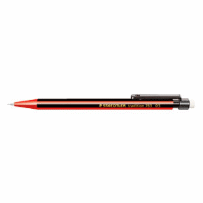
| A Mechanical pencil (sometimes known as a clutch pencil or refillable pencil) are used in drawings such as Orthogonal or Isometric drawings as they provide a very constant line thickness. The pencils come in a number of line thicknesses with the more common being 0.35, 0.5, and 0.7. These pencils can be very expensive as are the refills. |
|
| A compass (or pair of compasses) is a technical drawing instrument that can be used for drawing circles or arcs. As dividers, they can also be used as tools to measure distances, in particular on maps. Compasses can be used for mathematics, drafting, navigation, and other purposes. Compasses are usually made of metal and consist of two parts connected by a hinge. One part has a spike at its end which stops it from sliding on the paper when drawing a circle or arc, and the other part a pencil. The distance between the legs can be adjusted to allow the changing of the radius of the circle drawn. |
|
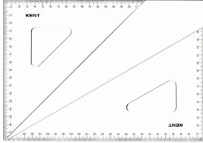
| Set Squares are used to draw accurate angles. The most common set squares are 45 degrees and 60/30 degrees. When using set squares they should always be used along with a T-Square. The Set-square rest on the straight edge of the T-Square and this ensures that the angle is drawn straight and with accuracy. |
|
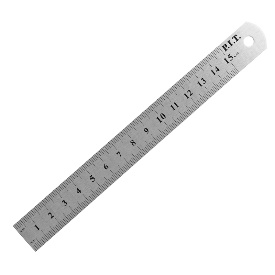
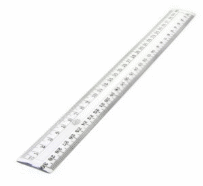
| A ruler is one of the most important pieces of drawing equipment. An opaque-type rulers should only to used to measure distances with lines being drawn with T-Squares and Set Squares. But it must be remembered that the edge of a ruler is not guaranteed to have a perfectly straight edge unlike a good T-Square or Set Square. Rulers used in technical drawing are usually made of polystyrene. Rulers come in two types according to the design of their edge. Straight edge can be used with lead and felt pens, whereas when technical pen is used the edge must be grooved to prevent the spread of the ink. |
|
| An eraser is used for erasing or rubbing out unwanted pencil lines on your drawings. They are often used with the aid of an erasing shield. |
|
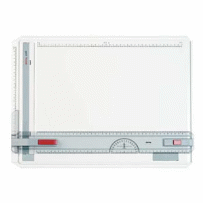
| A drawing board is a flat, smooth board on which to attach paper for making drawings or designs. Traditionally they are made of timber however modern day boards are constructed out of plastic. The board can be purchased in A4 size although they are more commonly found in schools as an A3 size format. |
|
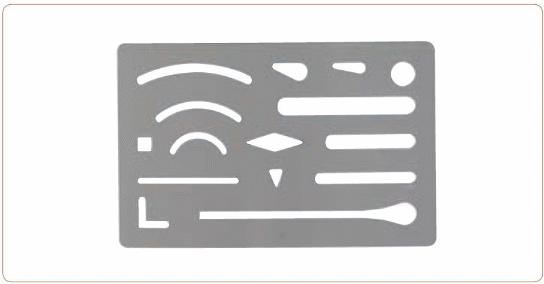
| The eraser shield is a simple metal or plastic plate, with openings of different sizes and shapes. These openings allow precise masking of small areas which allows you to erase without smearing or the accidental erasure of surrounding areas. An eraser shield is useful when correcting and editing a drawing. |



Lesson 6
Technological maps. Drawings
№1. Study and write the new words:
|
drawing (dwg) |
CAD (computer-aided design) |
scale drawing |
|
general arrangement dwg (GA) |
detail drawing |
schematic drawing (schematics) |
| plan view |
|
cross-section (section) |
|
exploded view |
two-dimensional (2D) |
three-dimensional (3D) |
|
oblique projection |
isometric projection
|
|
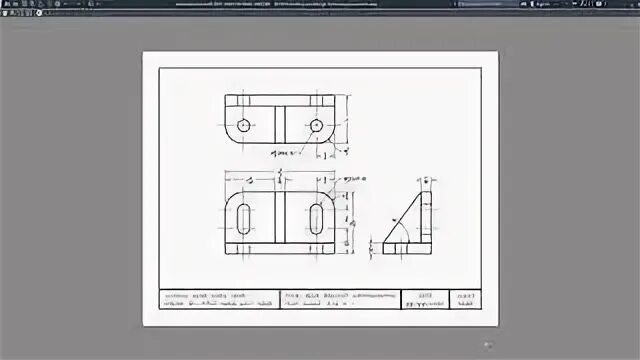

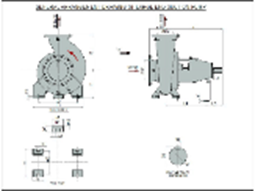

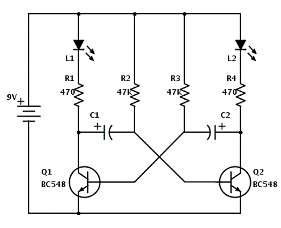

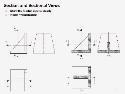
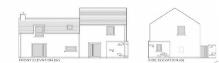 elevation
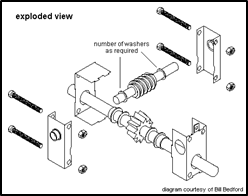


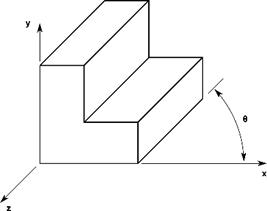
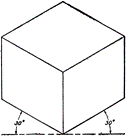
№2. Complete the sentences:
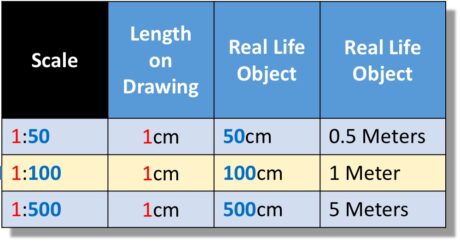
For engineering drawings, 1:5 is a commonly used … .
Whole machines or structures are shown on … drawings.
Electrical drawings don't usually show sizes. They're shown as … .
Most drawings are produced on computers, using … software.
№3. Write the full forms, in words, of the abbreviations and shortened terms below:
GA
CAD
dwg
3D
section
1:50
№4. Match the descriptions (1-6) with the names of views used on drawings (a-f):
a 2D view of the side of an object a) a plan
a 2D view inside an object, as if it is cut through b) a section
a 2D view, looking down on top of an object c) an isometric projection
a 3D view, showing an assembly taken to pieces d) an oblique projection
a 3D view, with the 2D face of the object at the front e) an exploded view
a 3D view, with a corner of the object at the front f) an elevation
№5. Complete the sentences, taken from conversations about drawings, using the words and abbreviations in the box:
3D detail elevation GA plan scale schematic section
We need a … through the bridge, showing the profile of the deck.
The only drawing we have is the …-… , which is 1:100, so it obviously doesn't show things in detail.
On drawing 12, there's a large … of the entire top deck of the ship.
This is the … showing the front face of the tower.
Modern CAD systems can produce … drawings that look almost as realistic as photographs.
We don't need dimensions and positions at this stage. We just need a … showing how many branches come off the main supply pipe.
We don't have a proper drawing. We've just got a rough sketch, which is not to
The fixings aren't shown on the 1:50 general arrangement. But there's a … , at 1:5, on drawing 42.
№6. Match the terms to the definitions:
Design brief – краткое описание
Concept – концепция, идея
Sketches – эскиз, набросок, черновик
Preliminary drawing – предварительный чертёж
Draft – версия
Current drawing – текущий чертёж, находящийся в процессе создания чертеж
Working drawing – рабочий чертёж, по которому ведётся производство
A description of design objectives -
A rough, hand-drawn illustration -
An initial diagram, requiring further development -
An overall design idea -
№7. Match synonyms to the verbs:
Amend, approve, circulate, issue, redesign, refine, revise, sign off, supersede
Change, improve, send out, distribute, accept, agree, replace
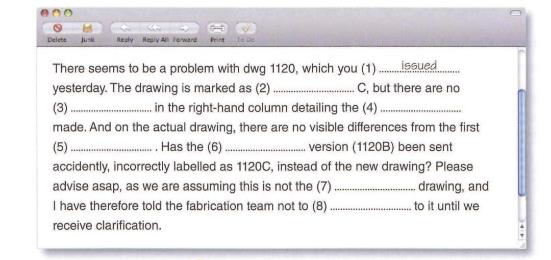
№8. Fill the gaps: amendment, current, draft, issue, note, revision, supersede, work
№9. Read and translate the text and answer the questions:
Manual drafting techniques involve the creation of technical drawings using physical instruments and media to achieve precise representations of objects, structures, or mechanisms, relying on the drafter's skill for accuracy and clarity. This method emphasizes hand-executed lines and annotations, often starting with preliminary sketches and progressing to detailed inked finals, to communicate engineering and architectural intentions effectively.
Essential tools for manual drafting include the drafting board, which provides a stable surface for securing paper; the T-square, used to draw horizontal lines parallel to the board's edge; and triangles (such as 30-60-90 or 45-45-90 degrees) for creating vertical and angled lines when combined with the T-square. Compasses enable the drawing of circles and arcs, while protractors measure and reproduce specific angles; French curves assist in rendering irregular curves smoothly. Mechanical pencils, available in various lead grades for different line thicknesses, are standard for initial line work, with erasers (including soft vinyl for clean removal without smudging) and ink pens for final revisions and permanent lines.
Common materials encompass high-quality drawing papers such as vellum, valued for its translucency and durability in revisions; tracing paper, ideal for overlays and modifications without altering the original; and blueprint paper (or diazo paper) for producing reproducible copies through light-sensitive processes. Scales, specialized rulers graduated in proportional units, are crucial for representing real-world dimensions accurately—for instance, a 1:50 scale in architectural drawings where 1 unit on paper equals 50 units in reality, allowing large structures to fit on standard sheets.
Key techniques begin with freehand sketching to capture initial concepts quickly, using light pencil strokes to outline proportions and forms without aids for fluidity. Straightedge-guided drawing follows, employing T-squares and triangles to produce precise, uniform lines that meet exacting standards for parallelism and perpendicularity. Shading, often applied through hatching (parallel lines) or cross-hatching to indicate material cross-sections or depth, adds visual clarity to distinguish features. The step-by-step process typically starts with a rough layout on grid or plain paper to establish overall composition, followed by detailed construction using scales and instruments, refinement of lines for consistency, and final inking for permanence before any shading or lettering.
Manual drafting offers advantages such as high tactile control, fostering a deep understanding of spatial relationships and proportions through direct manipulation of tools, which enhances visualization skills essential for engineering design. However, it is time-intensive, requiring significant manual effort for complex drawings, and prone to human errors like inconsistencies in line quality or measurement inaccuracies. Historically, these techniques dominated technical drawing until the widespread adoption of computer-aided design in the late 20th century, though they remain valuable for conceptual work and skill-building.
1) What does manual drafting involve?
2) What is a T‑square used for?
3) Which tools are used to draw vertical and angled lines?
4) What technique is used to quickly capture initial design concepts?
5) What are two main advantages of manual drafting according to the text?

Вебинар для учителей

🎓 Свидетельство об участии ✨БЕСПЛАТНО!✨



