


Россия, р.п. Красные Баки


СДЕЛАЙТЕ СВОИ УРОКИ ЕЩЁ ЭФФЕКТИВНЕЕ, А ЖИЗНЬ СВОБОДНЕЕ
Благодаря готовым учебным материалам для работы в классе и дистанционно
Скидки до 50 % на комплекты
только до
Готовые ключевые этапы урока всегда будут у вас под рукой
Организационный момент
Проверка знаний
Объяснение материала
Закрепление изученного
Итоги урока

Была в сети 31.10.2026 19:58

Воронина Марина Владимировна
преподаватель английского и немецкого языка, преподаватель информатики
 91 619
 192

Местоположение
Специализация
Методические указания 2 курс 5 часть (ЛЛХ) В мире искусств
Категория:
Английский язык
11.09.2025 13:00

Просмотр содержимого документа
«Методические указания 2 курс 5 часть (ЛЛХ) В мире искусств»
МИНИСТЕРСТВО ЛЕСНОГО ХОЗЯЙСТВА
И ОХРАНЫ ОБЪЕКТОВ ЖИВОТНОГО МИРА НИЖЕГОРОДСКОЙ ОБЛАСТИ
Государственное бюджетное профессиональное
образовательное учреждение Нижегородской области
«КРАСНОБАКОВСКИЙ ЛЕСНОЙ КОЛЛЕДЖ»
(ГБПОУ НО «КБЛК»)
МЕТОДИЧЕСКИЕ УКАЗАНИЯ
к курсу английского языка
для студентов II курса
«В мире искусства»
для специальности 35.02.01 Лесное и лесопарковое хозяйство
Составили:
преподаватели
иностранного языка
Воронина М.В.,
Булкина Т.А.
Красные Баки
2025 год
Lesson 1
Museums, galleries, exhibitions
1. Let’s remember about famous sights of the world. Translate them and write the country:
State Hermitage, Smithsonian, the Louvre, the British Museum, the new Acropolis Museum, Uffizi Gallery, Tretyakov Gallery, the metropolitan museum of Art, the Vatican Museums, the Prado, National Gallery.
2. Match the words to make up names and phrases:
1. Princess a) Franklin
2. Dr Philipe b) of Caribbean
3. Benjamin c) Tussaud
4. Pirates d) Curtius
5. Chamber e) Diana
6. Madam f) of Horrors
3. Use the words in brackets (1-10) in the correct form to complete the gaps. Translate the words in bold:
Where in the world can you bump into Princess Diana, meet David and Victoria Beckham or gaze into Charlie Chaplin’s eyes? Only at Madame Tussauds, the London landmark that's been 1)........... (pull) in the crowds since 1835. Getting up close and personal with life-sized wax models of the 2)......... (fame) is a feature of many family holidays to the capital, and having a model of yourself in the museum 3)........ (have) become a symbol of success for those who seek celebrity.
The story began in 1777 when Madame Tussaud learned the art of wax modelling from Dr Philippe Curtius while 4)......... (work) as his housekeeper. Living in Paris, Tussaud's early models, which included Voltaire, Rousseau and Benjamin Franklin, were a great success, but when her exhibition moved to England in 1802 she was 5)........... (able) to return because of the Franco-English war. Eventually, the exhibition settled in London and it's been a major tourist 6)......... (attract) ever since.
In 1958, Madame Tussauds 7).............. (add) to its attractions with a planetarium which continues to take audiences on a voyage among the stars. Today Madame Tussauds offers a state-of-the-art experience with 8)............... (interact) exhibitions designed to give 9)...... (visit) the feeling that they can be anything from rock stars to world-famous footballers. Those who want to test their courage can explore the Chamber of Horrors while the more 10).......... (adventure) can take a cruise with the Pirates of the Caribbean. Madame Tussauds has a fantasy for everyone.
4. Guess the words and unscramble them.
1) The story began in 1877 when Madame Tussaud learned the art of wax dolmenlgin from Dr Philippe Curtius.
2) Living in Paris, Tussaud’s early models, which ucdnilde Voltaire, Rousseau and Benjamin Franklin, were a great success.
3) Eventually, the exhibition destetl in London.
5. Guess the prepositions and fill in the gaps.
Where … (1) the world can you bump … (2) Princess Diana, meet David and Victoria Beckham or gaze … (3) Charlie Chaplin’s eyes? Only … (4) Madame Tussauds, the London landmark that’s been pulling … (5) the crowds … (6) 1835.
6. Complete the sentences using the best answer.
Today Madame Tussauds ___ (1) a state – of – the – art experience with ______(2) exhibitions designed to give _____ (3) the feelings that they can be ____ (4) from rock stars to world-famous footballers. Those who want to test their _________ (5) can explore the _____ (6) of Horrors while the more ____ (7) can take a cruise with the ________(8) of the Caribbean. Madam Tussauds ____ (9) a fantasy for ______ (10).
1) a. offered b. offers c. will be offered d. would offer
2) a. interact b. interacted c. interactive d. uninterective
3) a. visit b. visiting c. visitor d. visitors
4) a. anything b. any c. some d. nothing
5) a. love b. courage c. kindness d. politeness
6) a. House b. Room c. Flat d. Chamber
7) a. adventure b. adventures c. adventurous d. adventurousness
8) a. Pirates b. Children c. Solders d. Men
9) a. have b. has c. hasn’t d. had
10) a. no one b. nobody c. everyone d. anybody
7. Choose the right answer
The story_____ (1) (begin/begun/ began) in 1777 when Madame Tussaud ___(2) (to learn/ learned/ learns) the art of ______(3) (sand/water/wax) modelling from Dr Philippe_______(4) (Smith/Curtius/Brown) while working as his ______(5) (worker/nurse/housekeeper).
8. Make up sentences from the following words
1) London/is/Madame/wax/a/museum/in/Tussauds.
2) branches/It/the/has/world/around.
3) Marie/was/It/ founded/by/sculptor/Tussaud/wax.
4) Tussauds/attraction/Madame/in/tourist/a/is/ London/ major.
9. Answer the questions?
1.Where is Museum of Madame Tussauds situated?
2. When did the story of museum begin?
3. Who did Madame Tussaud learn the art of wax modelling from?
4. Why was she unable to return her exhibition from London to Paris in 1802?
5. When did she add a planetarium?
Lesson 2
Lexical exercises
1. Read and translate the text:
 Last Saturday, I went to the British Museum in London with my friends, Vicky and Helen. We arrived at 10 o’clock and bought a guidebook. It was £5.00. We visited the Egyptian rooms first. We saw the tombs of Egyptian kings and queens, and learned all about life in Ancient Egypt. Then we watched a video about sport in Ancient Greece. The Olympic games started in Greece about 3,000 years ago. Olympic athletes were really strong. They trained for 10 months before the games and ate special food.
After lunch, we went to the shop. Vicky bought a T-shirt with some Greek writing on it. Helen bought some pens and pencils. I bought a book about Egyptian queens. It was a really good day.
2. Are the sentences True (T) or False (F)? Correct the false sentences.
1. The guidebook was £4.00.
2. They went to the Egyptian rooms first.
3. They saw a video about Roman food.
4. They went to the shop before lunch.
5. Helen bought some pencils.
3. Complete the sentences.
1. Donna and her friends arrived at the museum at ______.
2. They went to the Egyptian rooms and then they saw a video about ____ in Ancient
Greece.
3. Before the Olympic games, the athletes trained for _______.
4. Vicky bought a ________ with some Greek writing on it.
5. Donna bought a book about _______.
4. Match the words with their definitions:
| 1. museum | a) a room or building that is used for showing works of art, sometimes so that they can be sold |
| 2. exhibition | b) a building where objects of historical, scientific, or artistic interest are kept |
| 3. gallery | c) an occasion when objects are shown to the public |
| 4. collection | d) an object that is made by a person, such as a tool or a decoration, especially one that is of historical interest |
| 5. artefact | e) a group of objects of one type that have been collected by one person or in one place |
5. What are:
- the most famous museums in the USA?
- the most famous museums in France?
- the most famous museums in Russia?
- the most famous museums in Germany?
- the most famous museums in Portugal?
- the most famous museums in Italy?
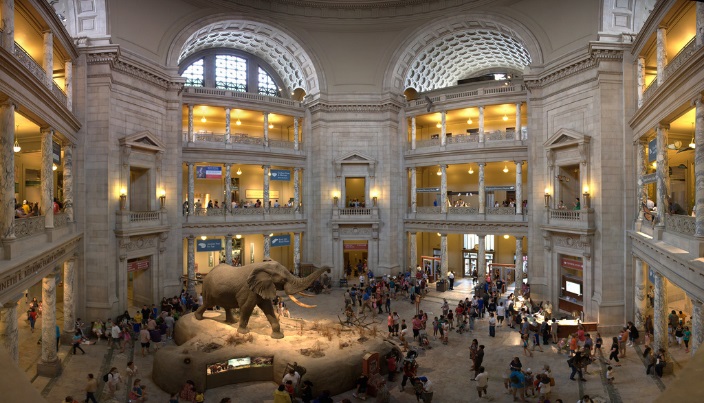

the Smithsonian Institution the Louvre

 The State Hermitage Museum / BMW Museum / Coach Museum in Lisbon / Juliet's House Verona
6. Visit the site of Sherlock Holmes Museum (https://www.sherlock-holmes.co.uk/)
and answer the questions:
What’s the exact address of the museum?
How much is a ticket for a 17-year-old student?
How much is a ticket for a 10-year-old child?
Is the museum open now?
Which park is near the museum?
Which Tube station is near the museum?
Who is the writer of Sherlock Holmes stories?
How many floors does the Georgian townhouse have?
How many armchairs are there in front of the fireplace?
How many pictures are there on the wall?
Lesson 3
Theater
1. New words
the Drama Theatre- драматический театр
the Opera Theatre- оперный театр
the Comedy Theatre- театр комедии
the Puppet Theatre- кукольный театр
the Philharmonic Society - филармония
matinee- утренний спектакль
box- office- касса (театральная)
cloak- room- гардероб
stage - сцена
pit- амфитеатр
stalls- партер
dress circle - бельэтаж
scenery- декорации
company- труппа (все актеры, работающие в театре)
the curtain rises- занавес поднимается
the curtain falls- занавес отпускается
to book seats- заказать билеты
to be success- пользоваться успехом
to be at one’s worst- играть плохо
to do (to show) a new play- ставить новую пьесу
2 Read the text
There are not many theatres in my town but they are all very popular with the public. I am a theatre lover. As for me, I prefer drama to all other theatres, but I like opera and musical comedy, too.
I’ll never forget my first visit to the Opera and Ballet Theatre. My friend and I wanted to see the famous ballet Swan Lake by Tchaikovsky. We bought the tickets in advance and came to the theatre half an hour before the show. At 7 sharp the performance began. From the very first minute I was deeply impressed by everything I saw on the stage. The costumes were fine. The dancing and music was thrilling. The ballet seemed to me a fairly- tale. I had never seen anything more wonderful. My friend also enjoyed every minute of it.
When the curtains fell at the end of the performance there a storm of applause was coming. It seemed that it would never end. The dancers were presented with large bouquets of flowers. We also applauded enthusiastically. The performance was a great success.
3. Answer the questions:
1. Are you a theatre fan?
2. How often do you go to the theatre?
3. What would you like to prefer evening performances or matinees?
4. What an opera singer do you know?
5. What kinds of theatres are there in Nizhniy Novgorod?
6. What are the most popular theatres nowadays?
7. Do you prefer to buy tickets at the box-officer or to book them by phone?
8. Where do spectators leave their coats and hats?
4. Insert prepositions and post verbal adverbs wherever necessary.
1. His plays are very popular … the public. He touches … serious social problems … his plays. Besides, he is a great master … intrigue.
2. Where are our seats? – … the orchestra stalls, … the seventh row.
3. Who is … the cast today?
4. Nick was … his best tonight.
5. They say it’s not easy to get tickets … this play. Let’s try to book seats … telephone.
6. Would you like to go … the theatre tonight?
7. Let’s take opera-glasses, our seats are … the balcony.
5. Fill in the table “Famous theatres”
| Theatre | City | Country |
| Bolshoi Theatre |
|
|
| Covent Garden |
|
|
| Sydney Opera House |
|
|
| La Scala |
|
|
| The Metropolitan Opera House |
|
|
| Teatro Colon |
|
|
| The Palais Garnier |
|
|
Lesson 4
Lexical exercises
1. Give their Russian equivalents.
Entertainment, audience, essentials, vaudeville, origin, myth, ritual, ceremony, society, scenery, persuade, laughter, applause, auditorium, authoritarian regime, incomprehensible, choreography.
2. Insert prepositions where is it necessary:
1. Our theatre is... the centre of the city.
2. When you go... you see the box-office.
3. An attendant shows us... our seats.
4. The boxes and the dress-circle are... the next floor.
5. Shows start... 7.30 p.m.
6. The spectators take... their coats and leave them... the cloak-room.
7. The stage is... the place where the orchestra sits.
8. The lights in the hall go....
9. There are intervals... the acts.
10. The spectators walk in the foyer... intervals.
11. After the last act the spectators rise... their seats.
3. Arrange the words into synonymic pairs:
drama, lobby, attendant, tragedy, foyer, spectator, troupe, onlooker, company, interval, intermission, break, ticket-collector, inspector.
4. Arrange the words into antonymic pairs.
comedy, balcony, tragedy, to hiss, to applaud, interval, spectator, drama, pit, orchestra, stalls, actor, pit stalls, act.
5. Match the English and Russian words.
1. matinee a. декорации
2. scenery b. состав исполнителей
3. company c. задние ряды
4. cast d. контролер, билетер
5. dress-circle e. раздевалка
6. box f. билетная касса
7. pit stalls g. фойе
8. orchesta stalls h. первые ряды партера
9. attendant i. ложа
10. cloak-room j. бельэтаж
11. box-office k. дневной спектакль
12. foyer l. труппа
6. Translate from Russian into English:
1. Наш театр ставит драмы, трагедии и комедии.
2. Если вы хотите пойти в театр, вы должны купить билеты в театральной кассе.
3. Зрители оставляют верхнюю одежду в раздевалке.
4. Билетер продает программки и показывает зрителям их места.
5. Спектакли обычно начинаются в 7 вечера.
6. Впереди перед зрителями находится место, где располагается оркестр, а над ним – сцена.
7. Поднимается занавес, огни в зале медленно гаснут и начинается пьеса.
8. Если актеры играют хорошо, то зрители аплодируют.
9. Между действиями пьесы есть антракты, во время которых зрители прогуливаются в фойе, обсуждая игру актеров.
10. Когда занавес опускается после последнего действия, раздается буря аплодисментов.
7. Read and translate the text:
A theatre is a building where plays, operas or ballets are performed. It has a stage for the actors and an auditorium for the audience. Thus the auditorium is the part of a theatre where the audience sits.
The stage is raised several feet above the floor of the auditorium. At the sides of the stage are wings. The curtain separates the stage from the auditorium. The curtain is dropped or lowered between the scenes or acts of a play (an opera). While the curtain is down, the workers on the stage (called “stage hands”) can change the scenery and prepare the stage for the next part of the performance. Several doors separate the foyer from the seating area.
Each person in a large audience can see the actors on the stage without discomfort as the back part of the auditorium is several feet higher than the front part, so that the seats are on a slope.
Above the ground floor there are generally several curved balconies with even steeper slopes of seats. Seats in the stalls are those near the stage on the ground floor. Seats in the first rows of the stalls are called orchestra stalls. Seats behind the stalls are known as the pit. This is the worst part of the English theatre. Next comes the dress circle, i.e. rows of seats higher up above the stalls and further back in the theatre.
Above the dress circle, a little higher up, there is the balcony or upper circle, as it is often called. Highest of all is the gallery. Then there are also boxes in each tier of the theatre. It takes quite a number of people to put on a play. The treatment of a play, the style of the production, the training of the performers depends on the director (who is also called by some people “producer” in G.B.). The stage manager is the person in charge of the technical part of the production of a play. There are also make-up artists, people who make the costumes, those who design the props and scenery, and, finally, stage hands.
The actors taking part in the play, are called the cast
Lesson 5
Movies. Cinema.
1. Choose the right variant:
1. ‘Script’ means
a) an idea
b) a written story
c) negation
2. ‘Screenplay’ means
a) a written text
b) a discussion
c) a game
3. ‘Genre’ means
a) a film
b) a modern movie
c) a kind of movie
4. ‘Cast’ means
a) people
b) children
c) all the actors in the film
5. ‘Character’ means
a) a man
b) an individual played by the actor
c) a woman
6. ‘Soundtrack’ means
a) songs with no words
b) all the songs in a movie
c) a set of ten songs
7. ‘Role’ means
a) a character in a movie
b) a love affair
c) a message
8. ‘Subtitles’ means
a) a song
b) the translation of the film on the screen
c) a dialogue
9. ‘A-list’ means
a) the best
b) the poorest
c) the worst
10. ‘Celebrities’ means
a) rich people
b) old people
c) famous people
11. ‘Tale’ means
a) an accident
b) a story
c) a movie
12. ‘Masterpiece’ means
a) an old movie
b) a movie with a strong idea
c) a great work of art
13. ‘Thriller’ means
a) an exciting movie
b) a detective movie
c) a dull movie
14. ‘Horror’ means
a) funny
b) frightening
c) dull
15. ‘Blockbuster’ means
a) a big failure of the film
b) a nice movie
c) a successful movie
16. ‘Western’ means
a) a life in the19th century in the American West
b) a criminal
c) a new film
17. ‘A newsreel’ means
a) an old film
b) a cinema film of news
c) a funny film
18. ‘Melodrama’ means
a) a film about animals
b) an awful film
c) a film with sudden events
19. ‘Box office’ means
a) music shop
b) the movie charts
c) the cinema
20. ‘Movie buff’ means
a) a film lover
b) a music lover
c) a person who hates films
21. ‘Sequel’ means
a) a police movie
b a gambling movie
c) a movie that follows a previous movie
22. ‘Animated’ means
a) cartoon-style
b) exciting
c) black-and-white
23. ‘Critics’ means
a) people who like things
b) television people
c) people who write reviews
2. What people do shoot the films?
| 1. An operator 2. An actor 3. A costume designer 4. A make-up 5. A sound operator 6. A director 7. A producer 8. A script writer |
is a person who | a) … is the boss and tells everybody what to do. b) …operates the camera. c) … operates the microphones during the filming. d)… acts in a film. e) … prepares costumes: dresses, suits for films. f) … can make a new face for an actor. g) … has general control of the money for a film. h) … writes scripts for films. |
3. What is the genre of this film?
| 1. Western 2. Fantasy
3. Thriller 4. Comedy 5. Horror 6. Cartoon 7. Musical |
is | a) a film with lots of music and dance. b) a film in which unnatural and frightening things happen, such as dead people coming to life, people turning into animals, etc. c) an action – film about cowboys, horses and gunfights. d) a film about space travel or life in an imaginary future. e) a film made by funny pictures. f) an action film full of violence and crime. g) a touching film with a happy ending. |
4. What are the names of the most famous directors?
| 1. Woody 2. Nikita 3. Alfred 4. Sergey 5. Andrei 6. Steven 7. Federico 8. Alexander 9. Vladimir | a. Spielberg b. Bondarchuk c. Allen d. Tarkovsky e. Mihalkov f. Hitchcock g. Fellini h. Rou i. Menshov |
5. Do you know American cinema?
| 1. Terminator
2. Sylvester Stallone 3. James Bond
4. The Chronicle of Narnia 5. Shrek
6. Cruella de Vill 7. King Kong
8. Zorro | a) The cartoon about green monster who falls in love to princess. b) An evil woman from Disney’s film about 101 dogs. c) A film about giant monster who died on the top of Empire State Building d) An actor with image of super hero from films “Rambo’ and “Rocky” e) A great blockbuster about famous spy called agent 007. f) A hero in mask with a sword who helps needy people g) This film is about unrealistic struggle people and machines or robots who want destroy future. h) The adventure of four children in a fairy land where they become kings and queen. |
6. Match the genres and their definitions.
| 1. comedy | a. a full-length film that has a story and is acted by professional actors, and which is usually shown in a cinema |
| 2. musical | b. a film about members of a violent group of criminals |
| 3. tearjecker | c. a film that inspires horror and fear |
| 4. thriller | d. a film that is intended to be funny, usually with a happy ending |
| 5. gangster film | e. a film dealing with real events in history |
| 6. horror film | f. a short film of news that was shown in cinemas in the past |
| 7. secret agent film | g. a women’s film that moves one to tears |
| 8. tragedy | h. a film made by photographing a series of drawings |
| 9. historical film | i. a film that tells a long story about brave actions and exciting events |
| 10. epic film | j. a film of popular science events |
| 11. war film | k. a film or a television programme that gives detailed information about a particular subject |
| 12. documentary | l. a film in which part or all of the story is told using songs and often dancing |
| 13. newsreel | m. a film that tells an exciting story about murder or crime |
| 14. popular science | n. a film about spies, detectives |
| 15. animated cartoon | o. a very sad film, that shocks people because it involves death |
| 16. feature film | p. a film about war |
7. Give 5 words for each category.
Favourite films:
People of a film:
Cinema companies:
Actors and actresses:
8. Write films for every genre:
comedy, fantasy, adventure, action, detective, cartoon
9. Match the adjectives to their antonyms:
1. moving A. comic
2. historical B. active
3. spectacular C. unemotional
4. gripping D. calming
5. entertaining E. contemporary
6. violent F. dull
7. serious G. peaceful
8. slow H. ordinary
9. scary I. funny
10. tragic J. boring

Вебинар для учителей

🎓 Свидетельство об участии ✨БЕСПЛАТНО!✨



