


Россия, р.п. Красные Баки


СДЕЛАЙТЕ СВОИ УРОКИ ЕЩЁ ЭФФЕКТИВНЕЕ, А ЖИЗНЬ СВОБОДНЕЕ
Благодаря готовым учебным материалам для работы в классе и дистанционно
Скидки до 50 % на комплекты
только до
Готовые ключевые этапы урока всегда будут у вас под рукой
Организационный момент
Проверка знаний
Объяснение материала
Закрепление изученного
Итоги урока

Была в сети 31.10.2026 19:58
Воронина Марина Владимировна
преподаватель английского и немецкого языка, преподаватель информатики
 91 619
 192

Местоположение
Специализация
Методические указания 1 курс 1 часть
Категория:
Английский язык
01.10.2020 22:14

Просмотр содержимого документа
«Методические указания 1 курс 1 часть»
Государственное бюджетное образовательное учреждение среднего профессионального образования Нижегородской области
«Краснобаковский лесной колледж»
Методические указания к курсу английского языка
для студентов I курса
Тема 1. Введение. Приветствие, прощание, представление себя
и других людей в официальной и неофициальной обстановке
Тема 2. Описание человека (внешность, национальность,
образование, личные качества профессия, род занятий,
должность, место работы и др.). Общение с друзьями
Тема 3. Семья и семейные отношения, домашние обязанности
Составила:
преподаватель
иностранного языка
Воронина М.В.
Красные Баки
2020 год
Lesson 1
Phonetics
Английский алфавит
В английском языке 44 звука, а алфавит имеет 26 букв. Поэтому одна и та же буква в разных положениях может читаться как несколько разных звуков. Для точного обозначения звукового состава слова пользуются транскрипцией, т.е. такой системой графических обозначений, в которой каждому звуку соответствует один определенный знак.
Английский алфавит состоит из 26 букв. Из них 6 служат для обозначения гласных звуков: a, e, i, o, u, y. Остальные 20 букв служат для обозначения согласных звуков.
| Буква | Название | Буква | Название |
| A a | [eı] | N n | [en] |
| B b | [bi:] | O o | [ou] |
| C c | [si:] | P p | [pı] |
| D d | [di:] | Q q | [kju:] |
| E e | [i:] | R r | [a:] (амер.[r]) |
| F f | [ef] | S s | [es] |
| G g | [dZi: ] | T t | [tı] |
| H h | [eıt∫] | U u | [ju:] |
| I i | [aı] | V v | [vı] |
| J j | [dZei] | W w | [`dʌbl `ju: ] |
| K k | [keı] | X x | [eks] |
| L l | [el] | Y y | [waı] |
| M m | [em] | Z z | [zed] (амер.[zı]) |
О транслитерации русских имен и фамилий
При заполнении регистрационных форм, анкет, оформлении разного рода документов (например, загранпаспорта или визы) приходится писать свою фамилию, имя, адрес латинскими (английскими) буквами. Данный сервис позволяет автоматизировать перевод (транслитерацию) русских букв в английские.
| А — A | К — K | Х — KH |
| Б — B | Л — L | Ц — TS (TC) |
| В — V | М — M | Ч — CH |
| Г — G | Н — N | Ш — SH |
| Д — D | О — O | Щ — SHCH |
| Е — E, YE | П — P | Ъ — |
| Ё — E, YE | Р — R | Ы — Y |
| Ж — ZH | С — S | Ь — ‘ |
| З — Z | Т — T | Э — E |
| И — I | У — U | Ю — YU(IU) |
| Й — Y (I) | Ф — F | Я — YA (IA) |
Правила чтения
Английские слова имеют несколько типов слогов. Однако, для понимания всей системы, необходимо запомнить и различать следующие два типа: закрытый и открытый.
Закрытый слог оканчивается на согласную: pen, cat, bus - гласная буква в слоге даёт иной звук.
Открытый слог оканчивается на гласную: game, like, stone - гласная буква в слове читается так же, как и в алфавите.
Ударение в транскрипции и словах обозначается вертикальной чёрточкой перед ударным слогом.
Одиночные гласные звуки
| Типы слогов | Буквы | |||||
| a [ ei ] | o [əu ] | e [ i: ] | i [ ai ] | y [waı] | u [ju:] | |
| I Открытый слог | [ ei ] make | [ əu ] rose | [ i: ] he | [ ai ] time | [ ai ] my | [ju:] mule |
| II Закрытый слог | [æ] cat | [o] dog | [e] nest | [i] big | [i] lynx | [A] cut |
| III Гласная перед r | [a:] car | [o:] born | [ə: ] term | [ə: ] fir | [ə: ] Byrd | [ə: ] fur |
| IV Гласная перед re | [εə ] hare | [o:] more | [ iə ] here | [ aiə ] fire | [ aiə ] tyre | [ juə ] pure |
Правила чтения согласных букв,
имеющих два варианта чтения
| Буква | Звук | Пример |
| c | [s] перед e, i, y | city |
| c | [k] | cat |
| g | [dZ] перед e, i, y | gym |
| g | [g] | big |
| s | [s] перед и после глухой согласной | speak |
| s | [z] после гласной и звонкой согласной, между гласными | blouse |
| x | [ks] перед гласной буквой в конце слова | text |
| x | [gz] перед ударной гласной | exam |
Чтение сочетаний согласных букв
| Буквосочетание | Звук | Пример |
| (t)ch | [tS ] | chair, catch |
| ch | [k] в словах греческого происхождения | architect |
| ch | [S ] в словах французского происхождения | machine |
| ck | [k] | cock |
| dge | [dZ] | cadge |
| gn | [n] | sign |
| kn | [n] | knife |
| ph | [f ] | phase |
| sh | [∫ ] | shake |
| th | [θ] | bath |
| th | [ð] | then |
| ng | [ŋ] | song |
| wh | [w] | when |
| wh перед о | [h] | whole |
| wr | [r] | write |
| wor + согл. | [ə] | world |
| wo + согл. | [A] | wonder |
| qu | [kw]в ударном слоге | queen |
| qu | [k] в конце слова | unique |
Exercises:
№1. Выпишите слова, в которых буква Aa читается по I типу слога [ei]:
Ann, game, sharp, arm, care, take, bag, fame, rare, large, dare, make, glad, plane, mark.
№2. Выпишите слова, в которых буква Aa читается по II типу слога [æ]:
March, skate, flag, barn, star, bark, cab, farm, large, flat, made, bad, hare, can, shake.
№3. Выпишите слова, в которых буква Aa читается по III типу слога [a:]:
Dad, age, far, share, cat, gas, sharp, face, table, garden, ware, dark, hand, stage, car.
№4. Выпишите слова, в которых буква Aa читается по IV типу слога [εə]:
Grace, scarf, rat, spare, came, compare, mat, bar, stare, hard, mare, take, sand, bare, carpet.
№5. Подберите транскрипцию для каждого слова первого столбика:
| cake | [beik] |
| bare | [mæd] |
| mad | c) [ba:] |
| bar | d) [sta:] |
| fare | e) [keik] |
| Ann | f) [seiv] |
| bake | g) [bεə] |
| save | h) [mæn] |
| man | i) [fεə] |
| star | j) [mεə] |
| mare | k) [æn] |
№6. Выпишите слова, в которых буква Ee читается по I типу слога [i:]:
Pete, pet, mere, see, net, scene, her, term, me, chess, bed, kerb, be, atmoshere, nerve.
№7. Выпишите слова, в которых буква Ee читается по II типу слога [e]:
Ted, he, perfume, spell, here, her, bee, herb, bench, person, ten, sere, rest, she, feet.
№8. Выпишите слова, в которых буква Ee читается по III типу слога [ə:]:
Serge, sleep, we, certainly, egg, steel, merge, meet, bell, verb, sincere, serf, greet.
№9. Выпишите слова, в которых буква Ee читается по IV типу слога [iə]:
Steve, mere, serve, street, where, fern, leg, jerk, keep, there, bere, perfect, end, sphere.
№10. Подберите транскрипцию для каждого слова первого столбика:
| west | [pə:sn] |
| he | [kə:b] |
| person | [fre∫ ] |
| here | [t ə:m] |
| sweep | [ðem] |
| fresh | [west] |
| term | [hiə] |
| mere | [di:p] |
| them | [swi:p] |
| deep | [miə] |
| kerb | [hi:] |
№11. Выпишите слова, в которых буква Ii читается по I типу слога [ai]:
Mike, shirt, nine, dish, fire, bird, kite, dirty, kick, lie, wing, sing, hill, five, girl.
№12. Выпишите слова, в которых буква Ii читается по II типу слога [i]:
Gill, wide, firm, chick, spire, like, sir, kilt, dine, rich, mine, shirt, trip, firm, site.
№13. Выпишите слова, в которых буква Ii читается по III типу слога [ə:]:
Billy, lime, birch, brick, line, kite, stir, ring, first, this, bird, pine, dive, kid, fir.
№14. Выпишите слова, в которых буква Ii читается по IV типу слога [aiə]:
I, big, skirt, sire, fine, fire, bird, swim, wire, silk, milk, spire, his, dire, firm.
№15. Подберите транскрипцию для каждого слова первого столбика:
| 1) nice | a) [kait] |
| 2) film | b) [gə:l] |
| 3) first | c) [film] |
| 4) fire | d) [pain] |
| 5) kite | e) [fə:st] |
| 6) thick | f) [θik] |
| 7) dirty | g) [maik] |
| 8) Mike | h) [faiə] |
| 9) kid | i) [ `də:ti] |
| 10) girl | j) [kid] |
| 11) pine | k) [nais] |
№16. Выпишите слова, в которых буква Yy читается по I типу слога [ai]:
tyre, try, gym, by, myth, cry, gyps, type, lynx, twenty, yard,cyst, byre, shy.
№17. Выпишите слова, в которых буква Yy читается по II типу слога [i]:
Lynn, shy, gym, yelp, gyps, yet, why, cry, puppy, crypt, type, yellow, my, tyre, syllable
№18. Выпишите слова, в которых буква Yy читается по III типу слога [ə:]:
Byrd, cry, baby, why,chyrt, my, byte, city, cyst, twenty, clyde, gym, type, myrtle.
№19. Выпишите слова, в которых буква Yy читается по IV типу слога [aiə]:
Tiny, try, twenty, byre, yard, cry, tyre, my, type, by, pyre, puppy, gyps, sky, lyre.
№20. Подберите транскрипцию для каждого слова первого столбика:
| twenty | a) [links] |
| my | b) [wai] |
| myrtle | c) [ `taiə] |
| city | d) [beibi] |
| syllable | e) [trai] |
| lynx | f) [ mə:tl] |
| cry | g) [ `twenti] |
| tyre | h) [krai] |
| try | i) [ `siti] |
| why | j) [ `siləbl] |
| baby | k) [mai] |
№21. Выпишите слова, в которых буква Uu читается по I типу слога [ju:]:
Tune, but, curve, cube, hurt, sun, tube, purple, trunk, cute, bus, burn, mule, purse, shrub.
№22. Выпишите слова, в которых буква Uu читается по II типу слога [A]:
Bruce, cut, huge, pure, but, dude, cure, must, nurse, curl, plump, tune, sure, cup, obscure.
№23. Выпишите слова, в которых буква Uu читается по III типу слога [q:]:
Turk, nurse, curds, flute, buzz, curl, mute, rule, fur, yuck, cute, nurse, true, bun, trung.
№24. Выпишите слова, в которых буква Uu читается по IV типу слога [juə]:
Pure, brume, us, cure, fuss, duck, secure, purl, huge, obscure, juke, gum, endure, slur, fume.
№25. Подберите транскрипцию для каждого слова первого столбика:
| 1) mute | a) [ `tju:lip] |
| 2) dust | b) [kjuə] |
| 3) curl | c) [dAst] |
| 4) pure | d) [glu:] |
| 5) glue | e) [´pə:pəs] |
| 6) tub | f) [mju:t] |
| 7) turn | g) [tAb] |
| 8) cure | h) [kə:l] |
| 9) tulip | i) [tə:n] |
| 10) much | j) [pjuə] |
| 11) purpose | k) [mAt∫ ] |
№26. Выпишите слова, в которых буква Oo читается по I типу слога [əu:]:
Tom, bone, fore, frog, more, stove, short, corn, no, storm, home, fort, tore, nose, lot.
№27. Выпишите слова, в которых буква Oo читается по II типу слога [o]:
Rose, doll, pork, phone, got, tore, log, bode, horn, hot, fork, go, bore, note, pond.
№28. Выпишите слова, в которых буква Oo читается по III типу слога [o:]:
Pose, born, cock, torn, bone, more, pork, stove, sport, not, fore, pond, storm,dog, bore.
№29. Выпишите слова, в которых буква Oo читается по IV типу слога [o:]:
More, home, store, long, tore, phone, for, hop, fore, dole, bore, no, pond, cost, coke.
№30. Подберите транскрипцию для каждого слова первого столбика:
| 1) go | a) [top] |
| 2) frog | b) [o:] |
| 3) born | c) [frog] |
| 4) more | d) [nəut] |
| 5) note | e) [bo:] |
| 6) shock | f) [ko:n] |
| 7) or | g) [mo:] |
| 8) bore | h) [∫ ok] |
| 9) phone | i) [fəun] |
| 10) top | j) [bo:n] |
| 11) corn | k) [gəu] |
Lesson 2
Greetings and Farewells
1. Study the material:
| Greetings | Responses | Farewells |
| Good morning Good afternoon Good evening Hello Hi Hello Hi there! How are things? Long time, no see Haven’t seen you for ages Great to see you again Nice to meet you | Nice to meet you Glad to meet you Pleased to meet you It’s a pleasure to meet you | Good-Bye Bye / Bye-bye See you soon See you later See you tomorrow Good night Have a nice day Have a good weekend Good luck! Take care!
|
| Useful Expressions | When You are Well | When You are Unwell |
| How are you? How are you doing? How are things? How’s everything? How it’s going? How do you do? | Fine, thank you Very well, thanks. I’m Okey All right Excellent Not bad | Not so good I am tired I feel awful A bit better
|
2. Read about formal and informal English greetings
1. Hey, Hey man, or Hi
You can use “hey” and “hi” to greet someone instead of “hello”. Both are particularly popular among younger people. While “hi” is appropriate to use in any casual situation, “hey” is for people who have already met. If you say “hey” to a stranger, it might be confusing for that person because he or she will try to remember when you met before! You can also add “man” to the end of “hey” when greeting males. Some people also use “hey man” to casually greet younger women, but only do this if you know the woman very well. Remember that “hey” doesn’t always mean “hello”. “Hey” can also be used to call for someone’s attention.
2. How’s it going? or How are you doing?
These are casual ways of asking “how are you?” If you’re trying to be particularly polite, stick with “how are you?” but otherwise, you can use these expressions to greet almost anyone. The word “going” is usually shortened, so it sounds more like “go-in”. You can answer with “it’s going well” or “I’m doing well” depending on the question. Although it’s not grammatically correct, most people just answer “good” – and you can too. Like when responding to “how are you?” you can also follow your answer by asking “and you?”.
3. What’s up?, What’s new?, or What’s going on?
These are some other informal ways of asking “how are you?” which are typically used to casually greet someone you have met before. Most people answer with “nothing” or “not much”. Or, if it feels right to make small talk, you could also briefly describe anything new or interesting that’s going on in your life, before asking “what about you?” to continue the conversation.
4. How’s everything ?, How are things?, or How’s life?
These are some other common ways of asking “how are you?” They can be used to casually greet anyone, but most often they’re used to greet someone you already know. To these, you can answer “good” or “not bad”. Again, if small talk feels appropriate, you could also briefly share any interesting news about your life, and then ask the person “what about you?” or another greeting question.
5. How’s your day? or How’s your day going?
These questions mean “how are you?” not just right now, but how you’ve been all day. You would use these greetings later in the day and with someone you see regularly. For example, you might ask a co-worker one of these questions in the afternoon, or a cashier that you see at the grocery store every evening. “It’s going well” is the grammatically correct response, but many people simply answer with “fine”, “good” or “alright”. By the way, notice that “good”, “fine” or “not bad” are perfect answers to almost any greeting question.
6. Good to see you or Nice to see you
These casual greetings are used with friends, co-workers or family members that you haven’t seen in a while. It’s common for close friends to hug when they greet each other, particularly if they haven’t seen each other in some time; so you might use this greeting along with a hug or handshake depending on your relationship with the person.
7. Long time no see or It’s been a while
These casual greetings are used when you haven’t seen someone in a long time, particularly if you meet that person unexpectedly. How much is a long time? It depends on how often you normally see that person. For example, you could use one of these greetings if you normally see the person every week, but then don’t see them for a few months or more. Usually, these phrases are followed with a question like “how are you”, “how have you been?” or “what’s new?”
Business Greetings and Formal Greetings
It’s best to begin by using formal greetings in most business situations, and then listen to how your co-workers or business partners greet you. It’s a good idea to wait until someone speaks casually with you before you speak casually with them. You may find that people will begin to use casual greetings with you over time, as you get to know each other better. Formal greetings are also used when you meet older people.
8. Good morning, Good afternoon, or Good evening
These are formal ways of saying “hello”, which change depending on the time of day. Keep in mind that “good night” is only used to say “good bye”, so if you meet someone late in the day, remember to greet them with “good evening”, rather than “good night”. Good morning can be made more casual by simply saying “morning”. You can also use “afternoon” or “evening” as informal greetings, but these are less commonly used.
9. It’s nice to meet you or Pleased to meet you
These greetings are formal and polite. If you say this to someone when you meet him or her for the first time, it will make you seem courteous. Remember to only use these greetings the first time you meet someone. Next time you see the person you can show that you remember him or her by saying “it’s nice to see you again”.
10. How have you been?
This greeting question is only asked by people who have already met. If someone asks you “how have you been?” they want to know if you have been well since the last time the two of you met.
11. How do you do?
This greeting is VERY formal, and quite uncommon, but it may still be used by some older people. The proper response is “I’m doing well” or, as strange as it seems, some people even ask “how do you do?” right back as an answer.
Exercises:
№1. Complete the table using these expressions.
Good morning / See you tomorrow / See you soon / Good afternoon / What’s up? /
How are you all? / See you then / Good evening / Hello / Hey! / Take care / How's it going? / How are you? / Good-bye / Bye / Good night / See you later
| Greetings | Farewells |
|
|
|
№2. Match the words with their description:
| Good Morning | We say it when we greet friends and classmates out of the classroom. |
| Good Evening | We say it in the morning, usually between 8:00 am and 12:00 pm. |
| Good Afternoon | We say it after lunch in the afternoon, between 12:00 pm and 8:00 pm. |
| Good Bye | We say it when we go to sleep. |
| Good Night | We say it when we leave. |
| Hello | We say it when we greet somebody between 8:00 pm and 12:00 am. |
№3. Act the dialogues:
Dialogue 1
A - Hi! My name's Carmen. What's your name?
B - I'm Paula.
A - Are you a new student?
B - Yes, I am. I'm from Brazil. And where are you from?
A - I'm from Spain.
B - Nice to meet you.
A - Nice to meet you, too.
Dialogue 2
M ike: Hi! Don.
Don: Hi! Mike. Who’s your friend?
Mike: Have you met Tina before?
Don: No, I don’t think so.
Mike: Don, this is my friend Tina. Tina, this is my colleague Don.
Don: Hello Tina, it’s nice to meet you.
Tina: It’s nice to meet you, Don.
№4. Do Phonetic Test
1. [ Sip ]
a) sip b) cheap c) ship d) sheep
2. [ bxk ]
a) back b) beg c) bag d) bark
3. [ pRk ]
a) pack b) pork c) park d) peak
4. [ hxpi ]
a) chap b) happy c) cherry d) shape
5. [ mHn ]
a) mule b) moon c) mourn d) mean
6. ["sIks'tJn ]
a) six b) sixty c) sick d) sixteen
7. [ gIv ]
a) give b) guy c) good d) guide
8. ['vIlq ]
a) wheel b) villa c) will d) while
9. [naIn ]
a) nanny b) Nina c) name d) nine
10. [ sprIN ]
a) sprint b) spring c) sprang d) sprint
11. chair
a) [ CIq ] b) [ SVq ] c) [ Ceq ] d) [CR]
12. cab
a) [ kxp ] b) [kxb] c) [kjHb] d) [kRd]
13. north
a) [nLT] b) [nPt] c) [nE:s] d) [nAt]
14. east
a) [xst] b) [Jst] c) [iz] d) [est]
15. west
a) [west] b) [wet] c) [wJst] d)[vest]
16. physics
a) ['fIzIks] b) [hIzIks] c) ['pjusIks] d) [faIzIks]
17. new
a) [nqV] b) [naV] c) [ni:] d) [nju:]
18. boy
a) [bOI] b) [bqV] c) [baI] d) [bi:]
19. coat
a) [kqVt] b) [kLt] c) [kAt] d) [kxt]
20. Earth
a) [Jst] b) [E:T] c) [Iq] d) [Rt]
21. [pxt Iz TrJ]
a) Пэт на дереве b) Пэт три года с) Пэт играет d) Пэт худая
22. [aIm 'veri 'plJzd tq 'mJt jH]
a) очень приятно b) доброе утро с) рад с вами познакомиться d) спасибо
23. [ A ]
a) bat b) brown c) bus d) bad
24. [ N ]
a) pen b) morning c) name d) uniform
25. [ C ]
a) teacher b) school c) brush d) mother
Lesson 3.
About yourself.
№1. Read the text «About myself» line by line and translate it.
Hello, friends. Let me introduce myself. My name is Vera. My surname or last name is Voronina. I was born on the 13th of October in Sochi, Krasnodarsky Krai. This is the most beautiful city in Russia situated on the Black Sea coast. Now I am a firstyear student at the Faculty of Economics of Rostov State University.
Now let me describe my appearance. I am tall and slim and have fair hair and blue eyes. My friends say that I am pretty. I love sports and music. I was very serious about a career in gymnastics when I was in the 4th form. But then I broke my arm and doctors didn't let me to go in for gymnastics. I love to listen to the modern music and dance. I dance a lot and I hope I am good at it. I also love swimming. I always swim in the Black sea when I visit my parents.
I would like to tell you about my family. There are five people in our family. My father's name is Mikhail Evgenyevich. He is a mathematician by education but works at a bank now. My mother's name is Natalya Yakovlevna. She works as a chief accountant at the hotel «Zhemchuzhina». She also has much work about the house after she gets home from work. But my sister and I always help her. Yes, let me introduce my younger sister. She is still a pupil. Her name is Tanya and she is in the fifth form. She is very pretty and a great dancer. We are good friends with my sister. My grandmother, my mother's mother, lives with us. She is very kind and helps us a lot.
Our family is very friendly and we have many friends. In summer many relatives come to visit us. And of course they use a chance to spend several weeks in beautiful Sochi.
In May I have finished school № 5 in Sochi. I did well in all the subjects but my favourite subjects at school were Computer Science and English. I also enjoyed Geography lessons. I am very interested in learning English because I always wanted to become an economist or a manager at some joint venture. That is why I think it is necessary to know at least one foreign language. Besides, knowledge of foreign languages helps in everyday life.
Exercises:
№1. Answer the questions:
1. What is Vera Voronina and where does she live?
2. What were her favourite subjects at school and what does she want to become?
3. What is her appearance and what does she love to do?
4. How many persons are there in Vera’s family, what are their occupations?
5. Why is knowledge of foreign languages very important for Vera?
№2. Choose the right variant.
This is the most beautiful city in Russia situated on the (Black Sea, Caspian Sea) coast
I am tall and slim and have fair hair and (grey, blue, brown) eyes.
But then I (break, broke, had broken) my arm and doctors (didn't, doesn’t, don’t) let me to go in for gymnastics.
I also love (reading, dancing, swimming).
There are (five, four, three) people in our family.
My father is a mathematician by education but works at a (shop, bank, school).
My mother's name is (Olga, Mary, Natalya).
My sister is a (student, pupil, worker).
In May I (have finished, had finished, finished) school № 5 in Sochi.
I am very interested in learning (English, French, German) because I always wanted to become an economist or a manager at some joint venture.
№3. Complete the sentences.
My friends say…………………….…………….………..
I dance a lot and…………………………………………..
There are five people…………………………….……….
My father's name…………………………………………
She is very pretty…….…………………………………..
She is very kind………………………………………….
№4. Put the words in the correct order.
My, name, or, last,is, surname, Voronina………………………………………
Describe, my, let, appearance, me…..…………………………………………
Sister, my, help, I, her, always, and…………………………………………….
Still, is, she, pupil, a…………………………………………………………….
We, good, are, with, my, friends, sister…………………………………………
Relatives, come, many, us, to visit………………………………………………
To be
№1. Study the material:
| Местоимение | to be в Present | to be в Past | to be в Future |
| I (я) | am a student | was a student | will be a student |
| He (он) | is a student | was a student | will be a student |
| She (она) | is a student | was a student | will be a student |
| It (оно, это) | is a student | was a student | will be a student |
| We (мы) | are students | were students | will be students |
| You (ты) | are a student | were a student | will be a student |
| They (они) | are students | were students | will be students |
№2. Вставьте глагол to be в правильной форме.
1. I … a student. 2. He … an economist. 3. We … workers. 4. They … doctors. 5. You … a lawyer. 6. She … a secretary. 7. You … managers. 8. It … a cat. 9. These girls … very strange. 10. Where … they from? 11. I … fond of sports. 12. Jane … married, but Nick and John … single. 13. You and Kate … here for the first time. 14. He … a businessman and his wife … a model. 15. We … at the lesson now. 16. They … my friends, but who … he? 17. Where … your car? 18. I … an artist, and what … you? 19. Her favourite seasons … spring and summer. 20. His hair and eyes … black.
№3. Составьте вопросительную и отрицательную формы к предложениям.
1. It is 10 o’clock now. 2. They are late. 3. He is hardworking. 4. We are students. 5. There are 14 floors in their house. 6. I am from Krasnye Baki. 7. His name is Mike. 8. She is a first-year student. 9. Her eyes are brown. 10. They are good friends.
№4. Подберите ответы к каждому вопросу.
| 1. Are you Russian? | a) Fine, thank you. |
| 2. What’s your name? | b) No, I’m single |
| 3. How are you? | c) Yes, I am. I am Russian. |
| 4. Who is that girl? | d) My name is Peter. |
| 5. What do you do? | e) She is Ann. |
| 6. Are you married? | f) I am a manager. |
| 7. What does she do? | g) I’m eighteen. |
| 8. Where is she from? | h) That’s a pen. |
| 9. What’s that? | i) She’s a teacher. |
| 10. How old are you? | j) She is from Krasnye Baki. |
№5. Составьте отрицание. Исправьте предложения.
Example: Milan is in Australia (Europe). Milan isn’t in Australia. It’s in Europe.
1) The US President is English (American). 2) The sun is cold (hot). 3) Milk is green (white). 4) The month after June is January (July). 5) You’re English (Russian). 6) Oxford is in Russia (England). 7) Madonna is a doctor (singer). 8) My family is in Africa (Russia). 9) Vladimir Putin is a teacher (president). 10) A cow is a wild animal (domestic animal).
№6. Ответьте на вопросы.
Example: Are you English? No, I am not.
Are you a student? Yes, I am.
1) Is your teacher old? 2) Is it Friday today? 3) Is English difficult? 4) Are you at museum? 5) Are Rolls-Royce cars cheap? 6) Am I stupid? 7) Are your parents students? 8) Is our college small? 9) Are the firs green? 10) Is the sky orange?
Lesson 4.
Nationalities
№1. Write sentences.
Example: Ann is from Spain.


Theo Franchesco Jane Ivan




Laila Barbara Paula Takashi
№2. Use your dictionary and write the nationalities.
England - English
Germany, Italy, Japan, Brazil, Spain, Scotland, France, the USA, Wales, Switzerland, China, Mexico, Russia, Ireland, Australia, Canada, Sweden, Poland, Turkey.
№3. Make sentences according to the model:
Tokyo is the capital of Japan.
Amsterdam, Havana, Dublin, Madrid, Paris, Rome, Kiev, Sofia, Warsaw, Budapest, Athens, Washington, Teheran, Bucharest, Baghdad, Copenhagen, Helsinki, Oslo, Stockholm.
Describing people
№1. Read the text and answer the questions:
How important is it for you to be attractive? Although everyone wants to be good-looking, do you think beautiful people are always happy?
I don’t think so. For example, it must be a problem to be a very beautiful woman, because some men may be more interested in looking at this woman than talking to her. They think of her like a picture rather than a person. Some people think that very pretty women and handsome men are stupid, as a rule. These people are thought to be only interested in their appearance.
Some people believe that only unattractive people can be clever. But surely no one wants to be really ugly; and no one wants to be plain either — that is to have rather simple face that can be easily forgotten. Being attractive can help you find happiness, but it does not always make you happy. So maybe the best thing is not to worry about your appearance. It is more important to try to be an interesting personality. Because interesting people are always attractive.
When we speak about somebody's figure, face, hands, feet we mean his or her appearance. A person may be tall, middle-sized or short, thin or plump. A face may be round, oval or square. In summer some people may have freckles on their faces. Old people have wrinkled faces.
People's hair may be long or short, thin or thick, good or bad, straight or curly. If it is long it is often plaited. Its colour may be black or fair, chestnut or red. Old people have grey hair. Women usually have their hair done at the hairdresser's.
Eyes may be large or small. They may be of different colour, grey, green, black, or hazel (brown).
Cheeks may be rosy or pale (if a person is ill), plump or hollow (if a person is very ill). Some people have dimples in their cheeks when they smile.
The manner of walking is called the walk (gait). One's step may be: light, heavy, firm. Old people often shuffle their feet, have a shuffling gait.
1. Why must it be a problem to be a very beautiful woman?
2. What people think that very pretty women and handsome men are stupid?
3. Can attractive people always be happy?
4. What is it more important: to be stupid and beautiful or clever but unhappy or an
attractive interesting personality?
5. Are you interested in your appearance?
6. What is appearance?
7. What can be people's face, hair, eyes, cheeks?
8. What can be the figure and the manner of walking of a person?
№2. Put these words into the correct categories in the table:
shoulder-length, handsome, dyed, straight, scruffy, middle-age, in (their) twenties/ thiгties, young, blonde, fashionable, beard, well-built, moustache, attractive, spiky, tall, overweight, smart, ugly, thin, wavy, short.
| Hair | Figure(size) | Agе | Appearance |
|
|
|
|
|
To Have
№1. Study the material:
| to have (иметь) | |||
| настоящее время | прошедшее время | будущее время | |
| I have | We have | had | shall have |
№2. Вставьте глагол to have в правильной форме.
You … beautiful eyes.
… you … any sisters or brothers? Yes, I … .
I … two sisters, but I … a brother.
… your mother … a good job? Yes, she … . / No, she … .
We … a new car.
What time … you … breakfast?
She always … a cup of tea in the morning.
… a good time!
We … a wonderful holiday last summer.
When he was young he … a car.
What time … you … breakfast this morning?
He … a birthday party.
№3. Составьте отрицательные и вопросительные предложения.
1. The boy has got a cat. 2. I have got a rabbit and a tortoise. 3. We have cassettes. 4. You have got bags. 5. My mother has blue eyes.
№4. Подбери к русскому предложению английский перевод:
1. У меня есть два хомяка. a) The girl has an umbrella.
2. У моей сестры есть фотоаппарат. b) Peter has a cassette-recorder.
3. У него есть попугай и черепаха. c) My sister has a camera.
4. У девочки есть зонтик. d) My parents have got a walkman.
5. У моих родителей есть плейер. e) He has got a parrot and a tortoise.
6. У котят есть корзинка. f) The parrot has a cage.
7. У попугая есть клетка. g) I have got two hamsters.
8. У Петра есть магнитофон. h) The kittens have got a basket.
№5. Используйте таблицу, чтобы написать, что Кейт и Колин имеют и не имеют. Напишите о себе, что у вас есть, а что нет.
|
| Kate | Colin | you |
| a camera | + | - | ? |
| a bike | - | + | ? |
| black hair | - | + | ? |
| brothers/sisters | one sister | - | ? |
Lesson 5
Character
№1. Read and answer the questions:
Describing people: traits of character
There is no doubt that all people have different character traits. Sometimes you may think that you know your friend's character well just because you have been friends for ages, but one particular situation can show how wrong you were. In lots of cases people just don't know who they really are and what they are capable of. Anyway, each of us has both negative and positve character traits and wants to be a better person. In life, there is a constant battle between these two traits.
As far as I am concerned, I am emotional and easy-going. That's why it is easy for me to make new acquaintances. Besides, my friends say that I am helpful, sympathetic and kind-hearted. Well, I am supportive as well. No matter how busy I may be, I will always be there to help if I am needed. As for my negative character traits, I am lazy and stubborn. Besides, I am too touchy and vulnerable. I dislike when people criticize me because I feel as if I must be perfect. Another negative trait of character I dislike and suffer from is my hot temper. I get angry very quickly and fly into a rage. Sometimes I even can't control myself when I argue with anyone.
If you ask me to describe a person whose character I like, I would tell you about my best friend, Anna. She is sociable and cheerful. She is always in high spirits. Her optimism always cheers me up. Besides, she is clever, purposeful and hardworking. She is an excellent student and already knows three foreign languages. Moreover, she has a wide range of interests. She is fond of music, reading and painting.
As for characteristics which are the least appealing in a person, I think it is envy and hypocrisy. Unfortunately, appearances are often deceptive. It is true when they say, "Don't judge a book by its cover." As for other negative characteristics I hate, I can't stand cruel and ruthless people. Moreover, I don't trust people who dislike animals. I find them cold-hearted.
1. Are you sure that you know your friend’s character very well?
2. What 2 character traits has each of us?
3. What helps her to make new acquaintances?
4. What positive and negative character traits has Lena?
5. What character traits interrupt her to be calm and reserved?
6. What character traits does her best friend Anna possess?
7. What character traits are the least appealing in a person?
№2. True or false:
1. Each of us has both negative and positive character traits.
2. I find people who dislike animals cold-hearted.
3. Appearances are never deceptive.
4. Any situation can show that you know your friend's character well.
5. Hot temper makes very quickly get angry and fly into a rage.
6. It’s very difficult for a complete extravert to make friends.
№3. Match the characteristics with their opposites
| 1.careful | a.greedy |
| 2.clever | b.unkind |
| 3.generous | c.untidy |
| 4.kind | d.careless |
| 5.tidy | i.silly |
| 6.polite | f.bad-tempered |
| 7.quiet | g.impolite |
№4. Match the adjectives with their characteristics
| 1. talkative | a) likes to give orders |
| 2. bossy | b) has good manners |
| 3. shy | c) talks a lot |
| 4. selfish | d) shares things with friends |
| 5. lazy | e) is interested only in him/herself |
| 6. generous | f) likes to be around people |
| 7. sociable | g) doesn’t say much in front of other people |
| 8. polite | h) doesn’t like working |
| 9. honest | i)tells the truth |
| 10. serious | j)thinks deeply about things |
№3. Can you find these similes? Match them.
| busy |
as | a loon |
| crazy | a jaguar | |
| fast | a bee | |
| happy | a pig in mud | |
| scared | a goose | |
| silly | a turtle | |
| slow | a giraffe | |
| tall | a bug’s ear | |
| cute | a church mouse | |
| quiet | an owl | |
| shy | a rabbit | |
| wise | a mouse |
Adjectives
Прилагательные можно разделить на две группы:
Fact adjectives или объективные прилагательные
Opinion adjectives или субъективные прилагательные
К первой группе относятся такие прилагательные, которые дают объективную оценку предмету. Допустим, мы видим деревянный стул. Он деревянный и это факт. Если вы подойдете к другому человеку и спросите о материале этого стула, он также скажет, что он деревянный.
Субъективные же прилагательные выражают ваше мнение. То есть стул этот, по вашему мнению, может быть красивым, однако, другой человек может иметь противоположное мнение.
В английской грамматике все прилагательные разделены на 9 категорий для определения их расположения. Прилагательные используются в следующей последовательности:
| 1. Мнение / оценка /впечатление, общие качества | smart – умный, expensive – дорогой, delicious – вкусный |
| 2. Размер | huge – огромный, giant – гигантский, tiny – крошечный, big – большой |
| 3. Свойства материалов | smooth – гладкий, fragile – хрупкий, scabrous – шероховатый |
| 4. Возраст | young – молодой, immature – незрелый, old – старый, antique –старинный |
| 5. Форма | rectangular – прямоугольный, oval – овальный, round – круглый |
| 6. Цвет | orange – оранжевый, turquoise – бирюзовый, white – белый |
| 7. Происхождение | Japanese – японский, Russian –русский, northern – северный |
| 8. Материал | copper – медный, metal – металлический, plastic – пластиковый |
| 9. Предназначение | sleeping – для сна, running – для бега, cooking – для готовки |
Категории возраста и формы могут меняться местами, в каком порядке вы бы их не использовали, оба варианта допустимы.
№1. Распределите прилагательные по группам:
| General characterization | Size | Age | Shape | Color | Origin | Material | Purpose |
|
|
|
|
|
|
|
|
|
Bad, zigzag, round, Floridian, youthful, big, teenage, red, black, concrete, free, great, cotton, flat, antique, brown, international, large, oceanic, ceramic, dance, spherical, transparent, local, Irish, sleeping, military, political, French, recent, triangular, swinging, strong, white, young, glass, Spanish, wooden, ancient, walking, small, racing, mature, yellowish, infantile, Australian, blue, fabric, straight, cooking, plastic, equatorial, leather, old-fashioned, metal, tiny, steel, circular, square, huge, oval, pink, little, orange, northern, polar, American, work
№ 2. Поставить прилагательные в правильном порядке:
1) suede / French / blue / soft / shoes
2) young / tall / Englishman
3) oval / Venetian / antique / valuable / glass
4) expensive / shiny / large / yellow / leather / case
5) oval / wooden / modern / nice / table
6) large / stone / beautiful / cottage
7) porcelain / tea / blue / thin / cup
8) tall / handsome / young / blonde / man
9) English / old / several / beautiful / castles
10) young / pretty / a lot of / French / girls
№3. Выберите правильный вариант
a long black coat или a black long coat
a wooden large armchair или a large wooden armchair
a beautiful wooden round table или a beautiful round wooden table
a sunny lovely day или a lovely sunny day
beautiful long fair hair или beautiful fair long hair
a slim tall girl или a tall slim girl
an old French film или a French old film
a nice new jacket или a new nice jacket
big white clouds или white big clouds
an old lovely little clock или a lovely little old clock.
Lesson 6
My Best Friend
№1. Read and answer the questions:
I’m Dan. I have many friends. I like my friends. When we gather, we play computer games, chat, make lots of noise. I like noise.
To my mind, people should have many friends as possible, because if you have no friends, you just become very dull and boring person. It is fine when you have friends, who are able to understand you and support and help in difficult situations.
We have much in common and we enjoy communicating with each other.
One of my friends is Sergey. He is nineteen. I can say that he is a good guy. He is a student. He wants to be a businessman like his father. He studies well, but he is not a hardworking person.
When we gather together, we like to play computer games, to watch new movies and discuss them. His favourite subject is Maths. He is keen on Maths. I guess he might become a great mathematician, but he wants to be like his father.
We are friends for a long time. We trust each other. We have some personal secrets. I can tell him about my troubles and he always helps me, if he can. I'm happy to have such a good friend as Sergey.
1. Does Dan has many friends?
2. What do they do together?
3. Is it necessary to have many friends? Why?
4. What kind of person is Sergey?
№2. Add the words and complete the sentences
She’s always on the phone. She’s______________
I can’t ____________ him, he can’t keep secrets.
My friends have been to many places. They are _____________
Why didn’t you talk to other people at the party? Are you so ________
When I am sad, he can ____________ me up.
A true friend is a person who I_________________________
Be ________________, hold your head up and stand up straight.
Stop arguing, find a ___________________
№3. Fill in the following prepositions:
by, about, on, of, up, with, for.
1.Friends rely ________ each other.
2. He always cheers me ________ in difficult situations.
3. You may share your secrets _________ me.
4. Friends always stand ______ each other.
5. I can’t agree _______ his opinion. 6. Tom is one _______my loyal friends.
№4. Complete the sentences with the following phrases:
a) keeps secrets;
b) worries about you;
c) ignores your problems;
d) tries to understand you;
e) helps you;
f) never thinks about you;
g) can’t betray (предавать) you;
h) always teases (дразнить) you.
1.A true friend is a person who _________
2.A false friend is a person who ________
3.A good friend is a person who ________
4.A bad friend is a person who _________
5.A supportive friend is a person who ________
6.A responsible friend is a person who _______
7.A false friend is a person who _________
8. An understanding friend is a person who _______
№5. Discuss the questions on the theme.
How many friends do you have?
Do you let your friend copy your homework if he (she) hasn’t done it?
Do you always buy a present for your friend if he (she) has a birthday?
Do you share your lunch with your friend if he (she) has forgotten it?
Do you call your friend if he (she) is absent from school?
Will you help your friend if he (she) gets a bad mark in some subject?
Will you talk to your friend if he (she) calls you when you are watching
your favourite TV programme?
Prepositions
№ 1. Read, translate and remember:
Ask for -
Wait for -
Pay for -
Look for -
Apply for -
Apologize for -
Talk to -
Listen to -
Belong to -
Explain to -
Look at -
Laugh at -
Talk about -
Know about -
Dream about -
Remind of -
Accuse of -
№2. Underline the correct preposition:
1. Let’s talk _______ our future plans.
a) on b) about c) at
2. Remind Ann _______ her repot.
a) at b)about c) of
3. What are you dreaming _______?
a) of b) for c) about
4. Don’t laugh _______ him!
a) for b) at c) with
5. Can you explain it _______ me?
a) for b) to c) at
6. Listen _______ the teacher attentively!
a) to b) by c) for
7. Can you wait _______ me at school?
a) with b) for c) by
8. I apologize _______ my rude words.
a) at b) by c) for
9. I’m looking _______ a pair of gloves.
a) for b) at c) with
№3. Fill in the correct preposition:
1. What are you dreaming _______ now?
2. I’m looking ______ my glasses.
3. Why are you accusing me ______ stealing money? I didn’t do it!
4. This magazine doesn’t belong ______ me.
5. What do you know _______ this new car?
6. This photo reminds me ______ my childhood.
7. Don’t laugh _______ him. He is a good boy.
8. Look ______ this advertisement! It’s beautiful!
9. Where could I pay ______ this suit?
10. Don’t wait ______ me. I have a lot of work to do.
11. Ask Andrew _______ help. He knows these grammar rules.
12. Sam is applying ______ his first job.
13. Listen _______ him attentively, he knows how this device works.
14. Look _______ the blackboard!
Lesson 7
My family
New words
mother, mummy – мама father, dad(dy) – папа
husband –муж wife – жена
brother – брат sister – сестра
daughter – дочь son – сын
grandson-внук granddaughter-внучка
grandfather – дедушка grandmother – бабушка
aunt – тетя uncle – дядя
cousin – двоюродный брат( сестра) nephew – племянник
niece – племянница mother-in-law – свекровь, теща
father-in-law – свекор,тесть stepmother – мачеха
stepfather – отчим stepson – пасынок
stepdaughter – падчерица brother-in-law – шурин, деверь
widow-вдова widower-вдовец
twins -близнецы foster child- приемный ребенок
№1. Match the definitions with the words.
| Your mother’s mother Your brother’s daughter Your father’s brother Your husband’s father Your sister’s son Your father’s sister | My niece My grandmother My aunt My nephew My father-in-law My uncle |
№2. Try to guess using the definition who this is!
your father and your mother are your …
your mother’s father or your father’s father are your …
your mother’s mother or your father’s mother are your …
your father’s sister or your mother’s sister are your …
your father’s brother or your mother’s brother are your …
your aunt’s or uncle’s children are your …
the daughter of your brother or a sister is your …
the son of your brother or a sister is your …
№3. Look at the family tree and fill in the missing words.
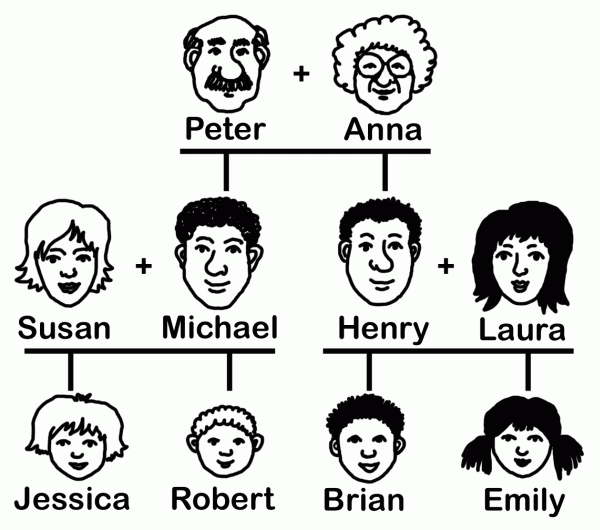
1. Anna is Brian's …………………
2. Jessica is Susan's ………………
3. Michael is Robert's …………… .
4. Henry is Laura's ……………….
5. Emily is Brian's …………………
6. Henry is Robert's ………………
7. Brian is Henry's …………………
8. Robert is Henry's ………………
9. Peter is Jessica's …………………
10. Robert is Brian's …………………
11. Anna is Peter's …………………
12. Laura is Emily's …………………
13. Laura is Jessica's …………………
14. Emily is Michael's ………………
15. Brian is Emily's …………………
№4. Read and answer the questions:
Our family is neither large nor small. We are four: mother, father, a sister and I, Oleg. We all live together in a three-room flat in Krasnye Baki. We are an average family.
My father Peter Ivanovich is 47 years old. He is a tall and well-built man with short black hair and grey eyes. He works as a manager at a plant. He likes his work and spends most of his time there. His hobby is swimming. By character my father is a quiet man, while my mother is energetic and talkative.
My mother’s name is Marina Petrovna. She is forty. She is a teacher of music and plays the piano well. My mother always has a lot of work to do about the house and at school. She is a busy woman and we all help her.
Our parents don’t always agree with what we say, but they listen to our opinion.
My sister’s name is Irena. Like our mother Irena has blue eyes and fair hair. She is a very good-looking girl. Irena is five years younger than me. She is a pupil of the 6th form. She does well at school and gets only good and excellent marks. Literature is her favourite subject and she wants to become a teacher.
Our family is very united. We like to spend time together. In the evenings we watch TV, read books and newspapers, listen to music or just talk about the events of the day. At the weekend we go to the swimming pool and we spend every summer at the seaside.
All of us like to spend our weekends in the country. We often go to the village where our grandparents live. They are pensioners now, but prefer to live in the country. My grand-grandmother is still alive. She lives in my grandmother’s family and is always glad to see us. I’m always happy to listen to her stories about her past life. Her health is poor and she asks us to come and see her more often. I also have many other relatives: uncles, aunts, cousins. We are happy when we are together.
1. Is Oleg’s family large or small?
2. How many people are there in his family?
3. What are his parents? Where do they work?
4. How old are they?
5. How do they look like? What are they by character?
6. Has Oleg brothers and sisters? What do they do?
7. Which of Oleg’s relatives live in the country?
8. Does Oleg’s family often visit grandparents?
9. Is his family friendly? Do they have much in common?
10. How do they spend free time? Where do they go together?
№5. True or false?
My grand-grandmother is not alive.
By character my father is a quiet man.
Nobody of us like to spend our weekends in the country
We like to spend our free time together.
Our parents always agree with what we say.
Lesson 7
PRESENT SIMPLE
| Настоящее простое время |
| Обозначает регулярное действие, то, что происходит постоянно, каждый день |
| Указатели времени: usually – обычно every day – каждый день often – часто always – всегда sometimes – иногда |
| Вспомогательные глаголы |
| do does (в 3-ем лице, ед.ч.) Употребляются только в вопросительных и отрицательных предложениях |
| Положительное предложение |
| V1
3 л., ед.ч. V-s,-es
|
| Отрицательное предложение |
| V1
3 л., ед.ч. V1
|
| Общий вопрос |
| V1 Do 3л. ед.ч. V1 Does |
| Специальный вопрос |
| V1 Wh. do 3л. ед.ч. V1 Wh. does |
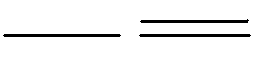

 do not

Упражнения
№1. Сделай предложения отрицательными
I live in London.
He likes to drink coffee.
You get up at 7 o’clock.
Doctors go to hospital.
My sister goes to school every day.
№2. Сделай предложения утвердительными
Foxes don’t live in the forest.
My sister doesn’t make her bed every day.
I don’t do exercises every day.
My brother doesn’t work at school.
We don’t play the piano every day.
№3. Спишите предложение и подчеркните слово с ошибкой
He take a shower at 7 o’clock.
When do she come home?
She don’t skate every winter.
I does my homework every day.
Does you like to sing?
№4. Составь предложение из слов
live, where, she, does ?
don’t, baseball, play, I.
to, likes, she, books, read
Monday, go, the, I, swimming pool to every
doesn’t TV she watch like to
№5. Составь общий и специальный вопросы к предложениям:
I go to school at 8 o’clock every day.
Nick plays football in the gym on Sundays.
They read books every evening.
You buy milk every Thursday.
She works at college.
№6. Откройте скобки и напишите глаголы в правильной форме.
One fly … (to fly) , two flies … (to fly).
One girl … (to cry), four girls … (to cry).
When a wolf … (to see) the moon, it … (to begin) to howl.
Wolves and sheep … (to be) never friends.
Our hens … (to lay) a lot of eggs.
Boys … (to fight) and… (to shout).
That boy … (to try) to catch some balls.
These girls … (to try) to run away from an angry turkey.
If one goose … (to have) one tooth, how many teeth … (to have) thirteen geese?
№7. Вставьте глаголы из скобок в форме Present Simple.
He ________ (get) up at 7.
He ________ (have) his English lesson every day.
Не ________ (speak) English to his friends.
He ________ (play) board games in the afternoon.
Sometimes he ________ (swim) in the lake.
He often ________ (go) hiking.
He sometimes ________ (sit) by the camp fire in the evenings.
He never ________ (go) on a trip without his friends.
№8. Вставьте глаголы в Present Simple.
go, like, love, watch, read, like, walk, come, do, watch
My name's Pavel. In the evening I usually (1) ___________ my homework.
Then I (2) ___________ TV or video.
I (3) ___________ action films! They are super!
Then I (4) ___________ my dog.
After that I (5) ___________ home, (6) ___________ a book and (7) ___________ to bed.
My sister is little. She doesn't (8) ___________ action films.
She (9) ___________ cartoons.
She (10) ___________ them every day.
Lesson 8
FAMILY AND FAMILY PROBLEMS
1. Read and answer the questions
A family is an essential part of our society. A family is a little world. According to researches, households of three or even four generations will become typical.
Firstly a family has things shared together like dreams, hopes and possessions. I think it is great. Besides, we need a family for comfort and protection.
Secondly a family is a place where they respect dwellers, a place where all members can enjoy the dignity of their own. Some people say that privacy is impossible in an extended family. But in my opinion trust is more important for a happy family than any other feature.
There are a lot of problems in an extended family, especially between brothers and sisters. They always treat one another badly. Of course, if you have a lot of brothers and sisters, there will be no privacy. But on the other hand, when you have no brothers or sisters, life becomes boring.
There are a lot of problems and conflicts that appear between teenagers and their parents. They don't understand each other.
Parents always want their children to be clever and learn harder. They don't bother themselves to understand their children. They are always glad when their children have trouble with things that are very valuable for them.
Parents always cheat teenagers. They say that school is very important for us and to enter an institute we should have good marks in our school-leaving certificates.
But it's not what the children want. I think that it is necessary to bridge the generation gap, and parents and children must come to an agreement.
1. What is a generation gap?
2. How should we overcome it?
3. What family is extended?
4. Do you agree that an extended family is better?
5. Is your family an extended one or not?
6. What problems are there in an extended family?
7. Do you agree that parents often cheat you?
8. Do you think that a school certificate with good results is important?
2 . Read the text «Lucy’s family» and complete with the correct words in parentheses:
Hi! My name is Lucy. I ______( live/lives) with my parents in Sydney, Australia. My mother’s name is Lilith and my father’s name is Fred.
I ______ (have/haves/has) two brothers and one sister. My brothers, Peter and Walter, ______(live/lives) with us, too. Peter _____ (study/studies) in a school downtown. He ______ (take/takes) the train to school. He _______ (get up/gets up/get ups) at 6 am. That’s very early! But Walter ______ (get up/gets up/get ups) late. He _____ (walk/walks) to work. Peter _____ (do/dos/does) his homework everyday at 5pm. My sister, Helena, ______ (live/lives) downtown with her husband, James. He ______ (work/works) in the suburbs. They _____(don’t take/doesn’t take/doesn’t takes) the bus to our house. They ______ (go/gos/goes) to our house by car. James is a doctor, but he ______ (don’t work/doesn’t work/doesn’t works) in a hospital, he _____ (work/works/workes) in an office. They _____ (visit/visits/visites) us every Sunday. I really _____ (love/loves) my family!
3. Unscramble the questions about Lucy’s family:
- ____________________________________________?
(she/alone/does/live)
- No, she lives with her brothers and her parents.
- _____________________________________________?
(they/where/live/do)
- They live in Sydney, Australia.
- _____________________________________________?
(Helena’s/does/do/what/husband)
- He’s a doctor.
- _____________________________________________?
(how/she/her/does/like/family)
- She loves her family!
- _____________________________________________?
(walk/does/Peter/to/school)
- No, he takes the train to school.
4. Describe the members of the family:





Вебинар для учителей

🎓 Свидетельство об участии ✨БЕСПЛАТНО!✨



