Россия, Казань


СДЕЛАЙТЕ СВОИ УРОКИ ЕЩЁ ЭФФЕКТИВНЕЕ, А ЖИЗНЬ СВОБОДНЕЕ
Благодаря готовым учебным материалам для работы в классе и дистанционно
Скидки до 50 % на комплекты
только до
Готовые ключевые этапы урока всегда будут у вас под рукой
Организационный момент
Проверка знаний
Объяснение материала
Закрепление изученного
Итоги урока

Был в сети 01.11.2026 00:38

Орлов Олег Игоревич
Учитель биологии
 5 317
 12 137

Местоположение
Специализация
Lacto- and bifidobacteria - the second human genom
Категория:
Биология
31.03.2021 07:50

Просмотр содержимого документа
«Lacto- and bifidobacteria - the second human genom»
Lacto- and bifidobacteria - the second human genome
"Human ecology"
Oleg Orlov sch102, Ilya Efimov KFU, Larisa Knyazeva KFU
(Teachers and biologists practitioners from Kazan)
Human genome - 20 thousand genes
The genome of the microbiome is the "second genome" - from 2 to 20 million.
... “the predisposition to diseases, including allergies, obesity, inflammation of the intestines, Parkinson's disease, depends on this (the second genome). It also affects the absorption of anti-cancer drugs, depression and autism. ” (James Gallagher)
For one reason or another, and even more so with age, structural rearrangements of the human microbiome occur, which partially leads to the loss of the body's ability to regulate the maintenance of the quantitative and qualitative composition of microorganisms inside and on the surface of the body. The human microbiome, which is directly involved in all biochemical and physiological processes of the body, can sometimes influence its behavioral responses, such as rabies, certain types of schizophrenia, and some other psychopathologies. Consequently, all sorts of changes in the microbiome can lead to physical ailments, physiological abnormalities and mental distress. In fact, humans are a “battlefield” of competing, beneficial and harmful parasites, obligate and facultative symbionts, and even those who use humans as a means of transportation. No kingdom in nature can lose sight of so much of the energetic organic matter contained in the body so as not to try to take its own. Fighting among themselves for the organic matter of the human body, inside and inside it, microorganisms must resist the onslaught not only of the immune system, but also of their closest neighbors’ competitors.

Thus, a kind of "triumvirate" is formed, consisting of protozoa and fungi, bacteria, viruses and, of course, cancer cells. Inside the triumvirate, like in a tropical forest, there is a constant struggle for a resource according to two principles: the first is the principle of competitive exclusion, when the enemy is destroyed, and the second is the principle of competitive evasion, when one enemy, avoiding a collision, goes into the stage of passive defense simply from a chemical signal another kind of "presence". The role of the human immune system in this struggle of "kingdoms" is the role of a regulator - egregor, which does not allow one group to take a leading position. It should be noted that this triumvirate simultaneously protects the human body, not allowing competitors from outside to enter the territory of its triumvirate. And yet, sooner or later, under the influence of various reasons and circumstances, a violation of a well-oiled evolutionarily verified system occurs. For example, the penetration of a conditional group of pathogenic bacteria into the human body is accompanied by the intake of antibiotics that suppress the action of the pathogen, as well as suppress some of the bacteria that have settled in the body. Having ceased to feel the restraining pressure from bacteria, viruses and fungi take over, "and" ... itching in the eyes begins - fungal keratitis, herpes appears on the face. If, for example, the level of protective reactions and immunity on the "regulator" itself - the body, for example, from hypothermia or simply from the natural aging of the body - decreases, then some kind of "fermentation" begins in the triumvirate. This leads to the seizure of leading positions by one or another group of the triumvirate and trouble if this group is cancer cells. It is impossible to recover from old age, but it can be postponed by constantly adjusting the qualitative composition of the community of microorganisms, that is, constantly maintaining the balance of forces between bacteria - viruses - fungi - protozoa and cancer cells. Naturally, in the "late" age, with a corresponding desire, it is necessary to maintain the level of immunity at the proper level, leading, as they say, a healthy lifestyle. And yet we accidentally upset the balance of microorganisms, for example, by eating animal meat "stuffed" with antibiotics (it may seem strange, but animals are "stuffed" with antibiotics not to fight microbes, but mainly to increase biomass, which is physiologically incomprehensible). Antibiotics in our food kill endobacteria, all kinds of disturbances occur in maintaining the balance of the neurohumoral complex of the human body, which affects overall health. It would seem that the use of "dietary supplements" with lacto- and bifidobacteria became an opportunity to purposefully adjust the biological community of the microbiome to restore the balance between the members of the triumvirate. Scientists have already learned not only to isolate and breed in a pure form the required type of symbiotic endo and ectobacteria, but also to obtain separate "breeds" of strains aimed at specific tasks. Bacteria and their spores, together with fillers, more often with prebiotics (a nutrient medium for bacteria), are pressed either into tablets or in the form of powders are placed in pills - capsules. Both are called dietary supplements containing lacto- and bifidobacteria, which is not a medicine in form due to the unpredictability of the result, which is quite individual. Almost all the action when taking bacterial dietary supplements is reduced to taking a tablet, washed down with milk or water. However, few people have tried to observe what happens to bacteria from food supplements after a time, placed simply in water, even in the aggressive environment of the digestive tract.

Most bacteria from food supplements simply pass through the gastrointestinal tract, where they release enzymes that help digest food, and for the most part become "light" nutrients themselves. For example, the Bulgarian bacillus (Lactobacillus bulgaricus) and thermophilic streptococcus are used with a ready-made dairy product - yogurt. Another species, Lactobacillus acidophilus, can indeed colonize or replace “old” species in the alcove of the digestive tract, but again the chances of this are very small when the change in the bacterial community is comparable to the change in the blood in the body. You can, of course, try to take it by quantity, using a large amount of dietary supplements with a large amount of bacterial CFU / ml, but there is a "pitfall" here that is not visible on the surface. The chances of getting into the folds of the intestine in order to form colonies in bacteria are very small, especially since most of the lacto- and bifido are inactive, when, after coming out of the stupor and growing up, they naturally have time to leave the intestines after about two days. In the folds of the intestine, whole islets are bastions of bacteria of old people, stuck together in the coenobium (in the general clot of mucus), already more toxic than beneficial bacteria, which are not at all going to give up their dominance. Among these undesirable opportunistic bacteria can be Helicobacter pylori (Helicobacter pylori), and even in 2 forms, one of which is active, the other is passive - attached to the villi of the gastrointestinal tract.
The weak point of this bacterium, which can cause stomach cancer, is the presence of common mucus that unites pylori individuals. By creating a tough competitive environment from other bacteria on the list of dietary supplements, we get an excellent chance to destroy the coenobium of Helicobacter pylori mucus, thereby preventing the appearance of cancer cells. Eli Mechnikov proposed the option of storming cenobium (bastions) - harmful bacteria - producers of toxins, investigating the reasons for the longevity of peasants in Bulgaria. Eli's option was to consume yogurt made from milk made from Lactobacillus bulgaricus. In fact, Mechnikov recommended the use of this Bulgar yoghurt to suppress toxic bacteria and colonize the intestines with new ones, which could help prolong life.
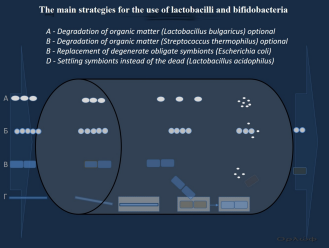
We conducted experiments, both in an apartment and in laboratory conditions, to study the growth rate of the number of bacteria on media made from dietary supplements fillers - prebiotics and powder from macerated cap mushrooms *. Studying the amount of bacteria secreted from spores in some dietary supplements, we noted that the number of active forms of bacteria in the BAA powders themselves is 5-10%, and when soaked with a prebiotic, it reaches 100% of the 4th number. day.
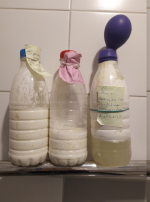
It is not easy to imagine them, bacteria, excellent "hatched" in the aggressive environment of the gastrointestinal tract at the same time. Taking dietary supplements directly is anything that, when playing golf with your eyes closed, will certainly hit the target, but will not make the "weather". If this golf course were filled with a layer of balls, they would surely fill all the holes and displace the old balls, replacing them with new ones. A series of experiments to find ways of "maturation" and accumulation of biomass of lacto- and bifidobacteria obtained from various dietary supplements, in the medium of their own probiotics and in a nutrient medium from the macerated mycelium of the fungus * showed the advantage of the latter option. The maturation of the polyculture of lacto- and bifidobacteria took place in the active container "AC" (photo), where, being in the environment of prebiotics and stimulants, bacteria wake up and continue to multiply. There is an example from Japan where powder from the macerated mycelium of the local fungus Lipusa Pleurotus cornucopiae is used as a prebiotic, which is mainly used as a store of immunostimulants from beta-glucans. And yet, in Russia there is a natural analogue of this supplier of mushroom beta-glucans *. The role of beta-glucans, contained in some types of mushrooms and not only, can be compared with the role of “commanders” (stimulants) of sites responsible for cleaning and putting things in order in the territories entrusted to the body. As soon as a “commander” appears, inactive workers - cells of the immune system begin intensive cleaning and preventive maintenance of the “premises” of residential and non-residential stock: they make small replacements, clean pipes with wire brushes, take out the trash, and carry out “deratization”. After such maintenance, the body will definitely not become newer, but it will work longer. Conventionally, enterprises for the production of probiotic products can be divided into three following categories: No. 1е Leading science-intensive breeding work and offering for sale strains - "elite" (for example, a bacteria breeding company - Xxxxx® and Xxxxc®); Firms № 2 * - purchase “elite” F1 strains and produce a large amount of secondary products F2, F3, etc.; Firms # 3 - they just buy all the breather in the market, mix and sell under tempting names and pretty labels. We must not forget about the "aging of cell cultures", and this, according to M. Lamb for cell cultures, is measured by the number of 50 mitotic divisions - generations. It should be clear that multiple reseeding of bacteria by firms No. 2 for the accumulation of bacterial biomass without proper selection leads to the degeneration of bacterial cultures - strains. An infinite number of cell divisions (proliferation) is noted only for cancer cells and their natural counterpart - amoebas, which are essentially the same thing. And yet, in agriculture, elite seed is obtained only from breeding companies, although it would seem that it is much easier to resell the previously purchased one many times. In the practice of the agricultural sector of the USSR, the method of "regionalization of crops" (multiple transplants of elite seed material on a specific site from TD Lysenko) gave a decent, but not long-term result. It was the hope for the method of multiple transplantation in a given area, as a "fundamental" one, that slowed down the selection, including of microorganisms.
Model experiment
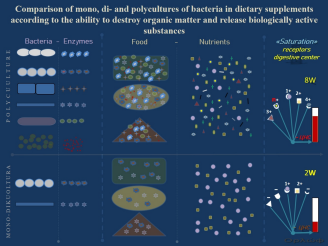
Model experiments to study the synergy of the work of bacteria when fed with organic substances were carried out on store milk. Fermentation of milk in the experimental (8 types of lacto- and bifidobacteria) and control (2 types of lacto- bifidobacteria) showed that the more varied the species composition of lacto- and bifidobacteria in the ferment, the faster the process itself occurs. When using a special "mushroom" starter culture for lacto- and bifidobacteria, the number of bacteria in the "experimental" version reaches such proportions that a person is fed not with digested food as such, but with a bacterial mass (you can see that animals feed on semi-digested food, for example, brown bears, previously burying the caught fish in the sand). And this is no longer even a heteroenzymatic lactic acid fermentation, but more - a polyenzymatic one. Mushroom starter culture with bifidobacteria showed much greater results than those introduced directly from lacto- and bifidobacteria from the dietary supplements themselves, as well as the introduction of the same bacteria from special “pharmacy” starter cultures. Comparison of bacterial densities in preparations:

Kefir - "mushroom leaven" -100% Kefir - "pharmacy" sourdough -30%
Explanation for the preparation of mushroom starter culture from lacto-bifidobacteria (not a recipe)
In just two days in a solution of macerated mushrooms, the number of bacteria increases by orders of magnitude. To do this, it is enough: 1. pour hot water into a container with a capacity of 50 ml, in which the mushroom powder is located; 2. Pour the contents of a tablet or capsule into chilled water and mix with water, loosely close the lid and leave to ripen at a temperature of 22-35 degrees for two days. The rate of reproduction of bacteria depends on the temperature, but in an apartment where the temperature is on average 22 degrees, a polyculture of 4-6 species grows best. It is important to know (from our experience) that in an active container, where bacteria multiply on an organic medium, unwanted rotting bacteria can appear only on the 4th day, this also applies to food. Hence - two days of ripening of cultures of lacto- and bifidobacteria in a container is still not enough, but enough. After two days of "ripening" of the bacterial polyculture in the AS, it is placed in a refrigerator, where the bacterial polyculture does not lose its viability for a month, being in a state of inhibited vital activity.
Logistic scheme for the use of bacterial dietary supplements


Macerated mushroom mycelium * and Active Container (AC)
Experiments in an apartment

For an effective effect on the human body from lacto- and bifidobacteria, the method of preparing special yoghurts, similar to those used and used by the villagers of Bulgaria, is most often used. Namely, at the end of the yoghurt ripening, the sourdough from it is transferred into cooled boiled milk to repeat the process. Let's try to track bacteria when fermenting milk. If we add standard starter culture from Lactobacillus delbrueckii ssp. bulgaricus and Streptococcus thermophilus, then at the end of the process in the serum we will find them in large quantities, with a consistency quality of 3 points (see below). If we charge milk, one of the pharmacy starter cultures - with 8 types of bacteria, then again the output will be the same 2 types, less often three - four, moreover, the quality of the product is good, and the consistency is about 4 points. We note that the species diversity of bacteria in the starter has a positive effect on the quality of the product and the rate of ripening. Thus, at the start we have a wide variety of lacto-and bifidobacteria, and at the finish less, but judging by the quality of the product, each species contributes its own enzymes, which affects the quality of the product. However, by changing the production regime and the species composition of bacteria at the start, some bacteria can come to the finish line. As for our goal, the chances of suppressing the pathogenic microflora increase, as well as the chances of populating the gastrointestinal tract with as many species as possible with new lacto- bifidobacteria, displacing old colonies.
List of the most studied lacto- bifidobacteria in terms of their therapeutic effect on the human body (Kommersant Style from 05/23/2018)
Bifidobacterium longum helps the skin to protect itself from physical (heat, cold) and chemical (cosmetics) aggressive factors. If scientists invented cosmetics with this strain, many could benefit from using powerful ingredients like retinoids instead of burning and reddening. This bacterium settles in our body at birth. It converts sugar into lactic acid, stabilizes the acid balance in the intestines and prevents the growth of pathogenic bacteria.
Bifidobacterium breve B-3 has the potential to be used to prevent photoaging from chronic exposure to UV rays. Lactobacillus acidophilus is one of the most popular probiotics. Since the 1920s, doctors have prescribed acidophilus for those with diarrhea or constipation. There was research that this bacterium helps with lactose intolerance, reduces the risk of developing rectal cancer. In combination with L. Bulgaricus, 80% of the subjects had acne inflammation (sample of 400 people). An Italian study found positive reviews of the combination of L. Acidophilus and B. Bifidum in the treatment of acne.
Lactobacillus plantarum is a strain that reduces the size, redness and frequency of acne breakouts. In addition, in 2007 it was studied for the treatment of irritable bowel syndrome and showed good results.
Lactobacillus paracei inhibits a neuropeptide that plays an important role in inflammation and sebaceous gland function. In 2014, L`Oreal conducted research and proved that the bacterium reduces skin dehydration, works with dandruff, and reduces skin sensitivity.
Lactobacillus rhamnosus prevents eczema. In the study, the children of women taking probiotic supplements were less likely to suffer from atopic eczema after reaching the age of four.”
Streptococcus thermophilus works as an antioxidant, increases the synthesis of ceramides (natural lipids) in the skin, and helps those with dry, sensitive skin or eczema. In combination with S. Thermophilus, L. Casei and Lactobacillus bulgaricus, it normalizes bowel function after taking antibiotics.
Staphylococcus epidermis can inhibit the growth of bacteria associated with eczema. This has been proven by DNA sequencing.
Staphylococcus aureus produces toxic compounds that signal the immune system to produce toxins that cause eczema. What a professor at the University of Michigan Gabriel Nunez recently wrote in an article in Nature.
Streptococcus salivarius kills the P. acnes bacterium that causes skin rashes (genetically programmed to expand pores and block the sebaceous glands, which leads to rashes).
In practice, most often latent forms of lacto- bifidobacteria of the following strains are placed in "professional" dietary supplements:
Lactobacillus acidophilus (La-14)
Lactobacillus rhamnosus (L. rhamnosus) (Lr-32)
Lactobacillus salivarius (L. salivarius) (Ls-33)
Lactobacillus plantarum (L. plantarum) (Lp-115)
Lactobacillus casei (L. casei) (Lc-11)
Bifidobacterium longum (BI-05)
Bifidobacterium breve (B. breve) (Bb-03)
Bifidobacterium lactis (B. lactis) (BI-04)
Lactobacillus bulgaricus and Streptococcus thermophilus, most frequently mentioned in the popular literature, which give a synergistic effect in milk fermentation, are absent in this list due to their purely milk specialization ("fungus"). In the presence of these bacteria specialized in dairy products, other lacto-bifidobacteria, by the principle of competitive avoidance, stop reproducing. Yeast - Kluyveromyces s.p *, which breaks down lactose, is often placed in the recommended non-professional dietary supplements, as well as in the "milk". Bulgarian bacillus, thermophilic staphylococcus and wild yeast can always be found in almost any lightly salted product, such as cabbage or cucumbers, where they also play a preservative role. Therefore, the presence of bacteria in the dietary supplement: Lactobacillus bulgaricus, Streptococcus thermophilus, will indicate its purpose for the preparation of just ordinary store yogurt, where the rest of the lactobacilli and bifidobacteria from the list will not be involved.
An example of setting up an experiment in a laboratory
1.Simple direct addition of dietary supplement powder (X-2) for a day in milk.
2. Preliminary soaking of dietary supplements (X-2) for the 2nd day in mushroom sourdough (booster block), followed by addition to milk.
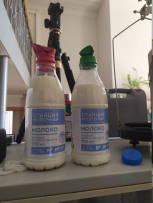
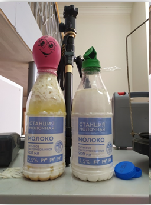
Microscopic study of the species composition of serum bacteria
Sample analysis - for product consistency
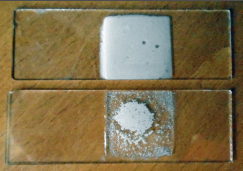
Preparation of slides on slides for comparing product consistencies from experience and control

"Immune" (X-3) pharmacy milk starter culture soaked for 24 hours

BAA (X-2) - soaked for 24 hours directly in milk

Mushroom starter culture bact. BAA (X-2) - solution in milk for 24 hours
The best result is a mash product enzymes and bacteria bodies
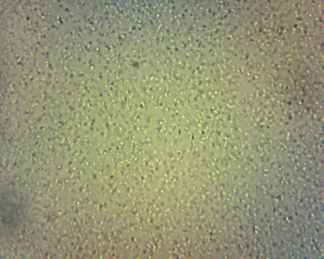
Quantitative and qualitative analysis of bacteria
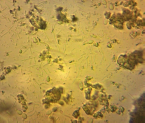

Our value judgments on the topic:
1. In our opinion, there is no benefit from taking directly the dietary supplements themselves with lacto- and bifidobacteria. Getting into the aggressive environment of the gastrointestinal tract, lacto- bifidobacteria, not covered with their own protective mucus, are practically doomed to death, and not having time to proceed to reproduction.
2. The presence of any prebiotics inside dietary supplements does not matter, due to the scanty amount and the absence of a team of consumers.
3. Most of the commercially available dietary supplements do not contain the declared effective variety of species of lacto-bifidobacteria and, on the contrary, contain undeclared types from conventional dry milk starter cultures.
4. We have shown that nutrient media for lacto- and bifidobacteria, created on the basis of macerated cells of some cap fungi, can be the basis of aquatic “live” fungal starter cultures.
5. Mushroom starter cultures can be considered universal, since in them several strains of lacto- and bifidobacteria multiply in parallel for 3 days (our example), after which shifts in the advantage of certain species begin.
6. We have shown a method of creating an "active" container, where in an aqueous medium on a substrate from macerated fungal cells * there is an explosive growth of the biomass of lacto- bifidobacteria extracted from dietary supplements.
7. The more varied the species composition of lacto- bifidobacteria involved in digestion, the faster the feeling of satiety occurs during nutrition, due to the greater number and variety of nutrients acting on the receptors of the saturation center itself in the hypothalamus.
8. Enzymes of not two bacteria, in the case of a milk "fungus", are aimed at the breakdown of lactose, but a whole group of synergistic ones, which is important for people with lactase deficiency.





Вебинар для учителей

🎓 Свидетельство об участии ✨БЕСПЛАТНО!✨