Россия, Ейск


СДЕЛАЙТЕ СВОИ УРОКИ ЕЩЁ ЭФФЕКТИВНЕЕ, А ЖИЗНЬ СВОБОДНЕЕ
Благодаря готовым учебным материалам для работы в классе и дистанционно
Скидки до 50 % на комплекты
только до
Готовые ключевые этапы урока всегда будут у вас под рукой
Организационный момент
Проверка знаний
Объяснение материала
Закрепление изученного
Итоги урока

Была в сети 10.10.2026 21:16

Толок Дарья Дмитриевна
Преподаватель Английского языка
 1 615
 45 203

Местоположение
Специализация
Flu: diagnosis and treatment
Категория:
Английский язык
09.06.2026 23:08

Просмотр содержимого документа
«Flu: diagnosis and treatment»
FLU: DIAGNOSIS AND TREATMENT
CONTENT
- Introduction
- Symptoms
- Diagnostics
- Treatment
- Prevention
- Conclusion
INTRODUCTION
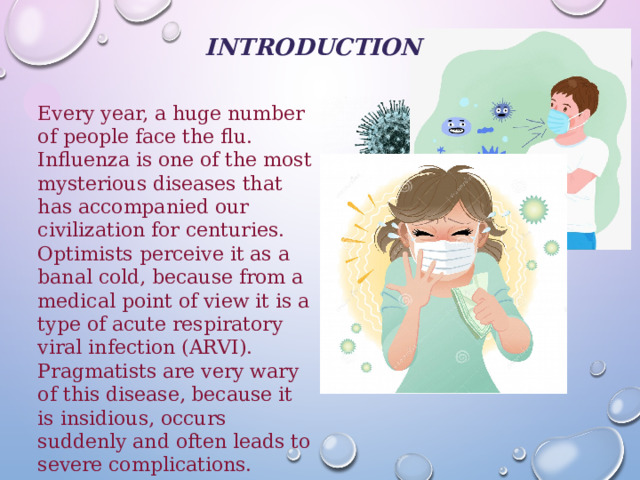
Every year, a huge number of people face the flu. Influenza is one of the most mysterious diseases that has accompanied our civilization for centuries. Optimists perceive it as a banal cold, because from a medical point of view it is a type of acute respiratory viral infection (ARVI). Pragmatists are very wary of this disease, because it is insidious, occurs suddenly and often leads to severe complications.

Symptoms of Flu:
- Fever (usually high)
- Headache
- Extreme tiredness
- Dry cough
- Sore throat
- Runny or stuffy nose
- Muscle aches
- Stomach symptoms , such as nausea and diarrhea

DIAGNOSTICS
The following methods are used for laboratory diagnosis of influenza:
- Determination of the virus RNA in biological samples : nasopharyngeal swabs, blood, and saliva.
- Detection of virus antigens:
immunofluorescence and enzyme-linked immunosorbent assays.
- Hemagglutination inhibition test:
to detect antibodies to the virus in blood.
TREATMENT
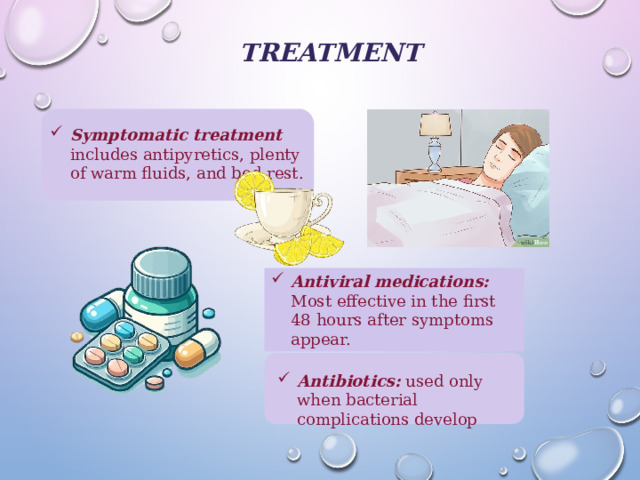
- Symptomatic treatment includes antipyretics, plenty of warm fluids, and bed rest.
- Antiviral medications: Most effective in the first 48 hours after symptoms appear.
- Antibiotics: used only when bacterial complications develop

PREVENTION
The Flu Shot
- Vaccination is the only method of specific prevention of influenza.
- After vaccination, specific immunity to influenza type A and B viruses is formed
NON-SPECIFIC PREVENTION :
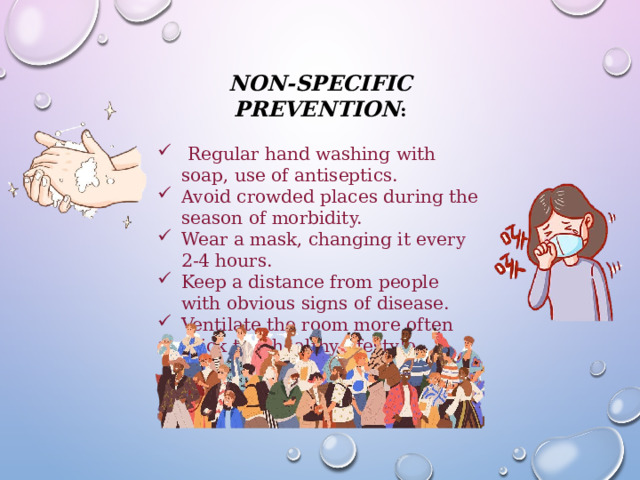
- Regular hand washing with soap, use of antiseptics.
- Avoid crowded places during the season of morbidity.
- Wear a mask, changing it every 2-4 hours.
- Keep a distance from people with obvious signs of disease.
- Ventilate the room more often
- Stick to a healthy lifestyle
CONCLUSION
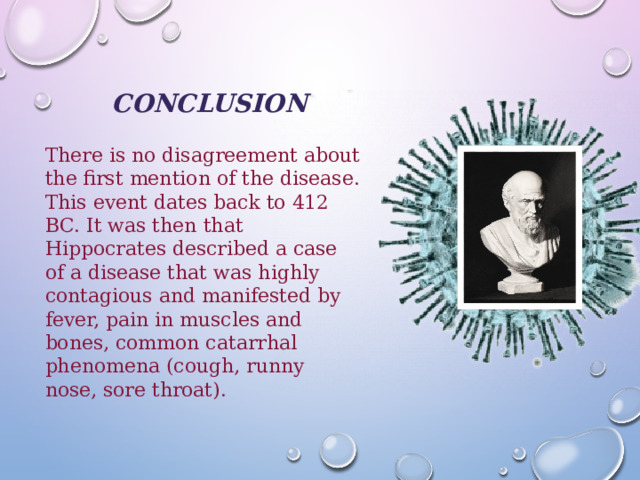
There is no disagreement about the first mention of the disease. This event dates back to 412 BC. It was then that Hippocrates described a case of a disease that was highly contagious and manifested by fever, pain in muscles and bones, common catarrhal phenomena (cough, runny nose, sore throat).

Тhank you for your attention








Вебинар для учителей
🎓 Свидетельство об участии ✨БЕСПЛАТНО!✨