

Россия, Саратов


СДЕЛАЙТЕ СВОИ УРОКИ ЕЩЁ ЭФФЕКТИВНЕЕ, А ЖИЗНЬ СВОБОДНЕЕ
Благодаря готовым учебным материалам для работы в классе и дистанционно
Скидки до 50 % на комплекты
только до
Готовые ключевые этапы урока всегда будут у вас под рукой
Организационный момент
Проверка знаний
Объяснение материала
Закрепление изученного
Итоги урока

Была в сети 18.10.2026 09:07
Королькова Александра Валентиновна
учитель английского языка
 1 002
 68 217

Местоположение
Специализация
" Coaching as a learning method"
Категория:
Английский язык
02.07.2021 11:10

Просмотр содержимого документа
«" Coaching as a learning method"»
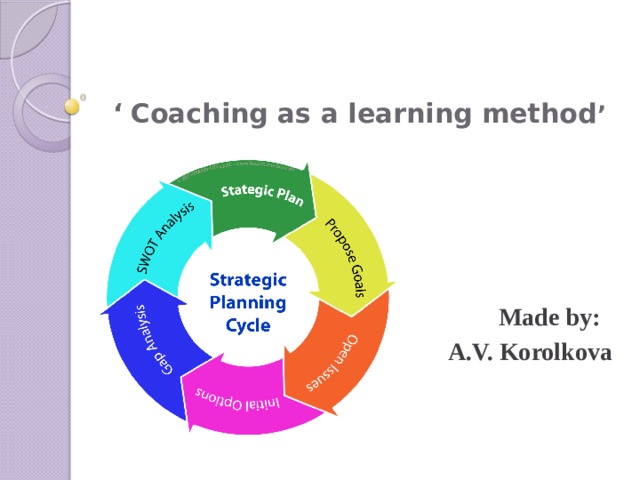
‘ Coaching as a learning method ’
Made by:
A.V. Korolkova
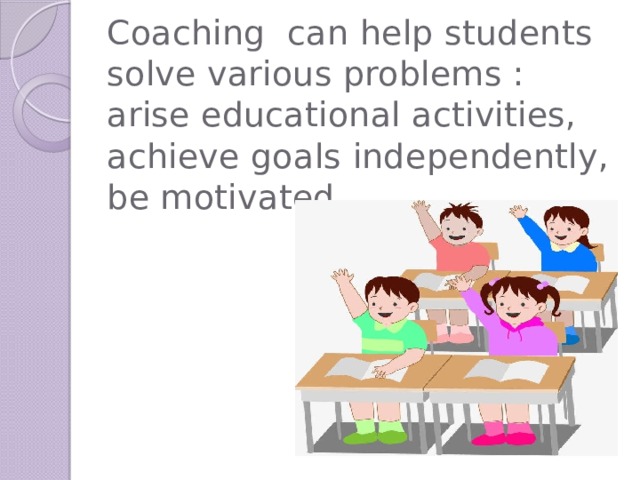
Coaching can help students solve various problems : arise educational activities, achieve goals independently, be motivated
What is the method of coaching?
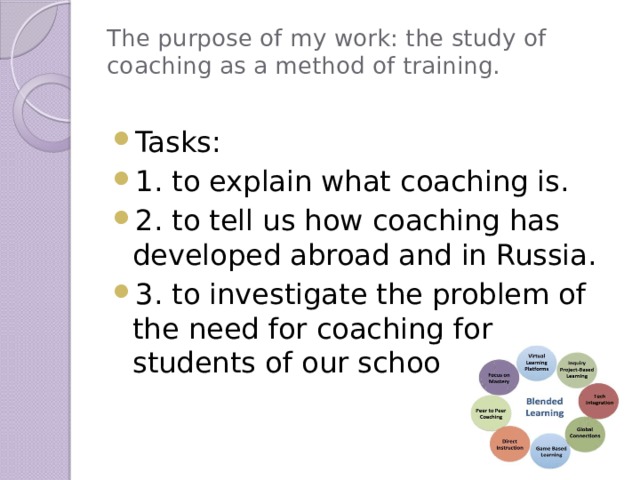
The purpose of my work: the study of coaching as a method of training.
- Tasks:
- 1. to explain what coaching is.
- 2. to tell us how coaching has developed abroad and in Russia.
- 3. to investigate the problem of the need for coaching for students of our school classes.
This work can be useful in social studies classes, classroom hours and other types of classes.
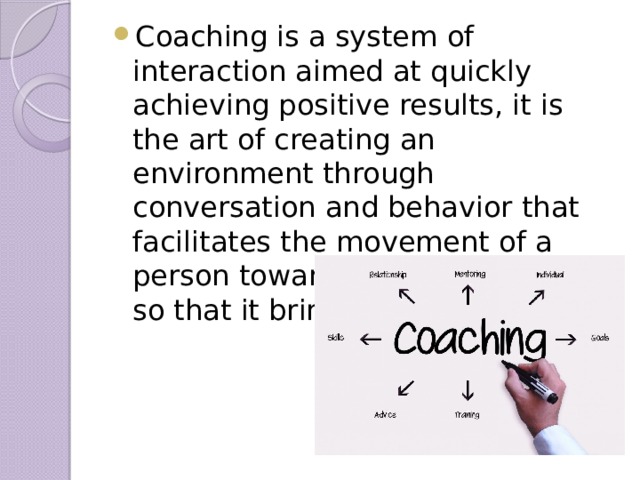
- Coaching is a system of interaction aimed at quickly achieving positive results, it is the art of creating an environment through conversation and behavior that facilitates the movement of a person towards the desired goals, so that it brings satisfaction.
Coaching was originated in America in the 80s of the XX century.
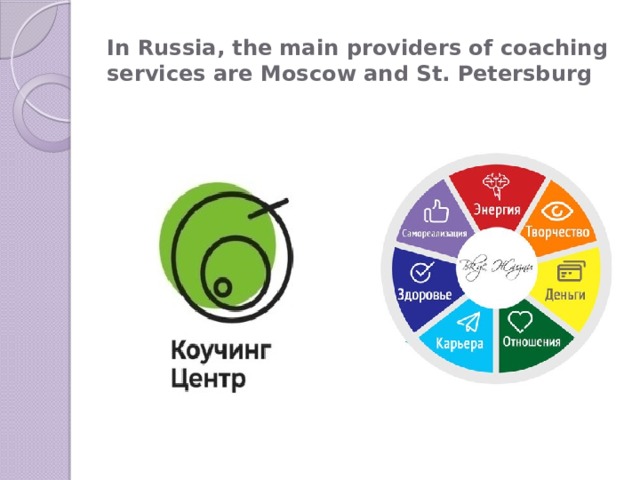
In Russia, the main providers of coaching services are Moscow and St. Petersburg
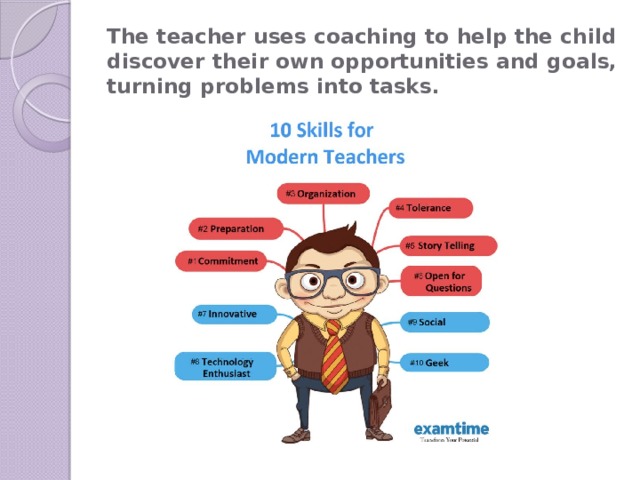
The teacher uses coaching to help the child discover their own opportunities and goals, turning problems into tasks.
The survey was conducted at the lyceum among students of the 5th, 9th, 10th, 11th grades
- 4 questions were asked:
- 1. Can you independently set (formulate) the goal of your training activity?
- 2. Can you develop a plan (define actions and means) to achieve the goal?
- 3. Do you always achieve the goal?
- 4. Do you need a mentor to achieve your goal?
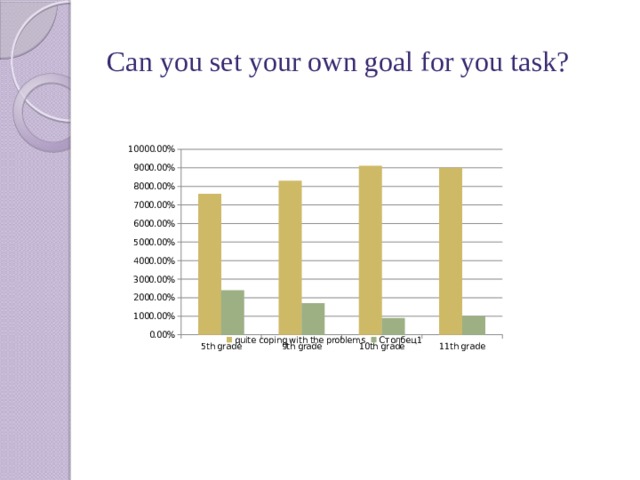
Can you set your own goal for you task?
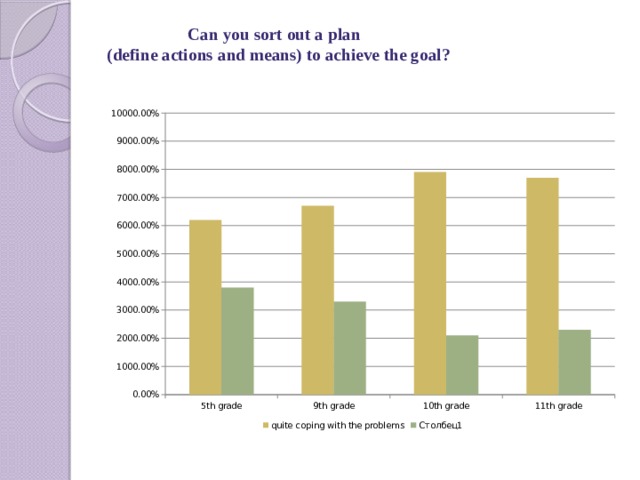
Сan you sort out a plan (define actions and means) to achieve the goal?
Individual questions for 10th graders:
- 1. If you do not achieve a goal in your learning activities, what do you think prevent you from achieving it?
- 2. What do you do to overcome these difficulties?
- 3. What else can you do to overcome these obstacles?
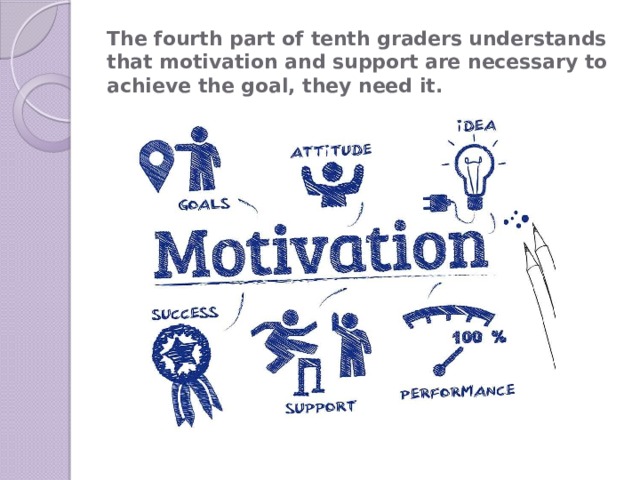
The fourth part of tenth graders understands that motivation and support are necessary to achieve the goal, they need it.
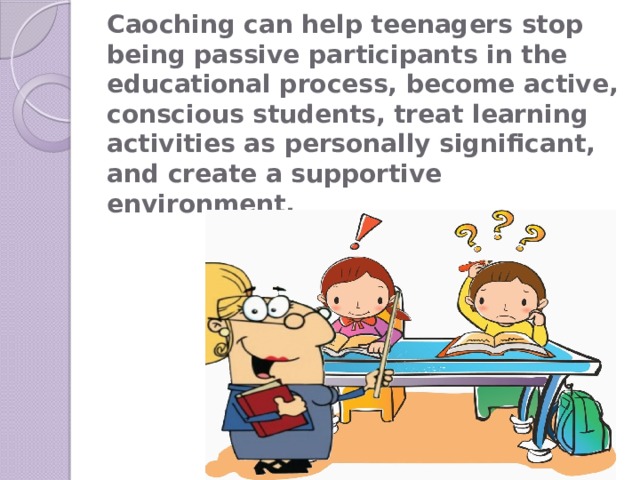
Сaoching can help teenagers stop being passive participants in the educational process, become active, conscious students, treat learning activities as personally significant, and create a supportive environment.
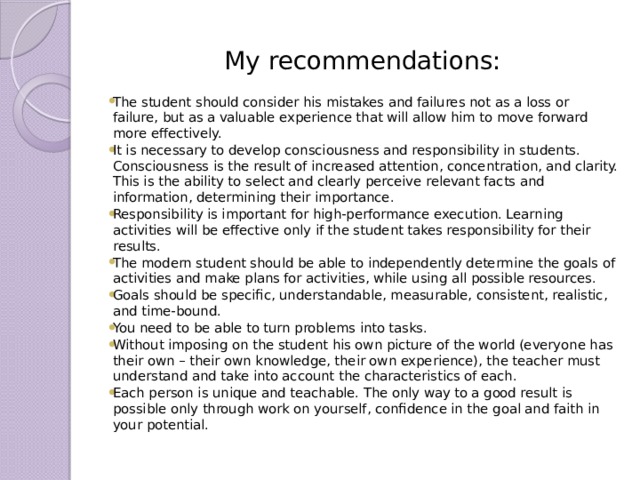
My recommendations:
- The student should consider his mistakes and failures not as a loss or failure, but as a valuable experience that will allow him to move forward more effectively.
- It is necessary to develop consciousness and responsibility in students. Consciousness is the result of increased attention, concentration, and clarity. This is the ability to select and clearly perceive relevant facts and information, determining their importance.
- Responsibility is important for high-performance execution. Learning activities will be effective only if the student takes responsibility for their results.
- The modern student should be able to independently determine the goals of activities and make plans for activities, while using all possible resources.
- Goals should be specific, understandable, measurable, consistent, realistic, and time-bound.
- You need to be able to turn problems into tasks.
- Without imposing on the student his own picture of the world (everyone has their own – their own knowledge, their own experience), the teacher must understand and take into account the characteristics of each.
- Each person is unique and teachable. The only way to a good result is possible only through work on yourself, confidence in the goal and faith in your potential.
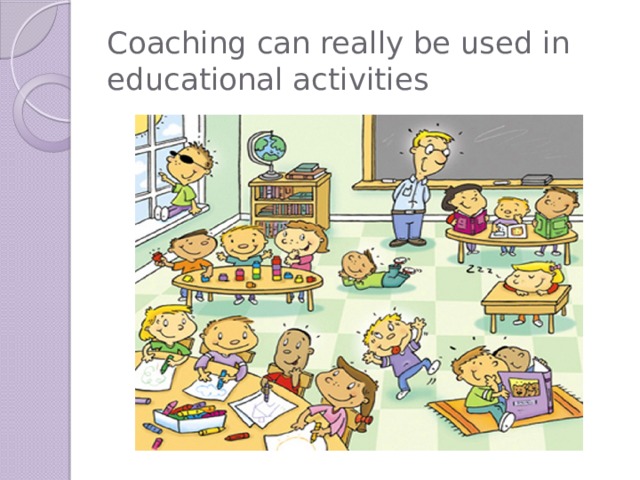
Coaching can really be used in educational activities
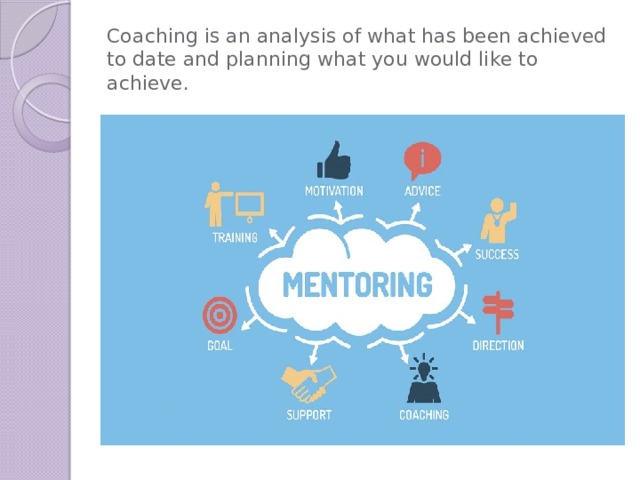
Coaching is an analysis of what has been achieved to date and planning what you would like to achieve.
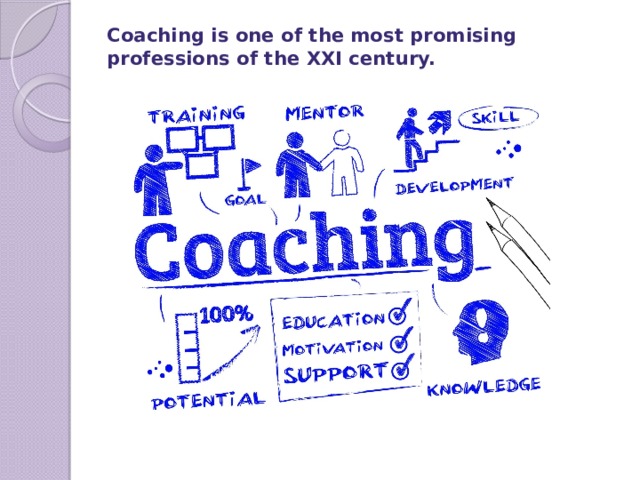
Coaching is one of the most promising professions of the XXI century.
Conclusion
In the course of my study of the literature, it turned out that coaching can really be used in educational activities, since observing the successful application of coaching in sports and business, it can be argued that this method will help significantly increase the results in teaching students in secondary schools.
The coaching approach in teaching and upbringing is of increasing interest to both teachers and parents, as it allows children to develop awareness, independence, initiative, goal-setting and planning skills.
In school pedagogy, coaching will help solve the most urgent problem of managing the educational process – motivation, which, as it turned out during the survey, students of our school need.
After analyzing the literature and additional sources, we can say that coaching is an analysis of what has been achieved to date and planning what we would like to achieve.
After reviewing various examples of the use of coaching and its structure, I was convinced of the correctness of the hypothesis put forward: coaching can help students of our school in solving problems that arise in educational activities, teach them to achieve goals independently, which will be useful in the future.

Thank you for attention!




Вебинар для учителей

🎓 Свидетельство об участии ✨БЕСПЛАТНО!✨



