


Украина, Каменское


СДЕЛАЙТЕ СВОИ УРОКИ ЕЩЁ ЭФФЕКТИВНЕЕ, А ЖИЗНЬ СВОБОДНЕЕ
Благодаря готовым учебным материалам для работы в классе и дистанционно
Скидки до 50 % на комплекты
только до
Готовые ключевые этапы урока всегда будут у вас под рукой
Организационный момент
Проверка знаний
Объяснение материала
Закрепление изученного
Итоги урока

Была в сети 09.11.2017 22:24

Виниченко Оксана Павловна
Учитель английского языка
 624
 96 098

Местоположение
Специализация
British Universities
Категория:
Английский язык
05.11.2017 17:41

Просмотр содержимого документа
«British Universities»

British Universities
Universities in Britain enjoy complete academic freedom, choosing their own staff and deciding which students to admit, what and how to teach, and which degrees to award. They are mainly government-funded, except for the totally independent University of Buckingham.
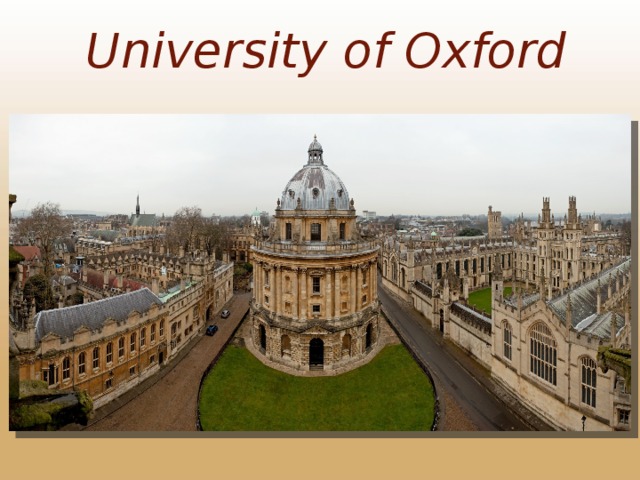
University of Oxford
Oxford university is a federation of colleges. Oxford has twenty-three ordinary colleges for men, five for women. All these are parallel institutions, and none of them is connected with any particular field of study.
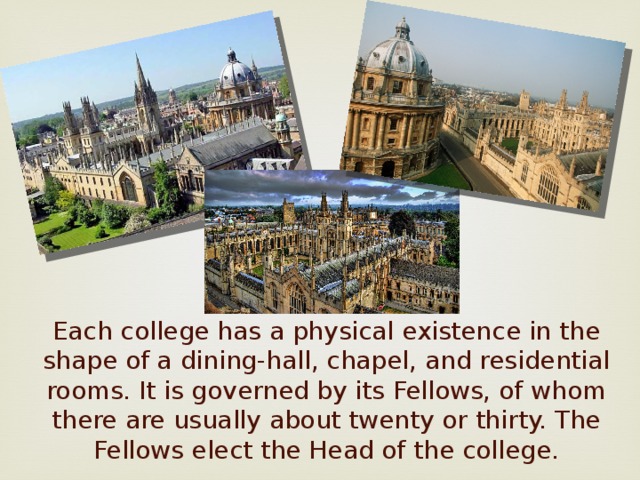
Each college has a physical existence in the shape of a dining-hall, chapel, and residential rooms. It is governed by its Fellows, of whom there are usually about twenty or thirty. The Fellows elect the Head of the college.
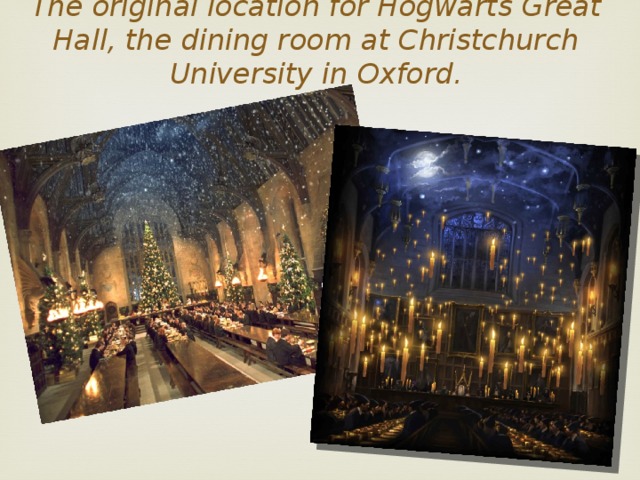
The original location for Hogwarts Great Hall, the dining room at Christchurch University in Oxford.

Colleges choose their own students, and a student only becomes a member of the University by having been accepted by a college. Some tend to be rather keen to admit a few men who are very good at rugby or some other sport, or sons of former students or of lords, or of eminent citizens, or of millionaires.

Amongst the University's old members are many widely influential scientists. Contemporary scientists include Stephen Hawking, Richard Dawkins and Nobel prize-winner Anthony James Leggett, and Tim Berners Lee, inventor of the World Wide Web.

University of Cambridge

University of Cambridge is the second-oldest university in the English-speaking world (after Oxford). The start of the University is generally taken as 1209.
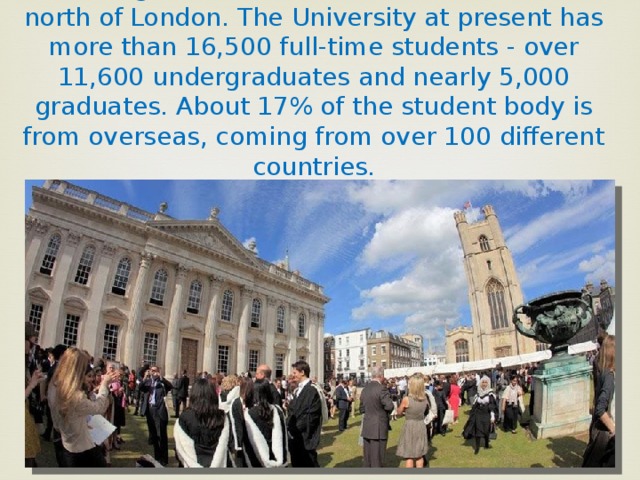
Cambridge is situated about 50 miles (80 km) north of London. The University at present has more than 16,500 full-time students - over 11,600 undergraduates and nearly 5,000 graduates. About 17% of the student body is from overseas, coming from over 100 different countries.
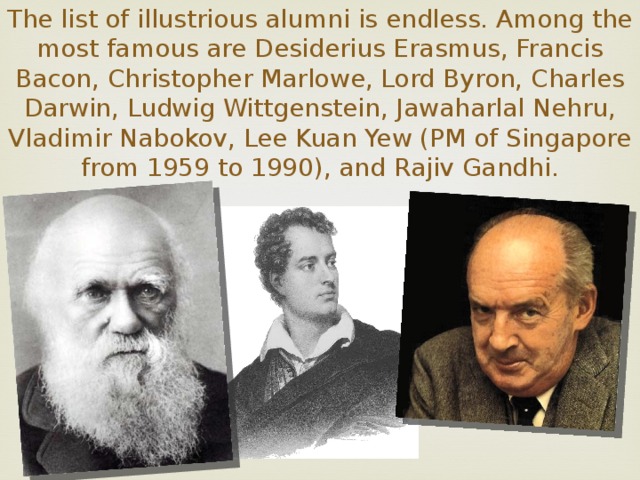
The list of illustrious alumni is endless. Among the most famous are Desiderius Erasmus, Francis Bacon, Christopher Marlowe, Lord Byron, Charles Darwin, Ludwig Wittgenstein, Jawaharlal Nehru, Vladimir Nabokov, Lee Kuan Yew (PM of Singapore from 1959 to 1990), and Rajiv Gandhi.


Вебинар для учителей

🎓 Свидетельство об участии ✨БЕСПЛАТНО!✨



