Россия, Ейск


СДЕЛАЙТЕ СВОИ УРОКИ ЕЩЁ ЭФФЕКТИВНЕЕ, А ЖИЗНЬ СВОБОДНЕЕ
Благодаря готовым учебным материалам для работы в классе и дистанционно
Скидки до 50 % на комплекты
только до
Готовые ключевые этапы урока всегда будут у вас под рукой
Организационный момент
Проверка знаний
Объяснение материала
Закрепление изученного
Итоги урока
Была в сети 10.10.2026 21:16

Толок Дарья Дмитриевна
Преподаватель Английского языка
 1 615
 45 203

Местоположение
Специализация
Amenorrhea and oligomenorrhea
Категория:
Английский язык
09.06.2026 23:13

Просмотр содержимого документа
«Amenorrhea and oligomenorrhea»
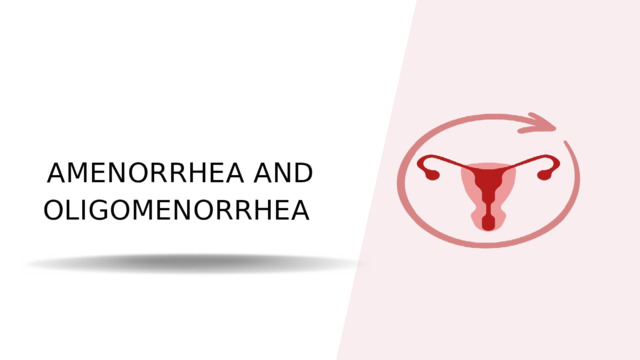
AMENORRHEA AND OLIGOMENORRHEA
INTRODUCTION & STATISTICS
WHAT ARE AMENORRHEA AND OLIGOMENORRHEA?
Amenorrhea- absence of menstruation.
- Primary: Never started by age 16. Secondary: Stopped for 6+ months.
- Primary: Never started by age 16.
- Secondary: Stopped for 6+ months.
Oligomenorrhea: Infrequent periods (cycles longer than 35 days).
- WHO Data
- WHO Data
- Affects 3–5% of women of reproductive age. Up to 25–30% in athletes and those with eating disorders. PCOS (a major cause) affects 8–13% of women globally.
- Affects 3–5% of women of reproductive age. Up to 25–30% in athletes and those with eating disorders. PCOS (a major cause) affects 8–13% of women globally.
- Affects 3–5% of women of reproductive age.
- Up to 25–30% in athletes and those with eating disorders.
- PCOS (a major cause) affects 8–13% of women globally.
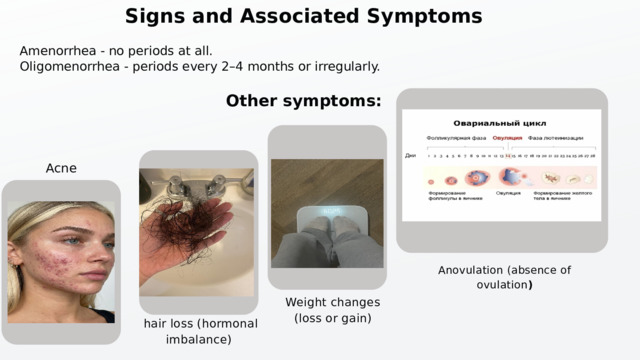
Signs and Associated Symptoms
Amenorrhea - no periods at all.
Oligomenorrhea - periods every 2–4 months or irregularly.
Other symptoms:
Acne
Anovulation (absence of ovulation )
Weight changes (loss or gain)
hair loss (hormonal imbalance)

DIAGNOSIS
- Medical history & physical exam: Cycle history, diet, exercise, stress. Pregnancy test: Always the first step. Blood tests: Hormones (FSH, LH, TSH, prolactin, estrogen, testosterone). Ultrasound: Pelvic ultrasound (ovaries, uterus). MRI/CT: If a pituitary tumor is suspected. Genetic testing: For primary amenorrhea.
- Medical history & physical exam: Cycle history, diet, exercise, stress.
- Pregnancy test: Always the first step.
- Blood tests: Hormones (FSH, LH, TSH, prolactin, estrogen, testosterone).
- Ultrasound: Pelvic ultrasound (ovaries, uterus).
- MRI/CT: If a pituitary tumor is suspected.
- Genetic testing: For primary amenorrhea.

TREATMENT
Treatment depends on the cause:
- Hormonal therapy: Birth control pills, progesterone. Medication: Metformin (for PCOS), dopamine agonists (for hyperprolactinemia). Lifestyle changes: Healthy weight, stress management, balanced exercise. Surgery: For structural issues (e.g., uterine scar tissue). Assisted reproductive technology (ART): For fertility issues.
- Hormonal therapy: Birth control pills, progesterone.
- Medication: Metformin (for PCOS), dopamine agonists (for hyperprolactinemia).
- Lifestyle changes: Healthy weight, stress management, balanced exercise.
- Surgery: For structural issues (e.g., uterine scar tissue).
- Assisted reproductive technology (ART): For fertility issues.

PREVENTION
Can They Be Prevented?
Steps to reduce risk:
- Maintain a healthy weight. Avoid extreme dieting and rapid weight loss. Exercise in moderation. Manage stress (yoga, meditation). Regular check‑ups. Balanced nutrition (calories, vitamins, minerals).
- Maintain a healthy weight.
- Avoid extreme dieting and rapid weight loss.
- Exercise in moderation.
- Manage stress (yoga, meditation).
- Regular check‑ups.
- Balanced nutrition (calories, vitamins, minerals).
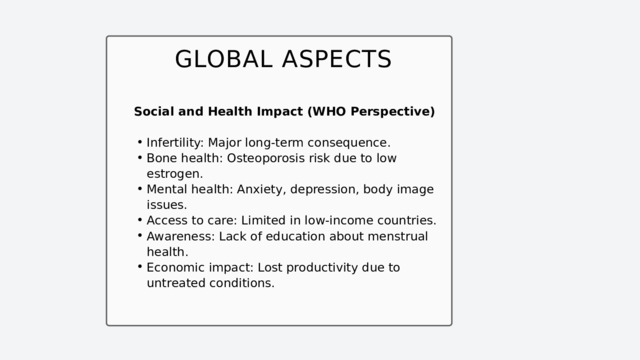
GLOBAL ASPECTS
Social and Health Impact (WHO Perspective)
- Infertility: Major long‑term consequence. Bone health: Osteoporosis risk due to low estrogen. Mental health: Anxiety, depression, body image issues. Access to care: Limited in low‑income countries. Awareness: Lack of education about menstrual health. Economic impact: Lost productivity due to untreated conditions.
- Infertility: Major long‑term consequence.
- Bone health: Osteoporosis risk due to low estrogen.
- Mental health: Anxiety, depression, body image issues.
- Access to care: Limited in low‑income countries.
- Awareness: Lack of education about menstrual health.
- Economic impact: Lost productivity due to untreated conditions.

THANK'S FOR WATCHING








Вебинар для учителей

🎓 Свидетельство об участии ✨БЕСПЛАТНО!✨